In the changing world of online marketing, social media has become an important way for brands to connect with people, raise awareness, and increase sales. With changing rules, more competition, and people getting tired of content, just posting regularly isn’t enough anymore, you have to post with a plan.
That’s where AI becomes important. AI is changing social media marketing by helping people make better choices, automating routine tasks, and creating personalized experiences for many users.
Whether you’re handling free content, running ads, or answering customer questions, AI can help you do these tasks faster and better. AI tools are now available for businesses of all sizes, helping with things like predicting trends, creating content, targeting audiences, and using chatbots.
In this post, we will look at how to use AI to optimize social media marketing campaigns. We’ll go over the steps you should take, point out the benefits, and share upcoming trends that are changing the industry.
Advantages of Using AI To Optimize Social Media Marketing Campaigns
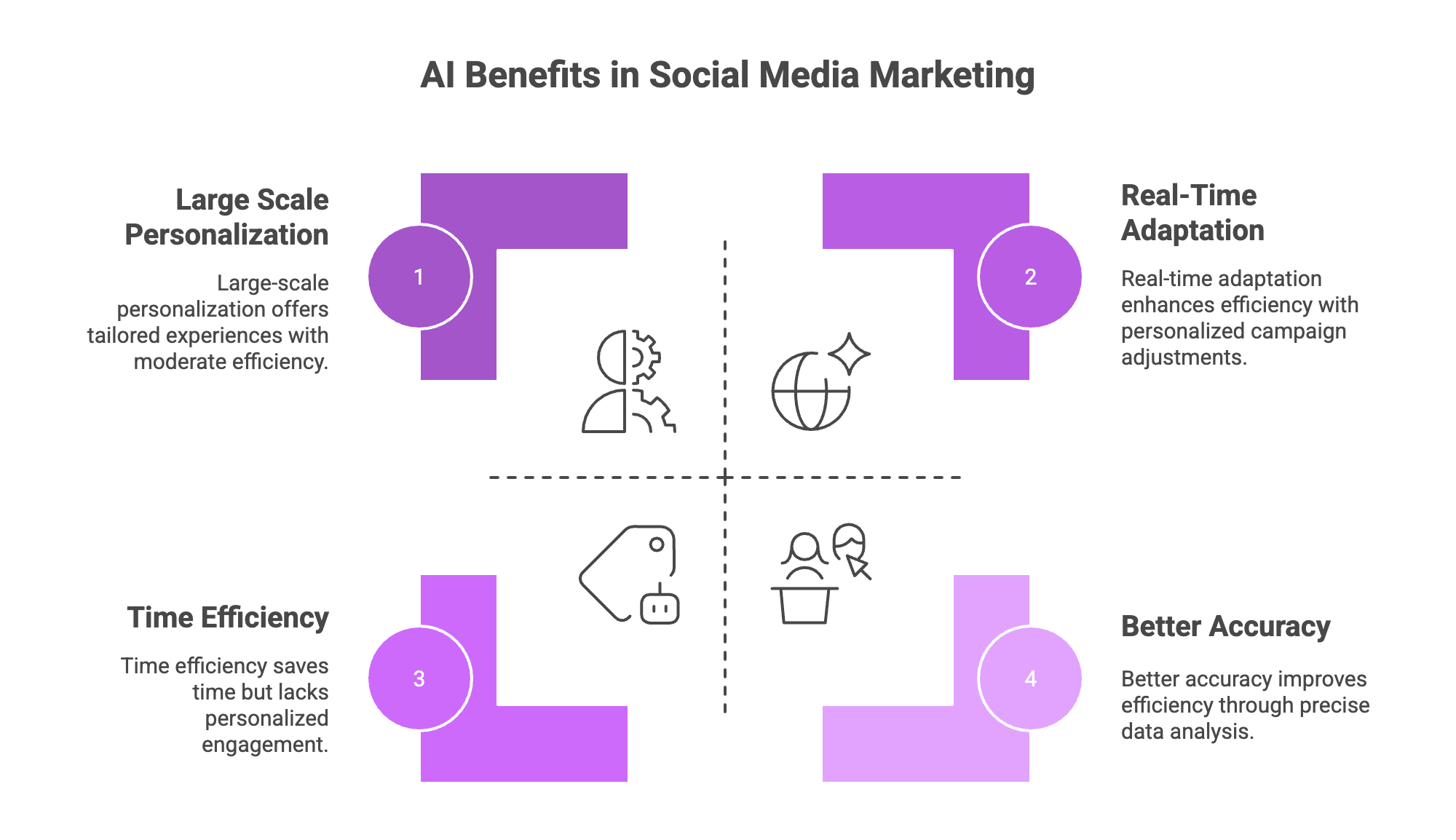
Time Efficiency
One of the good things about using AI in social media marketing is that it saves a lot of time. You can use AI tools to automatically handle regular tasks like scheduling posts, checking performance data, creating captions, and answering common questions.
This gives marketers more time to work on plans, be creative, and build connections with others. For example, tools like Buffer or Hootsuite use AI to find the best times to post by looking at how people have engaged in the past, so you don’t have to guess anymore.
Likewise, chatbots that use AI can handle many questions at the same time without needing people to help. Over time, these small improvements really add up, helping even small teams handle many channels well.
AI changes social media from a tiring job into an easy, smart process that runs all the time, even when your team is not working. In today’s quick-moving marketing world, saving time helps you stay ahead.
Better Accuracy
AI makes social media marketing easier by carefully looking at a lot of data, so businesses don’t have to guess as much. AI tools can quickly look at how people interact with content, what they like to do, and how well the content is doing.
This helps to see what is effective and what isn’t. This helps target the right audience, suggest better content, and improve campaign results. For example, AI can help figure out what kinds of posts your followers like the most, when they are most active, and which types work best.
It can even analyze emotions to understand what people think about your brand or campaign. These insights help marketers make decisions based on data, reducing mistakes and increasing profits.
When accuracy gets better, efficiency, participation, and the overall success of the campaign also improve. In a situation where timing and importance are key, AI’s ability to provide accurate and useful information is a big benefit.
Large Scale Personalization
In a time when we have too much information, having experiences just for you is important to stand out. AI helps make this possible for many people at once. AI looks at data like how people browse the internet, what they’ve done before, their age and background, and what content they like.
This helps create messages that fit different groups of people. This lets marketers send the right message to the right person at the right time, without having to change each post manually.
For example, AI can help you show content that’s relevant to users in different areas, suggest products based on what they’ve bought before, or customize emails and chat messages to match what the user wants.
This kind of personalization improves user experience and makes it more likely that people will engage, click, and make purchases. Most importantly, it doesn’t need a big team to run. AI helps customize content automatically, allowing small businesses to compete with larger ones in providing specific and relevant information to their customers.
Also Read: The Complete Guide to Maximizing Social Media ROI Across Platforms
Increased ROI
AI helps businesses make better decisions using data, which leads to smarter use of marketing money and better profits in the end. AI helps you save money on ads by finding the best audiences to reach and learning from how well the ads do.
This means your money goes to the places that are most effective. For example, AI in Facebook Ads or Google Ads can test many different ads, find out which ones are the most effective, and adjust your spending based on that.
It cuts down on useless content and focuses on effective methods that lead to more sales. AI tools also help speed up the sales process by better guiding potential customers through each step.
They do this by using automatic replies, smarter content sharing, and predicting which leads are most promising. Over time, this helps get more customers for less money. So, AI helps make your advertising better and your spending smarter, leading to more profit.
Real-Time Adaptation
One of the best things about AI in social media marketing is that it can monitor and change campaigns right away. Traditional marketing usually means planning and carrying out campaigns using set strategies, and then looking at how they worked afterward.
AI makes it possible to keep learning and making changes while the campaign is running. If a post or ad isn’t doing well, AI can quickly lower how many people see it or swap it for a better version.
In the same way, AI tools for understanding public feelings can spot quick changes in people’s opinions or find popular subjects, helping brands to react quickly. This flexibility helps prevent missed chances and reduce risks during a crisis.
Real-time adaptation helps keep your campaigns up-to-date, which is very important in the quick world of social media. With AI, marketers can quickly react to changes in what their audience does, what competitors are doing, or new trends in the industry. This helps them stay ahead and keep their marketing efforts on track.
Tips to Optimize Social Media Marketing Campaigns with AI
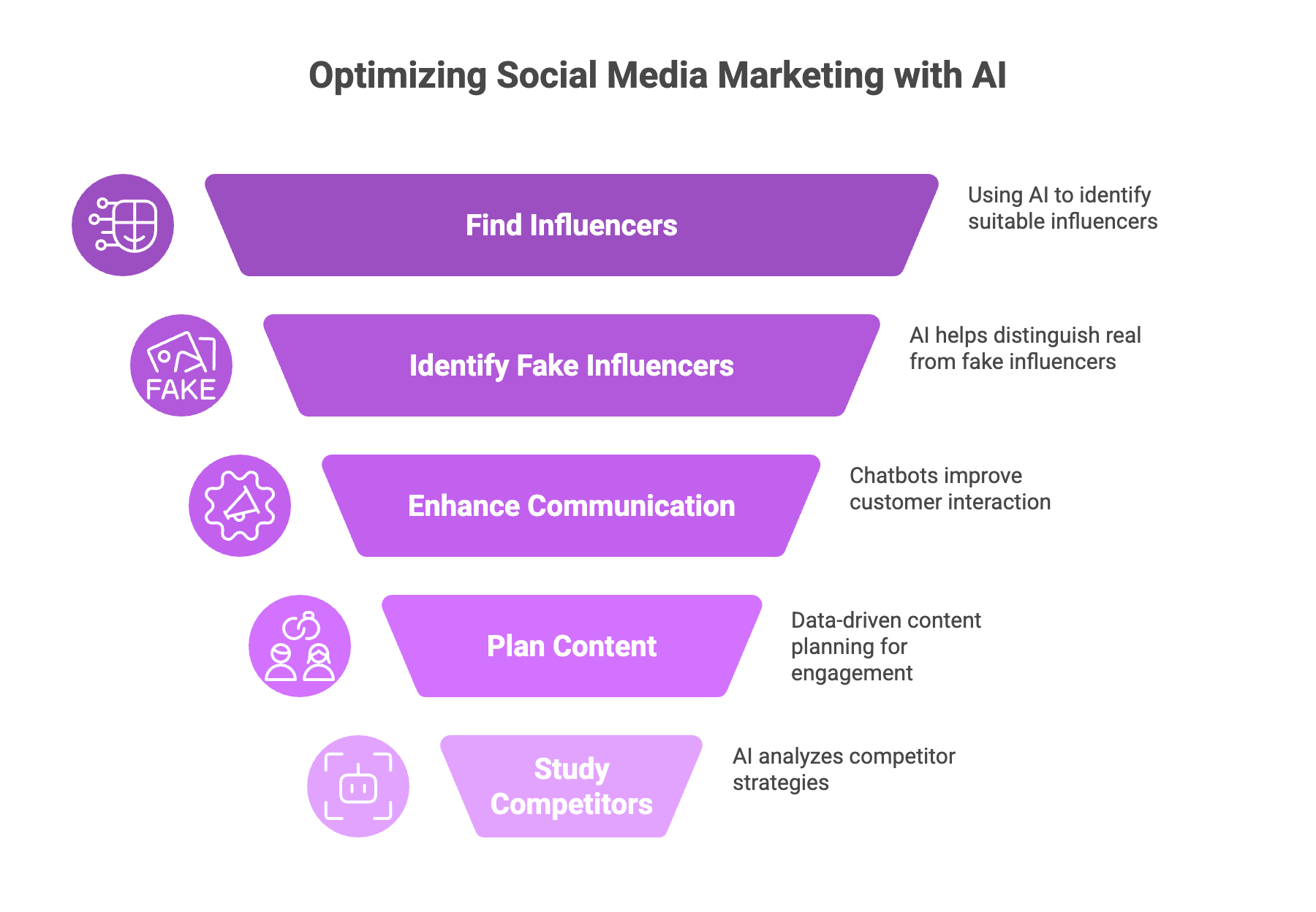
Find the Right Influencers
Marketers need to check how much money they make from their campaigns and learn to use their budgets better. In influencer marketing, this is a hard job. You might need to spend a lot of time choosing the right influencers for your area, looking at how well they connect with their audience and other important details.
It can be a boring job. This is where AI becomes important. You can use AI tools to make things easier. A good example of an influencer marketing platform is Social Animal. It can help you reach important people in your field and save you time.
With this platform, you can find new influencers by using specific words as search terms. The program uses NLP algorithms to understand and find the information you need.
Identify Fake Influencers
There are many fake influencers on social media. It’s hard to tell the difference between them and real influencers. They usually share great pictures and have many followers on social media.
The main difference between real influencers and fake ones is that fake influencers have more followers who are actually bots, not real people. It’s hard for most people to tell fake influencers apart from real ones.
And it takes a lot of time to check each influencer’s list of followers. If you work with a fake influencer, you will lose your money. That’s a huge waste of resources, right. In these situations, AI can be a big help.
It helps businesses find and stay away from fake influencers. You can easily find influencers who have acted suspiciously before. Some software programs use AI and machine learning to learn how people communicate with each other. When they notice unusual behaviors that show bot activity, they can quickly identify the fake profiles.
Faster Communication with Chatbots
Social media makes it easier than ever to communicate with customers. At the same time, companies are having a tough time handling all the emails and messages they get every day.
AI is changing the tone of how businesses talk to their customers. Using chatbots can make it easier to manage your customer conversations in many ways. They can assist you:
- Create smooth and easy conversations
- Offer support 24/7
- Lower the costs of your customer service work
- Strengthen your brand image
- Guide potential customers through the sales process
Make a Content Plan Based on Data
You can use artificial intelligence and big data to learn about the best content in your area. This can help you see what kind of content your audience likes to read, interact with, and share.
You can use AI to see how well each of your social media posts is doing. Platforms like Cortex can help you look at the types of content, topics, pictures, and videos that work best for your brand.
This information will help you plan your social media posts better. You can find out what styles and messages your potential customers will like best and think about how to use them.
Using data to guide your content plan can help you beat your competitors. With up-to-date information and data, artificial intelligence is changing how brands talk to the people they want to reach.
Perform a Study of Competitors
Most marketers keep an eye on what their main competitors are doing on social media. However, just keeping an eye on your competitors is not enough. You should look at what your competitors are doing to see what kinds of content, and deals work best for them.
Watching what your competitors do on social media and collecting that information manually can be slow and boring. Luckily, there are many tools and websites that use AI to help you get this done faster.
They can help you save a lot of time and make your results more accurate. Looking at how your competitors do on social media can help you make better choices. You can find successful methods used in your area and use them to get more people interested and increase sales.
You can also find influencers who are helping your competitors get more attention and interaction. This will help you decide what kind of influencers you should contact. Also, you can find weaknesses in your competitors’ plans and use them to your advantage.
Also Read: 11 New Social Media Platforms Marketers Shouldn’t Ignore in 2025
Future Trends for AI in Social Media
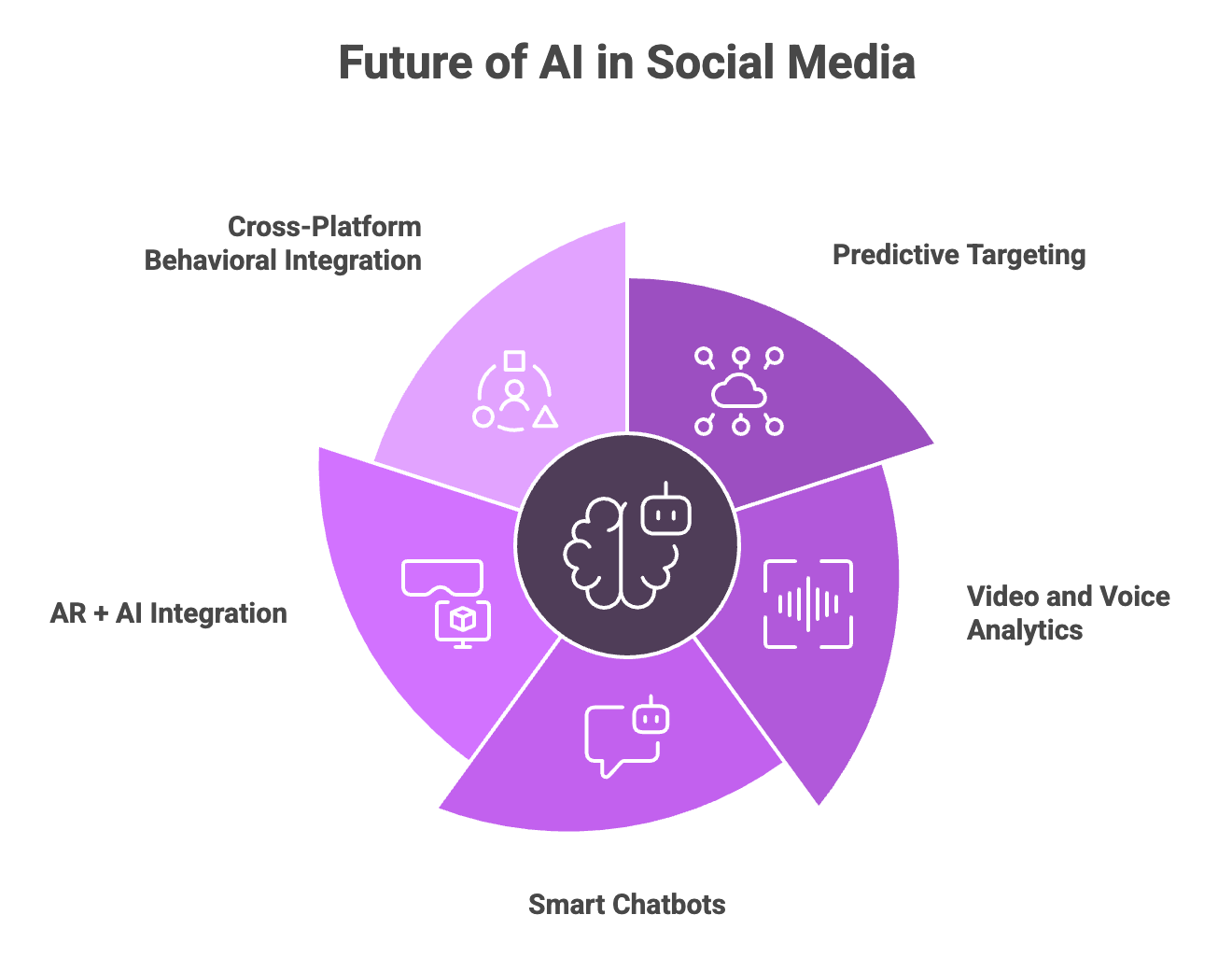
Predictive Targeting
Predictive targeting uses ML and AI to guess what users will do and like before they make a choice. Instead of just using past data, predictive models look at current activities, how users have interacted before, and behaviors of similar groups to guess what content or product a user might be interested in next.
This helps brands show more relevant content and ads at the right time, leading to more clicks and sales. For example, if someone often watches travel videos and follows adventure influencers, AI can guess that they will be interested in travel deals and show them ads related to travel even before they start looking for them.
Predictive targeting helps cut down on useless ads by focusing on users who are most likely to make a purchase. As rules about data privacy get stricter, this trend will become more important. It will help marketers use the little data they have in smarter ways.
Video and Voice Analytics
As voice assistants, podcasts, live videos, and reels become more popular, AI is starting to analyze voices and videos to learn how people are engaging, not just through likes and comments.
These tools look at how people speak, the words they use, their facial expressions, and other visual signs to understand how audiences really feel about something. For example, voice analysis can tell if customers sound excited or frustrated during live questions and answers, while video analysis can see if viewers are watching closely or skipping parts.
This deeper understanding provides better information for improving both the content and the way it is presented. Brands can improve their future ads by looking at how people feel and react to pictures, not just what they say or click on.
As video takes over social media, these tools will be important for understanding how well content performs in more relatable ways. In the future, AI tools will not only see and hear but will also understand the situation and what people mean.
Smart Chatbots
Conversational AI is improving quickly. It’s getting better at having smart conversations that understand the situation instead of just giving set answers like a basic chatbot. In the future, social media bots will be able to pick up on subtle feelings, answer complicated questions, and keep conversations flowing naturally, even after talking multiple times.
These AI helpers will do more than just answer questions. They will help users find products, solve problems, book appointments, or even make sales, all while adjusting how they talk depending on the chat.
For example, if someone asks about return policies on Instagram, they could quickly get a friendly reply that includes a link to the right page and a special discount to encourage them to buy again.
As this technology gets better, it will feel less like talking to a robot and more like talking to a helpful assistant. In social commerce, customer service, and lead generation, advanced chatbots will be key to providing real-time, personalized experiences for customers, leading to greater satisfaction and loyalty.
AR + AI Integration
Combining Artificial Intelligence (AI) with Augmented Reality (AR) will create more engaging and smart experiences on social media. Brands will use smart AR filters and virtual try-ons that change based on what the user likes, their face, and how they behave.
A beauty brand could create a filter on Instagram or TikTok that lets people see how different makeup colors would look on them. The filter could use AI to suggest colors that match their skin tone and what they’ve looked at recently.
In fashion, AI could suggest outfit ideas while you try on clothes using an app with augmented reality. This integration will increase involvement by making content more interactive, fun, and tailored to individual users.
As Snapchat, Instagram, and TikTok put a lot of money into improving AR, AI will make these effects look more realistic and smarter. This trend mixes content, utility, and commerce, giving users a new, interactive way to connect with brands on their devices.
Cross-Platform Behavioral Integration
Right now, AI tools usually look at how users act on one website or app. In the near future, AI will combine user behavior data from different platforms like Instagram, LinkedIn, TikTok, YouTube, and others to make a single user profile.
This overall perspective will help marketers see how users interact with different platforms and create more accurate campaigns. For example, if someone watches your video on TikTok but wants to buy your product on Instagram, AI can help you remind them about it at the right time and place with the right message.
This technology will help manage campaigns better and cut down on repeated work. Being able to see and understand customer behavior from a broad perspective helps brands create smooth and personal experiences across different platforms.
It also helps improve things right away, create better segments, and send messages that are more consistent. In the end, it helps people connect more meaningfully and leads to more sales by targeting the right people and personalizing the experience.
Final Thoughts
AI is not just a thing of the future anymore; it is a useful and strong tool that is changing how brands do social media marketing. By using AI in your plan, you can respond to data quickly, automate tasks that used to take a lot of time, and create content that is more relevant, timely, and interesting.
No matter if you’re using AI to understand your audience better, target ads more effectively, or have automated chats, the main idea is simple: work smarter, not harder. To make it work well, you need more than just tools.
You need clear goals, clean data, and careful management to keep authenticity and human connection. As social media and what people want keep changing, brands that use AI well will have a big advantage.
Now is the time to welcome AI not as a way to take away creativity, but as a helper that makes it better. Begin improving your campaigns now to keep up in the fast-changing online world.
FAQs
Is AI helpful for small businesses that don’t have a lot of money?
AI is really helpful for small businesses because it gives them a fair chance. AI tools can do jobs that usually need a whole team, such as writing content, monitoring social media, improving ads, and talking to customers. Many tools have cheap plans or free options, so even solo business owners and new companies can use advanced marketing strategies. With AI, small businesses can work better, stay on track, and make smarter choices without spending a lot of money.
Can AI help target the right audience on social media?
Yes, AI greatly improves how we target audiences by looking at their behaviors, likes, backgrounds, and past interactions. It can show which users are most likely to interact, make a purchase, or leave, helping marketers make better audience groups. Tools like LinkedIn Campaign Manager use smart algorithms to show ads to people who are similar to your best customers. AI helps make new audiences that are similar to existing ones and can change targeting strategies immediately to improve results.
Can we trust AI to handle customer service on social media?
AI is getting better at handling customer service on social media, especially for answering common questions and problems. AI chatbots can answer frequently asked questions, suggest products, and assist users in making purchases at any time of day or night. These bots can work with messaging apps like Messenger, WhatsApp, and Instagram DMs to provide quick and reliable help. For tougher problems, AI can pass the conversation to a human agent.
What are the drawbacks of using AI in social media marketing?
AI can be very helpful, but there are some risks to think about. Relying too much on machines can make content feel impersonal and create robotic interactions, which might make people feel disconnected. Also, AI can only make good choices if it has good information. If the data is bad or unfair, it can lead to wrong suggestions or targeting. There’s also the difficulty of keeping a consistent brand voice and a personal touch, especially when talking to customers.
How can AI assist with analyzing and reporting on social media?
AI-based analysis tools give instant information about how well content is doing, how the audience is behaving, how campaigns are performing financially, and other details. They provide useful information instead of just numbers that look good. This includes details like which content leads to sales, what times get the most interaction, and which groups of people respond best to different types of content. Some tools use machine learning to suggest what to do next or to create visual reports by themselves.