Creating a good SEO strategy involves more than just using keywords and getting links. One important thing that is often missed is when people talk about your brand online, whether they include a link to it or not. In the past, traditional SEO mainly focused on getting links to improve search rankings.
Now, search engines care more about how relevant the content is, recognizing important topics, and the credibility of the source. Brand mentions for SEO are particularly good at these things.
When people talk about you in news articles, forums, or on social media, it helps build your online reputation, make you more visible, and increase trust in you. These brand mentions help you show up better in results pages and boost your marketing.
As Google’s systems keep improving to recognize brand signals and what users want, it’s important to include brand mentions for SEO. This post looks at how brand mentions can affect SEO and why it should be a long-term part of your online growth strategy.
What is Brand Mentions for SEO?
| Section | Insight | SEO Impact | Placement Instruction |
| Authority Building | Brand mentions act as “implied links” from trusted websites | Strengthens domain authority | Place immediately after intro paragraph |
| AI Search Visibility | LLMs and AI Overviews use brand mentions to identify entities | Improves AI visibility & citations | Place in early section (after definition) |
| Topical Relevance | Mentions connect brand with industry keywords and context | Helps ranking for relevant queries | Place in “What are brand mentions” section |
| Trust Signals | Frequent mentions from authoritative sources build credibility | Improves E-E-A-T | Place in trust/authority section |
| Local SEO | Local citations and discussions reinforce location relevance | Boosts “near me” rankings | Place in local SEO section |
| Organic Demand | Mentions increase branded search volume | Improves CTR + rankings | Place before conclusion |
A brand mention happens whenever someone talks about your business, product, or website online. It doesn’t need a link to be important. Mentions appear in blog posts, podcasts, review sites, and even discussions on Reddit.
These are called implied links: mentions of your brand that aren’t clickable but show Google that your brand is important. Search engines use mentions to link your brand to important subjects and see how trustworthy you are.
Regular mentions from reliable websites boost your credibility and show that you matter in your field. Mentions also make it easier for AI to be found. Big language models use brand names to figure out which companies are reliable.
The more your brand is featured in good content, the more chances you have of being included in answers given by AI. The advantages keep going beyond that. Mentions help people recognize a brand, bring more visitors from other sites, and usually result in backlinks later on.
If you’re making a strategy to get noticed, you should include mentions of your brand in it. brand mentions for seo are an important sign of authority in AI-driven search.
Google and Implied Links
The important thing to understand about brand mentions is that Google sees them like links that aren’t directly clicked. Having reliable references, even if there’s no link, helps improve your credibility and importance in the algorithm’s view.
They are additional signs that help Google link your brand to certain topics and determine if you should appear in results pages. LLMs also use them to look for mentions of companies in reliable sources to identify which companies should be included in answers generated by AI.
The main thing is to see mentions not just as noise in the background, but as important signals that can affect rankings and AI outcomes.
| Type | Example | SEO Value |
| Linked Mentions | Blog post includes backlink | Very High |
| Unlinked Mentions | Brand name mentioned without link | High |
| Social Mentions | X, LinkedIn, Instagram posts | Medium |
| News Mentions | PR articles, media coverage | Very High |
| Forum Mentions | Reddit, Quora discussions | High |
| Review Mentions | Yelp, Google Reviews | High |
Also Read: Common Local SEO Mistakes That Businesses Make and How to Rectify Them?
How LLMs and Search Engines Handle Brand Mentions in 2026?
How Does Google Handle Brand Mentions?
Google’s systems search through billions of web pages to gather information about certain topics. When people talk about your brand name, even if there’s no link, Google uses that information to:
- Connect your brand with important topics.
- Find out how often and where people talk about your brand.
- Check if the sources talking about you are trustworthy.
These signals help create a profile for your brand that shows Google what your brand is all about. That profile helps see if your content is suitable for what users are looking for. If your name comes up often on important and relevant websites, your chance of getting a good ranking will go up, even if you didn’t get a link from them.
How Do LLMs Handle Brand Mentions?
| System | How It Uses Brand Mentions | SEO Outcome |
| Google Search | Detects unlinked mentions as entity signals | Better ranking relevance |
| AI Overviews | Uses mention frequency + authority for citations | Higher AI visibility |
| LLMs (ChatGPT, Perplexity) | Learns brand associations from training data | More brand recommendations |
| Knowledge Graph | Builds entity profile using repeated mentions | Strong topical authority |
| Local Search | Uses local citations and brand references | Better map rankings |
Big language models do not search the internet live. Instead, they learn from huge amounts of text from websites, articles, transcripts, and public databases. When your brand shows up often in good sources, LLMs start to connect it with certain subjects, traits, and importance. That’s how you get:
- Included in answers generated by AI
- Recommended as a helpful resource for conversation tools
- Known as an important entity in related areas
Like Google, LLMs like to see brands get regular and good visibility. Mentions help build trust and make everyone feel included. Backlinks are still helpful, but brand mentions are more likely to show up in answers by AI.
That’s because LLMs pull out names and details from regular text, not just website links. Even if there are no links, when a brand is mentioned, it’s more likely to be referenced in tools like ChatGPT, Perplexity, Google’s AI Overviews, or Bing Copilot.
Mentions help models understand that your brand is related to a topic. The more often you show up on trusted websites, the more likely people will find you when they look for answers online.
The Importance of Brand Mentions for SEO in 2026
Most SEO plans focus on creating good content, getting links from other websites, and fixing technical issues. But brand mentions are just as important for SEO. Think of them as a link that connects your content to the wider internet.
They help crawlers check that you are a real person or business doing actual work, and that people are discussing it. Mentions add to what you are already doing. If you are putting money into content marketing, online public relations, or expert ideas, you are probably already getting some mentions.
Now it’s time to monitor and boost them. Brand mentions for SEO is not a substitute for regular SEO work. They make them stronger. In a situation where AI is helping to increase visibility, you can’t ignore them. Here are a few points that will strengthen this fact. Brands in the top 25% of online mentions appear in AI-generated answers more than 10x as often as low-mention brands.
Establishes Trust and Topical Authority
Search engines are paying more attention to brand mentions, even if they don’t have links, to figure out which people, companies, or products are important in certain areas. When your brand is mentioned on important and trustworthy websites, they see your name as a reliable source on that subject.
These mentions are like online votes that show support, helping crawlers connect your brand to a certain topic. This can help people find you for related searches, even if you’re not specifically working on those keywords on your website.
This is very important in fields where trust and knowledge matter a lot, such as health, finance, or law. Also, when people talk about your brand on forums, blogs, news sites, and social media, it shows crawlers that your brand is important and well-regarded.
This helps strengthen your authority on the topic. brand mentions for seo focuses more on entities and becomes an important way to build your online presence and show your expertise.
Unlinked Mentions Affect Rankings
Backlinks have always been very important for off-page SEO, but brand mentions without links are becoming more important in how search engines rank you. Google has improved its ability to understand words and phrases.
Now, it can recognize when a brand is mentioned, even if there’s no link, and use that information to decide how important and trustworthy the brand is. These citations that aren’t connected help show search engines that your brand is part of important discussions online.
For instance, if many industry blogs or news sites talk about your company in connection with certain products or trends, Google considers this when deciding how important and trustworthy your brand is. This can affect rankings, especially for searches with brand names and longer phrases.
PR campaigns, influencer mentions, and media coverage can help with SEO even if they don’t directly create backlinks. Including unlinked mentions in your SEO plan helps create different types of signals outside your website.
Mentions Help Referrals and Organic Traffic Work Together
Brand mentions help with SEO, but they can also attract natural visitors to your site, which can boost your growth. When someone talks about your brand in a blog, podcast, video, or on social media, people usually look up your name or visit your website.
When people look for a brand or click on links to it, it shows crawlers that the site is good. This is because visitors stay longer, don’t leave quickly, and come back again. These signals are important for how websites rank in results pages
Also, the more people see your brand in reliable places, the more they are likely to click on your link when they find it in search results. This can help improve your rankings. Brand mentions help bring people to your site directly and make your site easier to find on search engines.
They connect referral methods and organic search efforts, improving both visibility and user interaction at the same time.
Improves E-E-A-T
Google is focusing more on E-E-A-T, which stands for Experience, Expertise, Authoritativeness, and Trustworthiness. This is particularly important for websites that deal with important topics like money and health.
When trusted websites mention your brand, or when experts talk about it in their articles, it really helps improve how your site is seen for E-E-A-T. When respected sources talk about your brand, it shows that they trust you and think you know what you’re doing in your area.
This is especially important if those mentions come from government (.gov), school (.edu), or respected news websites. Even without a link to your site, how people talk about your brand helps crawlers figure out how you rank in your field. These signals can help increase how easily people find you in results pages.
For businesses that want to be seen as trustworthy in important areas like health, law, and finance, getting mentioned by well-known brands is very important, not just helpful.
Including them in your plan helps create a good SEO reputation that matches Google’s quality standards, which helps maintain strong rankings over time.
Strengthens Brand Recognition and Local SEO
For businesses that are located in a specific area, mentions are very important for showing up in local results pages. Even if you don’t have links to your website, regularly being mentioned with your brand name, especially with local words like your city or neighborhood, shows that your business is active and trusted in that area.
These mentions can come from local news, blogs, directories, review sites, or pages about community events. When Google finds your brand mentioned in local places, it strengthens your connection to that area.
This can help improve your visibility in map searches and “near me” searches. Also, local customers who see your brand talked about in trusted local places are more likely to look for you online or visit your website.
This rise in searches for your brand helps improve your local SEO. By adding local public relations and outreach to your SEO plan, mentions of your brand can help you get noticed online and connect with people in real life.
Look for Places of Brand Mentions for SEO in 2026
After you start getting mentions of your brand, the next step is to find out where they appear. Many brands are talked about more often than they know. It could be something mentioned in a blog, a quote from a podcast, a friendly mention on social media, or a chat on Reddit.
The important thing is to keep an eye on these mentions regularly. This way, you can see how far your message goes, find chances you might have missed, and turn mentions without links into links to your site. Here are some tools that can help you discover, keep track of, and manage what people are saying about your brand online.
Google Alerts
This is a free and easy tool that helps you keep track of when your brand is mentioned on websites. You can create notifications for your brand, product, website, or even names of competitors. You’ll get an email when there’s a new mention. To create one:
- Visit google.com/alerts.
- Type your brand name in quotes.
- Click “Show options” to change how often you receive updates, where the information comes from, and which area it covers.
- Click “Create Alert”.
You can set up several alerts to keep track of different products, team members, or brand names. It’s not the best tool, but it’s good for finding early mentions and easy successes.
Mention
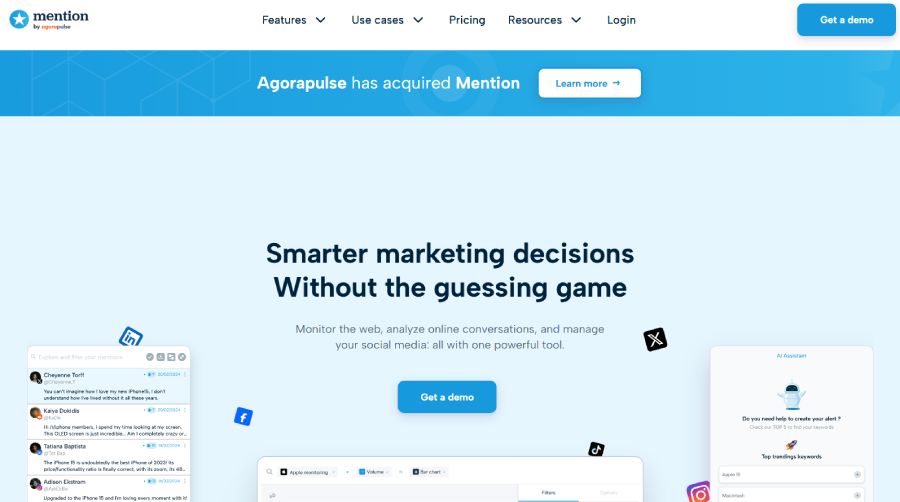
Mention is a tool that helps you see when your brand is talked about on blogs, forums, and social media in real time. It gives you a lot more information than Google Alerts, with options to sort the mentions by sentiment, where they’re from, or how important they are.
You can create alerts for your brand, product names, or important words that your audience is interested in. Mention also gives scores to influencers, helping you see which mentions are important to respond to.
It also allows you to reply to mentions right in the platform, making it simple to connect or follow up when needed. Even though it’s a paid tool, the extra exposure is valuable, especially if you’re focusing on content or public relations strategies.
AnswerThePublic
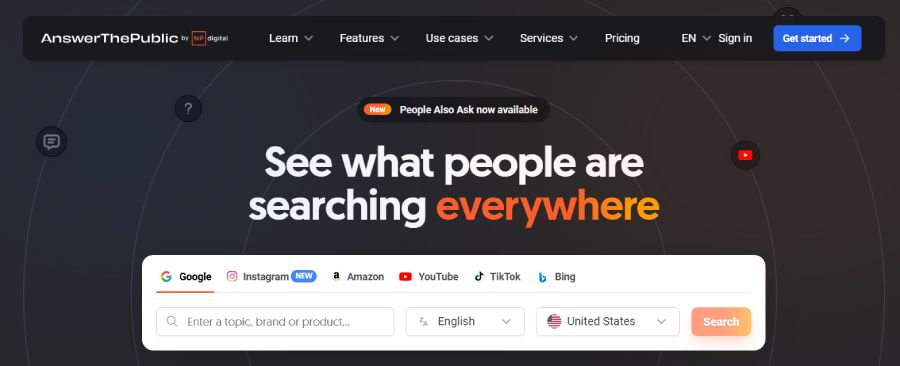
This isn’t like regular mention-tracking tools, but it’s great for finding out how people discuss your brand (or similar brands) online. Type in your brand name or a keyword, and you will see a visual map showing real questions, comparisons, and search terms from users.
This helps you find when people talk about your type of product without mentioning your name. You can use this information to make content, start PR campaigns, or find out how people talk about competitors online. It’s really useful if you’re working on a plan for specific terms or how people see your brand.
Hootsuite
It is mainly known for managing social media, but its monitoring tools are also great for keeping track of mentions on different platforms. You can create special feeds to keep an eye on your brand name, product keywords, or campaign hashtags as they happen.
These streams collect information from platforms like X, LinkedIn, Instagram, and YouTube, helping you see what people are talking about in one place.
You can reply right from the dashboard, which makes it simple to communicate. It is great for finding quick mentions and posts made by users that might not appear in regular online searches.
Brandwatch
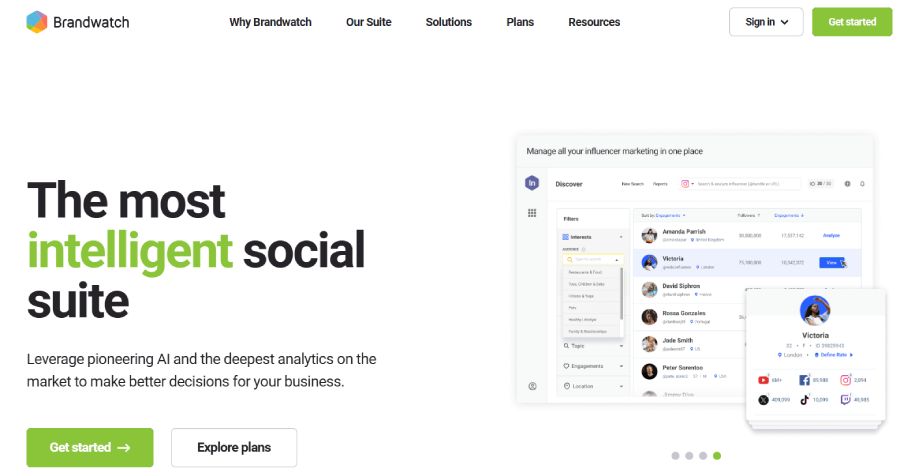
It is a strong tool for understanding brands, made for teams that need important information for large businesses. It watches millions of places, like blogs, forums, news websites, reviews, and social media.
Brandwatch uses artificial intelligence to find trends in sentiment, related topics, and how people see brands in various areas. It is really helpful if you’re doing big PR campaigns, handling many brands, or need to track how visible a brand is over time.
SEO teams can keep an eye on how often people talk about your brand, the situations they talk about it in, and whether those mentions are mostly good or bad.
Strategies to Get Brand Mentions
If you want more people to talk about your brand, you need to give them something interesting to discuss. Getting mentions means being in the right spots, saying the right thing, and doing it at the right moment. Here are five effective ways to get your brand noticed more in blogs, news, social media, and communities.
Guest Blogging
This method can still be effective if you do it correctly. Stop using the old method of sending the same standard posts to many low-quality blogs. Instead, aim to reach important and relevant websites where your content can really help.
Here’s how to deal with it: In Ubersuggest, search for a topic that your audience is interested in. Next, check the Content Ideas report to find the best articles about that topic. Let’s take email marketing as an example topic.
Create a list of 25 to 50 websites that share similar topics and have a lot of interaction from their audience. Focus on blogs that have real readers. You might want to write a blog post called “Top Email Marketing Tips to Use in 2025”.
Create content that covers what’s missing. After that, go to each website, read the instructions closely, and stick to the rules. Make sure you understand what the blog needs.
Look at their current articles. What’s missing? What new ideas can you bring? Add the natural feel of the brand. You don’t have to add a link. Just mentioning your brand naturally as part of a helpful example or tip is enough.
Make sure to share your post as much as you can. Reach out to people online, send them emails, and do whatever you need to do. Every guest post you share is another chance for people and websites to discuss your business.
Also Read: How to Create Engaging Blog Content as a Beginner?
Start Social Media Campaigns Made for Sharing
Want people to talk about you on X, Reddit, LinkedIn, and more? Make campaigns that people will want to be part of. A good social campaign can really change things for the better.
Great campaigns engage people, connect with their emotions, and fit in with their interests and activities. After you really know your audience, make a campaign that takes advantage of what they like.
Make sure your campaign has clear goals, and pick the best platform for your campaign. Once you have the basic information, these strategies are good places to begin:
- Start a challenge where users create and share their own content. Ask people to share pictures, how they use the product, or helpful advice about it. Encourage people by showing them their progress instead of only giving rewards.
- Make unique hashtags that are easy to recall and encourage people to join in. Use tools like Hootsuite or Brandwatch to keep an eye on these.
- Create live interactions. Reply to posts, share creative submissions, and highlight participants. This makes it easier for people to see and talk about.
Social media changes quickly. When you get the timing and situation right, people will naturally start talking about your brand.
Get Media Coverage Through Digital PR
Public relations isn’t only for big companies. Digital PR helps small businesses and individual founders get noticed in big magazines, podcasts, and specialized blogs. Think of it like a relative of link building.
Instead of directly trying to get backlinks, you’re getting media attention that helps you look trustworthy and makes you more visible through mentions even if they don’t link back to you. Here’s how to begin:
- Register for HARO, Featured.com, or Qwoted. These services send daily requests from reporters who need information from people.
- Reply fast. Reporters have to finish their work quickly. Provide brief, memorable answers that help them do their work more easily.
- Don’t promote too much. Focus on providing value, and include your brand name naturally in your title or when you mention a quote.
Even if you don’t have a backlink, being featured in articles on specific industry sites or friendly platforms like Forbes or TechCrunch helps your brand’s SEO because people will see and recognize it.
Create Experiences that People Will Want to Talk About
Customers mention what is different or special. If your onboarding is easy, your support is friendly, and your product really helps with a problem, people will talk about you. On Reddit. In YouTube comments. To make the most of these customer service opportunities:
- Ask satisfied customers to tell you about their experiences. It doesn’t have to be a full review; just a screenshot or a short post is fine.
- Check how people feel about the brand and user-generated content using review websites and brand tracking tools. You’ll find mentions you didn’t know about.
- Answer in public. Talking about brand mentions, even those without tags, helps create community and make your brand more visible.
This is a long-term plan. But it leads to a constant flow of genuine, positive mentions of the brand over time. If you provide amazing help and guide your customers well, they will leave great reviews online.
You can also keep an eye on what people say about you on review sites like Yelp. If someone says nice things about your work, say thank you to them. If you receive bad feedback, try to fix the problem. It’s an easy strategy, but it gives great results.
Team Up With Influencers Who Really Use Your Product
Influencers are not just famous people in the business-to-consumer world anymore. Actually, small influencers and niche creators can bring more value to a brand than famous people, especially if they are part of your industry. Here’s how to work together with these influencers in a smart way:
- Find creators who fit well with your area. Find podcast hosts, Substack writers, YouTubers, or LinkedIn users who connect with your audience.
- Give them something worthwhile. That could be getting early access, sneak peeks, or shared content.
- Don’t try to make a script work if it doesn’t. Let them mention your brand in a style that matches their voice and their audience.
These kinds of mentions often seem more genuine, are shared more, and are more likely to be recognized as important for brands in search results or AI-created content.
Convert Mentions Into Links
We understand what you’re wondering: “Didn’t you say Google is getting away from links?” That’s correct. But it hasn’t happened yet. Right now, good quality backlinks are still important.
They still affect how well you rank in results pages. One way to improve your website is by turning mentions of your brand that don’t have links into links. The first step is to find a mention that doesn’t have a link using one of the tools we showed you.
Hootsuite, Google Alerts, Mention, and Brandwatch are all good tools. Next, use Ubersuggest to see the site’s domain score. After you type in the website name and click “Search,” you’ll see the Traffic Overview with this information:
- Domain Authority
- Backlinks
- Organic Traffic
- Main Pages
If the site has a good score (usually 40 or more), reach out to them politely and ask if they can turn the mention into a link. You should reach out to the owner of the website or the writer of the article. Give this a try:
Hello [Name of site owner],
I noticed you talked about my website in [name of article]. I just wanted to say thank you for the shout-out.
Could you please add a link to our homepage here: https://site.com? Thanks again for mentioning me.
Best regards,
[Your name]
Most website owners and writers will gladly give you a link if they have already said nice things about you. It only takes a few seconds. You don’t need to use this method for every “brand mention you” come across. Try to get more people to mention your brand and turn some of the best mentions into links to your website when it’s a good idea.
Brand Sentiment vs Brand Mentions
Brand mentions aren’t just nice to see; they should actually make a difference. If you’re putting money into digital PR, guest posts, or working with influencers, you want to see if they’re helping you get results. Here are some easy ways to measure how much value brand mentions bring back:
Keep Track of Branded Search Volume Changes
One of the easiest signs that more people know about a brand is when more people search for its name. When more people are looking for your company name, or product, instead of just general terms related to your industry, it means there’s more interest.
This is probably because your brand has been mentioned recently. Use tools or keyword research sites to see how often people are searching for your brand. Look at these numbers before and after important PR campaigns, partnerships with influencers, or media coverage to see if there’s a connection.
An ongoing increase shows that people are talking about your brand, which is helping to create awareness and interest. To get a clearer ROI analysis, match the times when search activity goes up with certain mentions or campaigns.
Then, look at how users behave afterward, such as how long they stay on the site or if they make a purchase. This approach helps you go beyond superficial numbers and link how well your brand is seen to real results. This lets you make better choices when spending on PR or working with influencers.
Monitor Referral Traffic
Referral traffic is an important measure for checking how well brand mentions work on different sites. When people talk about your brand online, like in articles, blog posts, or by influencers, they often include links to your website.
These links take people to your website, and you can monitor them with UTM codes. Look at both how much traffic you have and how good it is. Check things like how many people leave your site right away, how many pages they visit in one visit, and how many end up taking an action you want, like making a purchase.
Good referral sources usually show that the people who hear about the brand are a good match for your intended customers. Also, if you watch how users from certain mentions go through your sales process, you can give a dollar value to their involvement, which makes your ROI calculations stronger.
By looking closely at different ways people find your business, you can focus on the partnerships, channels, or types of content that bring in a lot of good visitors and give you noticeable results.
Check Backlinks from Mention Campaigns
Links from brand mentions are important for search engine ranking and also help to measure the success of a marketing campaign. Use tools like Semrush to check for new links that appear when your brand is mentioned online.
The number, quality, and trustworthiness of these backlinks help improve your rankings, making it easier for people to find your website. To check if the campaign was worth it, look at how much more traffic you got to your website and how much better your keywords ranked after the campaign that got your brand talked about.
You can also give a rough dollar value to backlinks based on how much they cost in paid ads or how much they help with SEO over time. Some tools can show you how much traffic each backlink might bring.
Good backlinks from trustworthy sources improve your brand’s reputation and reliability, resulting in lasting benefits. By linking brand mentions to SEO gains, you can better explain why investing in content marketing and public relations is worthwhile because it leads to clear and ongoing benefits for your website’s visibility.
Check the Quality of Leads and Mentions in Sales Conversations
It’s important to see how mentions of a brand affect sales talks and the quality of leads to understand the real return on investment, not just clicks or views. Sales and marketing teams should work together to identify potential customers who mention seeing or hearing about the brand from certain sources.
Tools like CRM systems and customer feedback forms can help collect this information when talking to customers. Also, salespeople can learn to ask how potential customers found out about your brand and document their answers.
Better leads, measured by how likely they are to convert, the size of the deal, or how well they match with customers, often come from important mentions by trusted brands. You can better understand your ROI by comparing the success rates of leads that came from mentions with those from other sources.
Over time, this helps figure out which kinds of brand exposure bring in more paying customers. This method makes sure that building a brand is seen as important and helps attract the right kinds of valuable customers.
Set Baselines and Compare Every Month
To accurately measure the ROI from brand mentions, it’s important to set baselines for KPIs like branded search volume, website traffic from referrals, backlinks, quality of leads, and sales conversions before starting a campaign.
By having a clear starting point, you can track how brand mentions improve over time. Check these numbers every month to find trends and see how certain campaigns or mentions affect them. Tools like Google Data Studio, Tableau, and Excel dashboards can show trends and unusual patterns clearly.
Think about external things like the time of year or other marketing activities to make sure you’re not wrongly blaming results. Comparing results from month to month helps make quick decisions. If a brand mention plan isn’t working, you can easily change it.
This continuous way of measuring creates a collection of past performance data, which helps make better predictions and plans. Regularly checking how well your PR, influencer marketing, or digital content efforts are doing helps show that these investments are improving your brand and adding value to your business.
Final Thoughts
Brand mentions are now an important part of public relations and content marketing. They are key to modern SEO. As crawlers evolve from just looking at links to understanding meanings and specific topics, how and where people talk about your brand online affects how visible, credible, and trustworthy your brand appears.
Brand mentions help improve your online presence in many ways. They build your expertise and trust, enhance local searches, increase visitors from other sites, and naturally lead to more links to your content.
They connect technical SEO and brand storytelling, helping with search visibility and building trust over time. If you want to improve your rankings, get good leads, or prepare your online strategy for the future, using brand mentions is a smart and lasting way to grow your influence.
By keeping an eye on brand mentions, earning recognition, and improving how you respond to them, you’re not only boosting your SEO but also building a strong online presence for success in the long-term.
FAQs
Do brand mentions help SEO even if there’s no backlink?
Yes, brand mentions that aren’t linked still help with SEO. Google’s systems have improved to find and understand mentions of brands that aren’t directly linked. These mentions help crawlers connect your brand with certain topics, industries, and keywords. Even though they don’t directly pass link value like backlinks do, they help build your brand’s online presence, relevance to specific topics, and local SEO. When mentioned multiple times on trusted websites, unlinked mentions can affect how crawlers grade your site.
Are brand mentions as useful as backlinks for SEO?
Brand mentions are useful, but they don’t fully take the place of backlinks. Backlinks share authority between websites, helping one site rank better in results pages. Brand mentions help in ways like building trust, staying relevant to the topic, and improving SEO signals related to the brand. A good SEO plan should include two key things: getting backlinks to strengthen your website’s authority and having your brand mentioned to increase visibility and trust.
How can I find out when my brand is mentioned online?
It’s easier to keep an eye on brand mentions using tools like Brandwatch, Brand24, Mention, Hootsuite, or Ahrefs Alerts. These tools let you know when people talk about your brand online, like on blogs, news sites, forums, or social media. Some tools also check how people feel, how far your message spreads, and how much people interact with it. Consistently checking these mentions helps you know when to ask for backlinks from mentions that don’t link to you.
Should I reach out if I see my brand mentioned but isn’t linked?
If you find a mention of your brand that doesn’t have a link, it’s usually a good idea to ask the writer or publisher for a link in a friendly way. If people are already saying good things about your brand, many will be willing to add a link to it, especially if it helps their readers. This method, known as link reclamation, is a smart and safe way to create backlinks and improve the SEO value of mentions that already exist. Make sure your message is friendly and tailored to the person you’re contacting.
Which kinds of brand mentions are best for SEO?
Not every brand mention is equally important. Mentions from trusted websites, popular news sources, or government and educational sites are very important for SEO. People and crawlers trust these sources, so their references are more important. Also, talking about your brand along with important keywords or topics helps strengthen your expertise in that area. While any positive comments can help you get noticed, those from trusted sources related to your field are especially important for improving your ranking and boosting your brand’s reputation.