
In the busy world of online shopping, first impressions are made quickly, and usually, your product description is the only way your product can communicate. Without a salesperson, a physical shelf, or a hands-on experience, your words need to persuade customers completely.
A good online product description tells you what the product is and why it is important to you. It helps people feel confident, makes them want to buy, provides answers, and finally leads to more sales.
Many online stores don’t do well because they use common language, repeated phrases, or dry technical details. In a market with many similar products, strong descriptions can help you stand out.
They can help more people find you online, reduce how many people return products, and increase sales. This post looks at what makes some ecommerce product descriptions better than others and shows you how to create content that clearly communicates, has personality, and serves a purpose.
What Makes a Good Product Description?
Clear and Engaging Words
A good product description shouldn’t sound like a technical guide or filler content, it should feel like a friendly chat. The language is lively, meaningful, and has a clear aim. Every sentence is made to be smooth, build interest, and pull the reader along.
There’s a natural flow to how ideas are presented, described, and repeated. Words are selected thoughtfully to match the vibe of the product and the spirit of the brand, making a smooth link between the item and what the customer expects.
The style can be fancy, playful, confident, or calming, but it’s always unique. Instead of just listing qualities, the writing has a friendly and personal touch, making it feel more like a conversation than a business deal.
The language is confident and makes people feel trust, but it is still friendly and easy to understand. A really good product description can make even a regular item seem special and interesting enough to notice.
Reflects Brand Identity
A good product description always reflects the unique style of the brand that created it. It doesn’t just talk about the product; it shows what the company stands for, what it cares about, and how it connects with its customers.
The words, style, and organization are all selected to match the brand’s identity. For example, a luxury brand will use nice and proper words, while a casual brand might be more fun and friendly in their tone.
Consistency helps people notice and trust you. When a customer looks at a product description, it should seem like the brand is speaking to them. The tone should be the same as what’s on the website, social media, and packaging.
The way the words are used connects everything, making each product seem like a part of a bigger story. If things aren’t matched up, the descriptions might seem scattered or easy to forget.
Content that Connects with People
A great product description doesn’t just say what the item is; it makes the reader imagine how good it would feel to have it. It looks at more than just how someone looks; it also connects to their feelings, dreams, and way of living.
Good descriptions show how buying something can make you feel comfortable, confident, excited, or classy. They help people imagine: someone seeing themselves wearing those shoes, sleeping in that bedding, or using that gadget.
The emotional side helps people view the product as something more than just an item; it makes them think of it as an experience or a way to solve a problem. The best descriptions make you feel like, “This is perfect for me”.
This feeling is soft and detailed. It doesn’t make big promises, but it encourages the customer to think that life would be better with the product. It’s the feelings behind the words that change product descriptions from just information into stories that connect with people.
Balanced Simplicity and Detail
A good product description strikes the right balance between giving useful information and being easy to understand. It has all the important details a shopper needs, like materials, size, weight, how it works, and how to care for it, but makes it easy to understand.
Instead of using complicated words or too many details, a good description makes things easier to understand without losing important information. The information is there, but it’s arranged and focused on what the customer really wants to know.
Things are not too complicated, and every sentence has a clear reason for being there. Every feature mentioned is there to help with understanding or to be more attractive. The result is a description that teaches in an interesting way and sells without being pushy.
It helps shoppers feel sure about what they’re buying, making the experience fun. Finding the right mix of information and simplicity often helps people feel more confident when they click the “add to cart” button.
Structurally and Visually Appealing
How something looks is just as important as what it says. A great product description is easy to look at and easy to understand. It’s set up so it’s easy to read, with clear titles, short paragraphs, and a logical order.
Bullet points are used well to show important features, and the layout makes it easy to read, especially on phones. The way it’s arranged attracts attention instead of pushing it away. Each line is carefully chosen, and it fits well with the product pictures around it.
The words and pictures work well together to tell a complete story. There’s also space around the text, which makes the layout neat and easy to read. Having the same look on all product pages makes the brand seem more professional and trustworthy.
When the way things are organized and shown is done well, the description blends into a bigger brand look that looks neat, up-to-date, and thoughtful. It’s the way the words and the design work together that makes people want to buy.
Also Read: Top 20 Negative Hooks to Increase Reach That Drive Engagement Fast
Tips to Create Great Product Descriptions
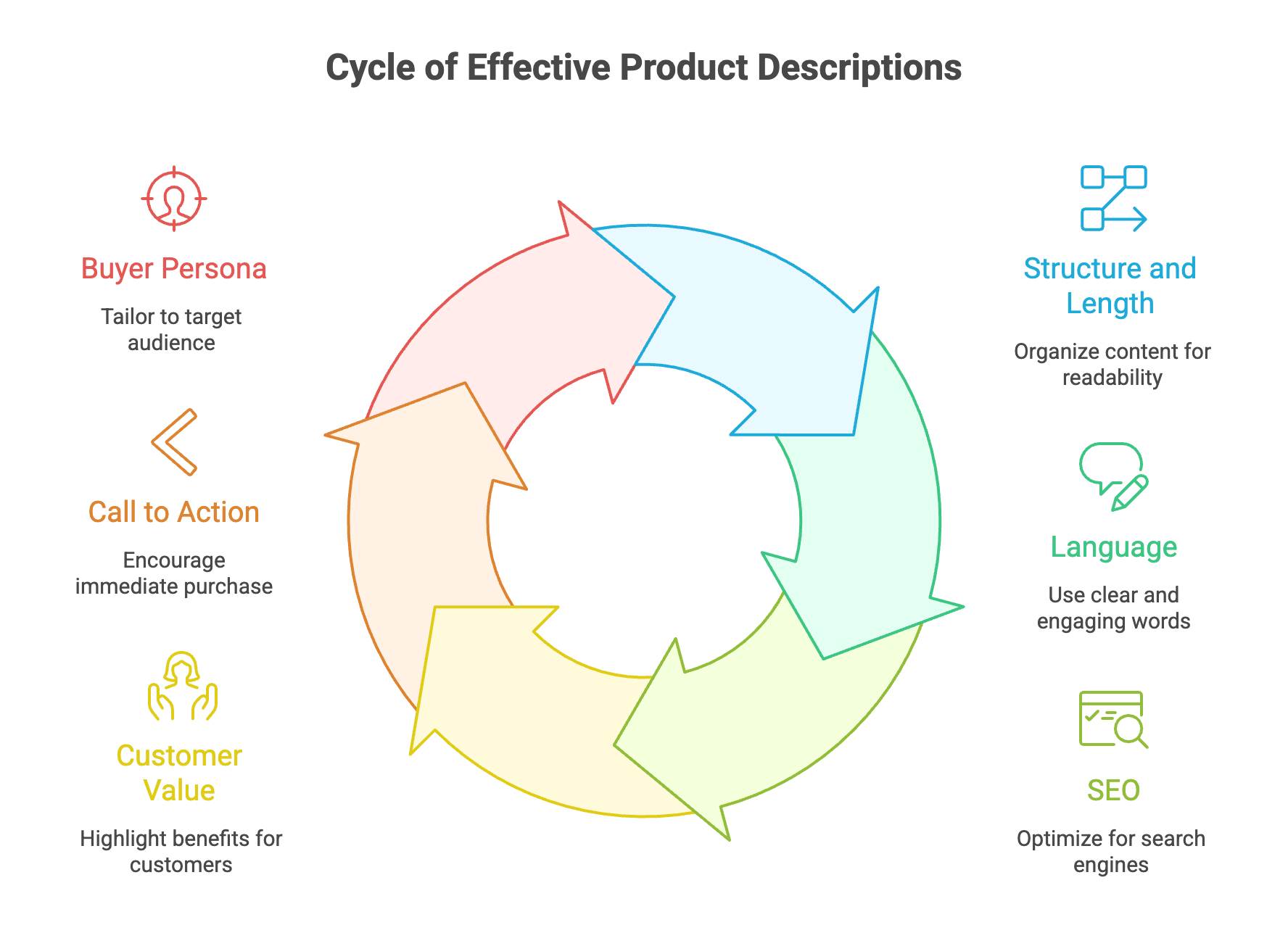
Structure and Length
Before you start writing, think about how you want to organize your description. People reading online have a hard time focusing, and long paragraphs can quickly make them lose interest. A good product description should be simple to read, so important details are easy to find. How something looks is as important as what it says.
- Use short sentences. Try to keep them 20 words or less to make them clear and easy to read
- Split the content into small pieces using bullet points and line breaks
- Use headings and subheadings to explain what the product does and how it helps
- Add pictures or icons of the product to make it look better and easier to understand
Language
The words you use can greatly affect how a product description is received. Using clear, easy-to-understand language that focuses on benefits helps build trust and keeps the user interested. Skip the fancy words and focus on what really matters, how your product helps solve a problem or makes the customer’s life better.
- Use clear and professional language that shows you know your product well
- Show what makes your product special with its unique features and clear advantages
- Explain how the product will make the customer’s daily life or experience better
- Don’t use extra words like “very,” “excellent,” and “great quality”, let the facts speak for themselves
SEO
A good product description should help people find it and encourage them to buy it. That means using the right words in your content to improve it, but still making it sound natural. Google’s algorithms are changing to prefer content that is natural and helpful, so using too many keywords isn’t a good idea anymore. Good SEO should seem easy for the reader.
- Use popular words that many people search for but aren’t too competitive to get noticed more
- Use keywords naturally in your writing, titles, and metadata
- Organize your content with easy-to-understand headings and subheadings, making sure it flows in a logical order
- Don’t use long sentences in a passive voice. They make your writing less clear and can hurt your SEO
Customer Value
One of the biggest mistakes in online selling is showing the features of a product without saying why they are important. Your aim is to link those features to real-life results, this is where the feature-benefit method works well. Instead of just describing the product’s features, explain how it improves the buyer’s life or helps with their problems.
- Describe what something does and how it helps
- Think about the emotions and real benefits, what will the customer get or what problems will they escape
- Use real-life examples to show how the product is used in everyday life
- Use easy-to-understand language that highlights the benefits and connects with your readers, instead of using complicated terms
Call to Action
You’ve informed the customer and got them interested, now what. A strong call-to-action is the last push they need to make a purchase. Instead of using general CTAs, customize yours to highlight the value and advantages you talked about in your description. Be sure to sound confident, clear, and focused on the customer.
- Explain the main advantage of the product to highlight why it’s valuable before the CTA
- Use convincing words like “Get yours now,” “Feel the change,” or “Buy now”
- Make sure the CTA is easy to see and placed just below the main description
- Use urgency or exclusivity when needed like “Limited stock available” or “Today only”
Buyer Persona
A strong product description talks directly to the customer you want to reach. This means understanding what they want, what makes them unsure, and how they like to talk. Each line should show not just what you’re selling, but also how it relates to your customer’s life, why it’s important to them and how it connects to who they are or what they want to achieve.
- Find out what drives your customers, like their desire for status, ease, low prices, or high quality
- Think ahead and deal with common concerns like, “Will it work?” or “Is it simple to assemble?”
- Show your brand’s personality in a way that connects with your audience like being fun, knowledgeable, or friendly
- Use natural language and jokes that connect with your customers’ lives
Also Read: Top 5 Tips for Crafting Good Seasonal Content in Any Niche
Mistakes to Avoid While Writing Product Descriptions
Vague or Generic Copy
One of the biggest mistakes in product descriptions is using general words that could describe almost anything. Phrases like “high quality,” “great value,” or “top performance” don’t mean much unless they are explained or connected to something specific.
This vague writing doesn’t help customers understand the product and makes it hard to tell it apart from similar ones. When descriptions are dull or boring, shoppers don’t find anything special to remember, and they don’t feel encouraged to make a purchase.
Even worse, using the same basic content can make it look lazy or not genuine, especially if it shows up on a lot of different products. In online shopping, since customers can’t feel or try a product, the description has to be very clear and convincing.
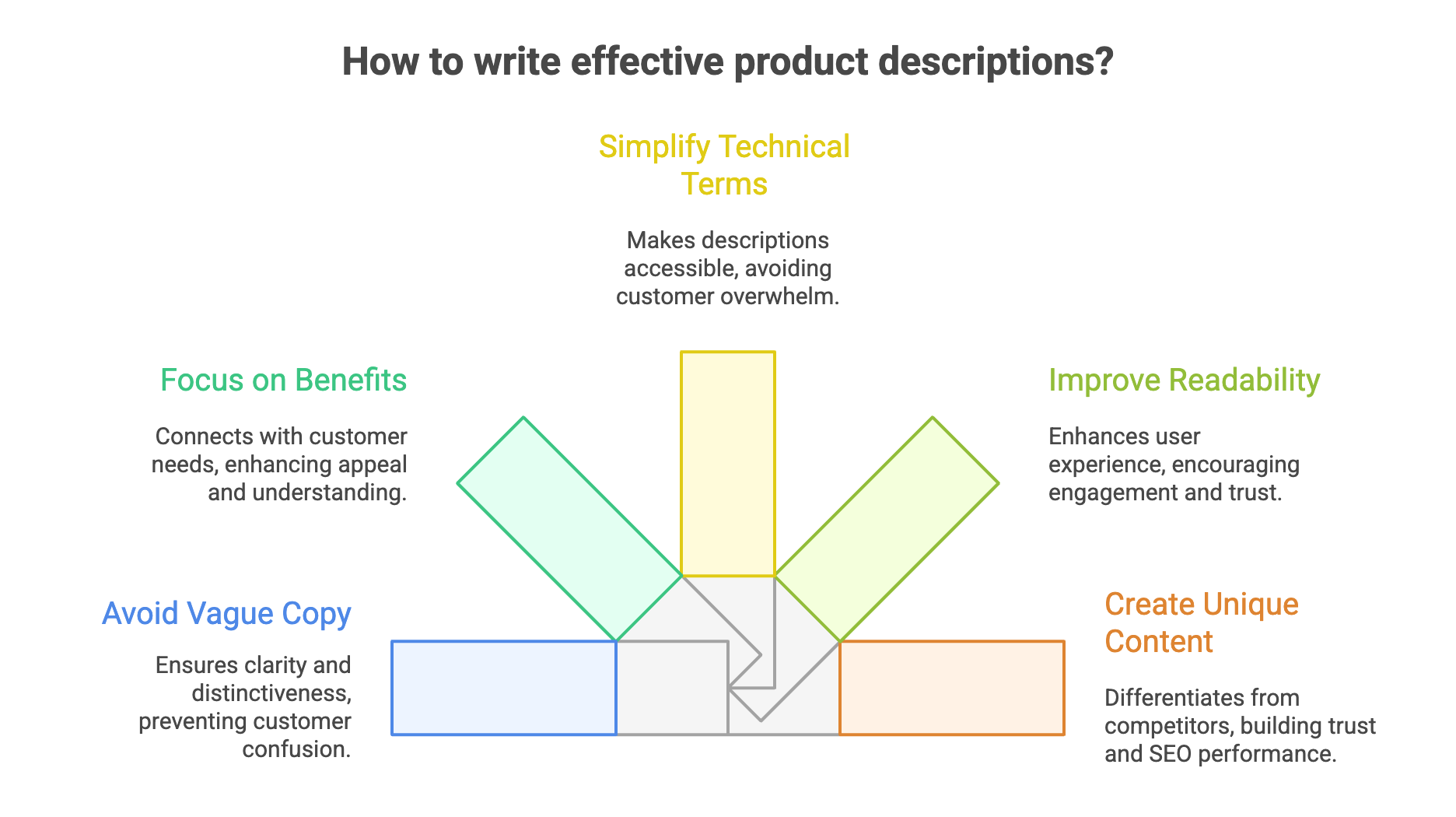
Talking Only About Features, Not Benefits
It’s important to list features, but if that’s all you do, the descriptions can seem cold, technical, or not relate to the customer’s everyday life. Features tell you what the product includes, while benefits explain how it helps the buyer.
When benefits are not mentioned, shoppers have to figure things out on their own. This can lead to them losing interest or feeling unsure. For instance, saying a backpack has “mesh shoulder straps” is helpful, but explaining that these straps “help you stay cool and comfortable during long hikes” makes it more appealing and easy to understand.
Products become appealing when customers can picture how they might use them or how their features will make their lives better. A description that only talks about the technical details might attract some people who really know about technology, but most buyers want to feel good about their choice or find a way to fix a problem.
Using Too Many Technical Terms
Technical details are important, especially for things like electronics or appliances. However, using too much complicated language can turn away regular customers. When descriptions use many difficult words, abbreviations, or technical language, they become confusing and unappealing to read.
Shoppers might feel confused, overwhelmed, or bored if they can’t easily understand the words. Even people who know a lot about technology like clear communication. Complicated descriptions can make it feel like the brand is talking down to the customer instead of having a friendly conversation with them.
A good description turns complex words into easy-to-understand information while still being correct and clear. If customers have to leave the page to find out what something means, it makes using the product difficult.
Ignoring Readability and Format
Even good content can fail if it’s not set up correctly. Long blocks of text, big paragraphs, or different styles can make descriptions hard to read, especially on phones. In online shopping, it’s important to be clear and easy to understand.
If a user can’t quickly find what they need, they might leave the page and go to another site. Bad formatting makes people think you’re not very professional. A messy or confusing design makes a brand look rushed or careless, which can lower people’s trust in it.
Good formatting makes the content easier to read. Using short paragraphs, bullet points, bold words, and plenty of space helps direct the reader’s focus. A good-looking product description not only appears nicer, but also works better.
Copying Product Descriptions from the Manufacturer
Many online sellers still make a big mistake by depending on the standard descriptions provided by manufacturers. These descriptions are usually boring, too complicated, and not meant for any particular group of people or brand style.
Even worse, this content is often copied on many different websites, which can harm your SEO performance by causing duplicate content problems. From a user’s point of view, these descriptions feel dull and often don’t explain why someone should buy the product from you.
They also lose the chance to build trust or feelings, only sharing simple facts. In a competitive online shopping environment, being different is important. A custom product description, even if it’s short, makes it feel more personal and trustworthy.
Final Thoughts
In online shopping, since buyers can only see and read, product descriptions are very important for helping them make choices. A good description does more than just share information; it connects the product to the customer.
It shows worth, creates feelings, and builds trust. Pictures may catch your eye at first, but it’s usually the description that makes you want to act. Good product descriptions show your brand’s style, connect with your audience, and explain not just what the product is, but also the value of having it.
By steering clear of common errors and emphasizing clear information, advantages, and emotions, your product descriptions can improve the shopping experience and make your business stand out in a busy market.
No matter if you’re writing about one item or a whole list of items, the key idea is the same: if you want people to click “Buy,” you need to give them a good reason that makes sense to them. Powerful words help sell things and also create trust.
FAQs
What is the difference between features and benefits?
Features are the real qualities of a product, like the materials it’s made of, its size, technical details, or the parts that come with it. Benefits show why those features are important to the customer. For example, a feature might be “double wall insulation,” and the benefit would be “keeps your drink hot for 8 hours”. Good product descriptions include both, but they should focus more on benefits because they help customers feel a connection and picture how the product will fit into their lives.
How long should a product description for online shopping be?
There’s no single correct answer, but usually, product descriptions should be long enough to include important details and short enough to keep the reader interested. A good length is 100 to 300 words, depending on how complex the product is. For basic things, a few strong sentences and some bullet points may be enough. For more expensive or complex products, it’s often important to have longer descriptions with sections for features, benefits, and specifications to help people make choices.
Is it okay to use bullet points in descriptions?
Yes. Bullet points are great for showing important features, details, or benefits. They split up the text, make it easier to read, and help customers find the information they want quickly. They work better when you add a short paragraph that explains the product’s story or makes it feel more appealing. Consider bullet points as helpful additions, not as substitutes for interesting writing.
How can I make technical products more appealing?
Even technical products can be improved with language that focuses on people. Think about how technology helps or makes life better for the user. For example, instead of saying “32GB DDR5 RAM,” you could say, “Easily handle many tasks at once without slowing down”. Try to avoid technical terms unless your audience knows them, and always explain the features in a way that shows their benefits. People don’t just buy technology; they buy the performance, speed, or convenience it offers.
Should I use stories in product descriptions?
Yes, when it makes sense. Telling stories makes your product more meaningful and helps people feel connected to it. You don’t need to tell a whole story, but just a few sentences about how the product is made, how it helps with a common issue, or how it can be used in someone’s daily life can be very effective. Telling stories about a product makes it seem more personal, easier to remember, and more attractive, especially in competitive areas like clothing, home items, or health products.