

Summary: Content marketing is among the most successful methods of establishing connections, attracting, and retaining a business’s target demographic. Regardless of whether your aim is to elevate brand recognition, generate leads, enhance your search engine rating, or strengthen consumer trust, you need well-researched material.
Key takeaways:
- Content marketing tools will facilitate all stages of the content marketing life cycle; the identification of the target audience, creation, distribution, analysis, and optimization of the content.
- The tools for social media management enable your company to publish, communicate, track, analyze, and learn about conversations in social media.
- These tools will facilitate marketers to understand and analyze the trends, research opportunities for content, understand the search intent, and to optimize the search visibility of content.
- AI tools such as Jasper, ChatGPT and Claude will significantly speed up content creation, idea generation, editing and optimization, while still ensuring high quality and consistency of the content produced.
- Analytics tools such as Google Analytics 4, Hotjar, and Parse.ly, will generate essential information on user behavior, content performance and provide opportunities to generate new conversions.
- Automation tools such as Zapier, Make or HubSpot Workflows will enable your team to eliminate tedious manual tasks by connecting apps and automating workflows to increase operational efficiency.
- Low-cost and free content marketing tools are available to marketers and small businesses that aim to develop content strategy without a huge investment. The list of such tools includes, but not limited to: Canva, Google Trends, Google Analytics 4 and AnswerThePublic.
- To make the best use of content marketing tools, the following must be applied: audience research, content plan, improvement of the content quality, tracking of the performance, reuse of the content and a robust distribution strategy.
It takes a lot more than simply releasing blog posts and social media updates to master content marketing. Businesses will need to study audience interests, research developing subjects, optimize their material, design visually interesting material, disseminate it across various channels, and track their outcomes routinely.
This is where content marketing tools become indispensable. They may simplify sophisticated tasks, raise efficiency, and provide valuable information that aids marketers in making wise decisions.
These tools, ranging from keywords to content production and analytics to social media management, assist companies of all dimensions in optimizing their workflow and improving their results. Learning more about top content marketing tools can assist you in building a strong marketing strategy and we will see the best 25 ones now.
Best Content Marketing Tools in 2026
With content scattered across multiple platforms, the exact whereabouts of the audience can remain a mystery for many teams. These foundational tools are what teams will rely on to build a coherent, cross-channel marketing strategy and achieve clear ownership of the execution.
Sprout Social
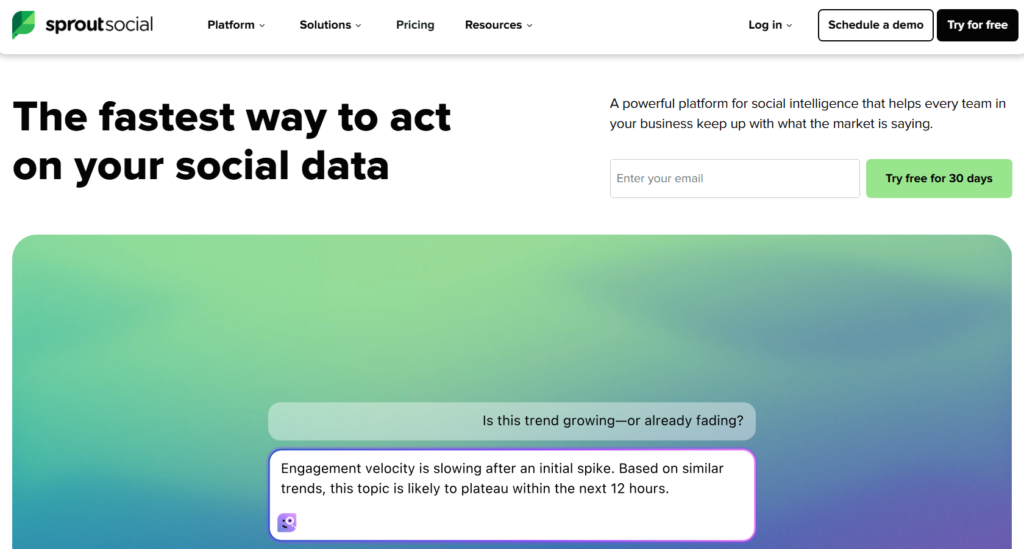
Sprout Social is the intuitive social media management tool built to drive smarter, faster business impact from organic and paid social investments. It functions as a unified platform for publishing, active engagement and AI-powered customer care, all in a streamlined workspace.
With human-centric AI and sophisticated analytics that parse over one billion messages per day, Sprout filters out the digital noise and delivers ready-to-act social intelligence.
Instead of piecing together disconnected data from disparate applications manually, Sprout leverages its patented ViralPost technology to make publishing more precise, distributing content automatically at the optimal send time.
The user-friendliness of Sprout streamlines onboarding to an average of 34 days so teams can get more time dedicated to driving a 268% ROI.
HubSpot Marketing Hub
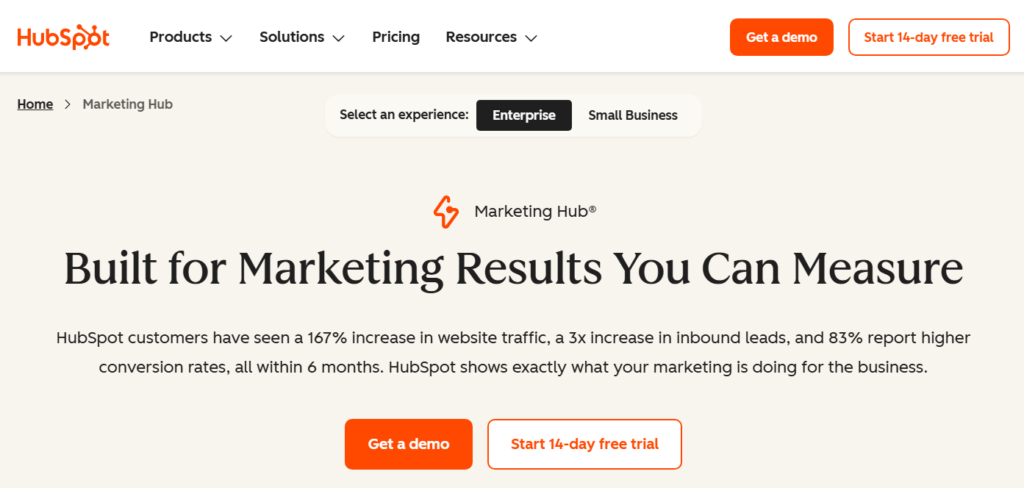
The HubSpot Marketing Hub is a fully integrated platform of CMS, email, and social tools. By connecting to top-of-funnel content attraction strategies, the platform streamlines your entire marketing workflow through automated nurture sequences and real-time ROI tracking.
Semrush

Semrush expands to the entire content production lifecycle by allowing marketers to discover topics, perform technical audits on competition, and find optimization recommendations in order to gain a better digital presence.
BuzzSumo
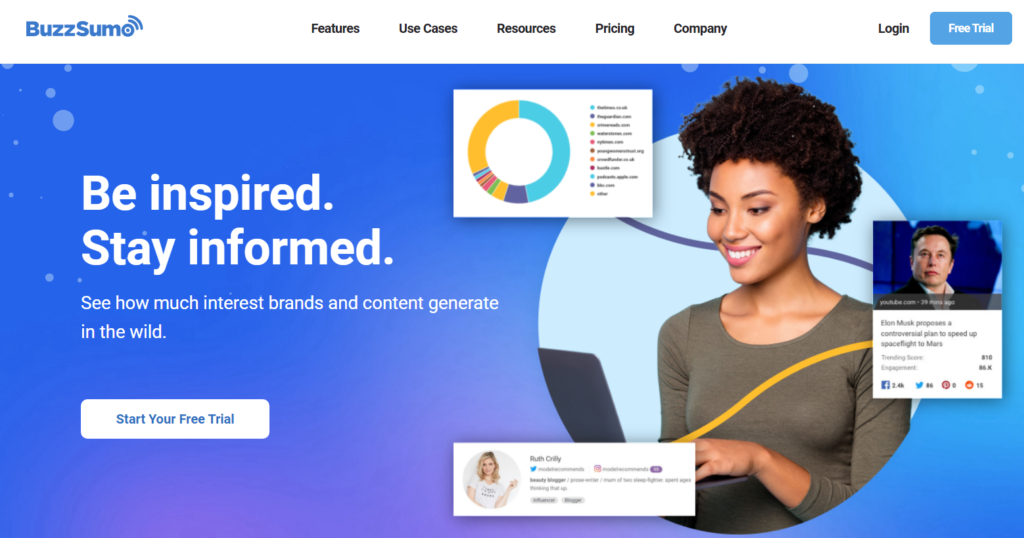
BuzzSumo acts as an extensive search and analytics index, delivering unmatched content research and trend spotting capabilities across the web. It analyzes global social engagement data to surface engaging content and topics.
Canva

The graphic design platform empowers teams of any skill level to design and share professional brand-aligned visual content with an extensive library of customizable templates, optimized for any channel.
Also Read: Why Content Marketing Should be the Cornerstone of Your Digital Marketing Strategy?
Best Tools for AI Content Marketing in 2026
Generic content created from AI can just add more noise to the digital world, but these sophisticated solutions help increase content production speed. Teams can utilize these solutions to ramp up content efforts without compromising the quality, freeing up critical manual bandwidth to focus on the bigger picture.
Jasper
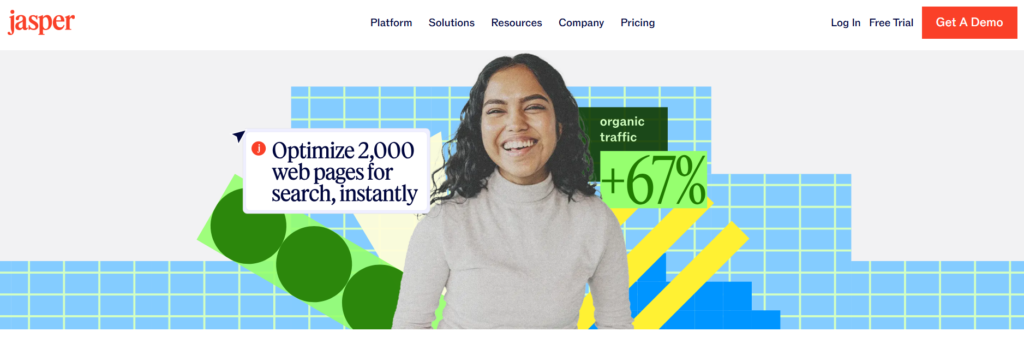
The enterprise-friendly generative writing assistant, Jasper, produces copy with adherence to brand style guidelines and standards. It accelerates large-scale content creation and turns rough drafts of blog posts, product descriptions and other marketing collateral into well-structured final pieces.
ChatGPT
As a powerful large language model, ChatGPT assists teams in kicking off brainstorming, developing editorial briefs, and rewriting complex documents. It works as a real-time writing companion for experimenting with new content strategies and angles.
Claude
Editorial teams will appreciate Claude’s advanced natural language processing, perfect for analyzing and editing long-form manuscripts and refining brand voices. Its context window handles multiple documents for thorough content editing.
Best Tools for Content Marketing Analytics
Consumers want human-centric content that caters specifically to their browsing habits. Diagnostic tools are essential for monitoring how users interact with content and identify opportunities to improve conversion rates.
Google Analytics 4
GA4 lays the foundation for any digital property. Track digital interactions and user paths across devices with event tracking, which informs content creators on how specific assets drive conversions to lead generation and sales.
Hotjar

The visual behavior suite provides insights through real-time user click maps, scroll maps, and anonymous session recordings. Understand your users’ interaction patterns on your site to quickly find and resolve where the friction in the customer journey is caused by poor design.
Parse.ly
Parse.ly is a real-time analytics platform designed for media companies and corporate content hubs to transform raw data into actionable dashboards that help authors identify their top-performing content.
Also Read: How to Write Great Listicle Content and Grab Your Audience’s Attention?
Best Tools for Content Marketing Automation
These systems streamline content distribution processes and close operational gaps to eliminate burnout among growing organizations. Without them, high-priority, strategic marketing initiatives can be hampered by manual processes.
Zapier

The no-code integration platform, Zapier enables custom connections between your various marketing applications and tools to automate repetitive tasks such as saving new leads to your database.
Make

Make offers an advanced visual automation platform to automate complex, multi-step content distribution workflows and large data streams. Digital teams can design custom data transformations and share assets between different cloud storage solutions.
HubSpot Workflows
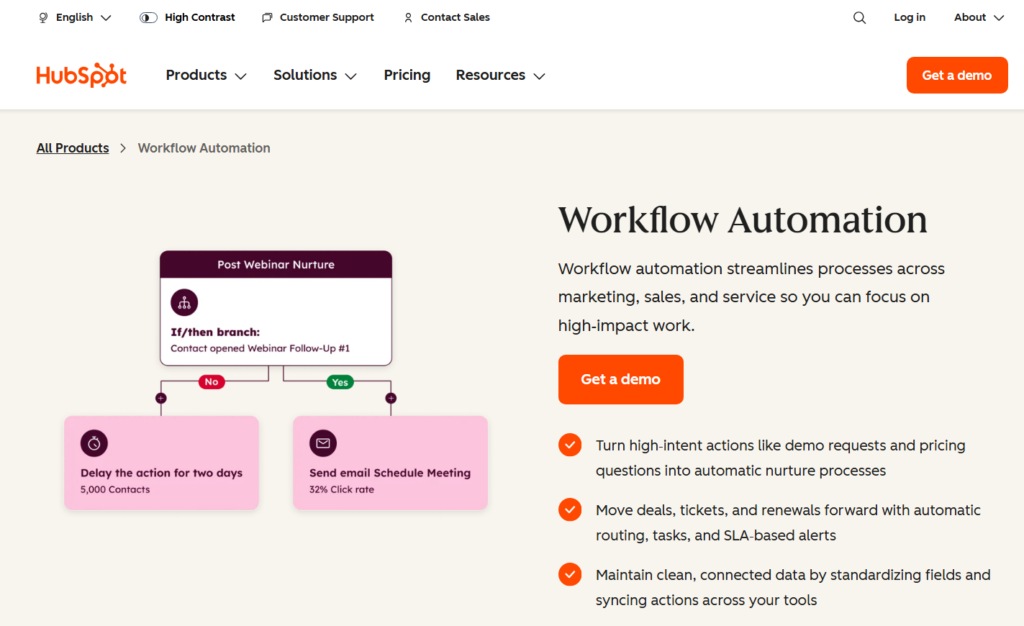
The automated logic builder is used to launch targeted content based on custom user actions and content consumption data. Personalized documentation is immediately sent to prospects after they interact with a specific page.
Best SEO Tools for Content Marketing
Today, search engines value original content over outdated metrics, and content creators should work with tools that offer the deepest insight into consumer queries, intent, and content frameworks.
Ahrefs

The industry-standard index built for technical backlink profiles, organic competitor crawlers, and organic content gap analysis gives teams the granular, structured data needed to emulate competitor organic footprints and uncover unmet consumer demand.
Surfer SEO

The SurferSEO tool takes a look at what current search engine results pages are telling us about how content should be structured, offering us specific scoring and optimization recommendations for word count, heading structure, and keyword usage to meet these requirements.
Google Search Console
Use Google Search Console as a basic, foundational dashboard to accurately confirm that your content appears correctly in search engines, see how often it’s presented and technically indexed, and get an actual report showing what words and phrases users are typing into search engines to find your web pages.
Free Tools for Content Marketing
Solo creators or lean teams make as much out of their time as possible with tools that don’t require capital investment to produce high-value, visually compelling content. The tools listed here give diagnostic feedback or assist with the design of your content.
For those with a strictly $0 budget for marketing tools, we still recommend you don’t miss the free tiers of some foundational platforms, such as:
- Canva: Quickly design graphics for social media dimensions, with access to a library of standard templates.
- Google Analytics 4: Track content and campaign performance, but with the limitations of the zero-cost framework for key traffic and conversions.
Google Trends

Use Google Trends to see what the world is looking for at any given moment, analyze fluctuations in search terms in specific regions and see when topics become particularly popular with seasonal spikes to get a feel for current interest and tailor content accordingly.
AnswerThePublic
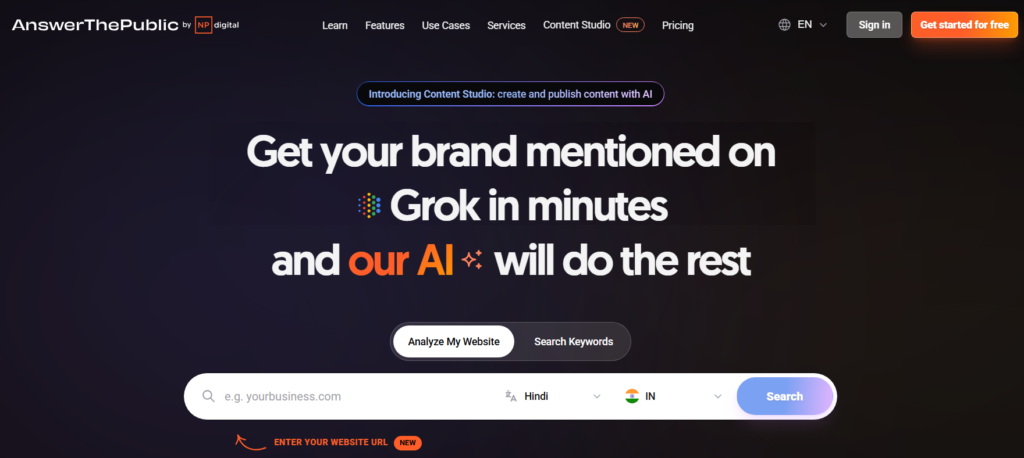
AnswerThePublic is a free tool for marketing, it shows the questions and queries on the internet that people are searching for, by inputting the keyword, a cloud of questions with prepositions and comparisons is generated. These can be used by marketers to know what the audience is interested in to write the most appropriate articles and optimize blogs or social media strategies.
Tools for Marketing Content Operation
Avoid slow content creation processes with complicated internal workflows and multi-level approval queues that put creative tasks on hold. Project environments with a clear structure and oversight will keep your content execution aligned with your content strategy.
Monday.com
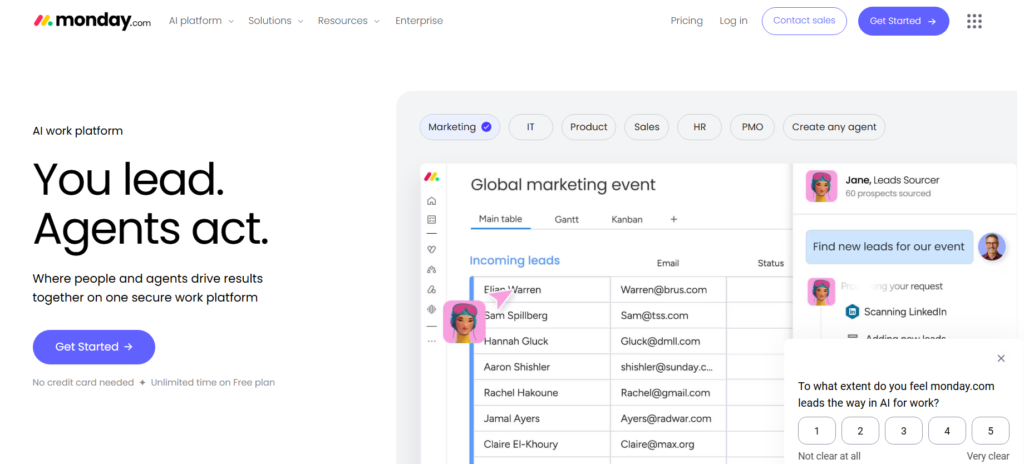
Use the Monday.com content operations management tool as an easy way to organize tasks related to content creation among multiple departments through status fields and Boards to create content calendars, schedule projects, and put approval processes in place with automation and alerts.
Asana
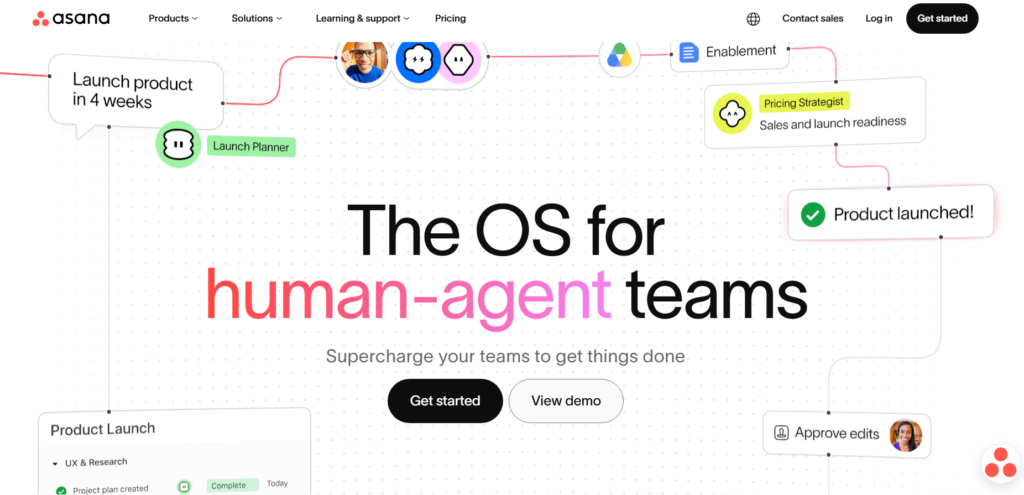
With Asana, creative tasks can be structured by setting project timelines and assigning ownership as the project progresses so that the completion of tasks can be mapped, monitored and organized with calendar and deadline visibility.
Notion (Teams)

Use the Notion teams content collaboration tool as the central hub to keep editorial calendars, content briefs, and brand documentation updated, easily accessed and always available for multiple team members through an integrated, modular document editor.
Tools for Enterprise Content Marketing
To scale content marketing globally while adhering to strict standards and keeping content secure and consistent is vital for global businesses. These tools offer advanced control and security, and they break down workflow silos to effectively manage a massive output of content.
Contently
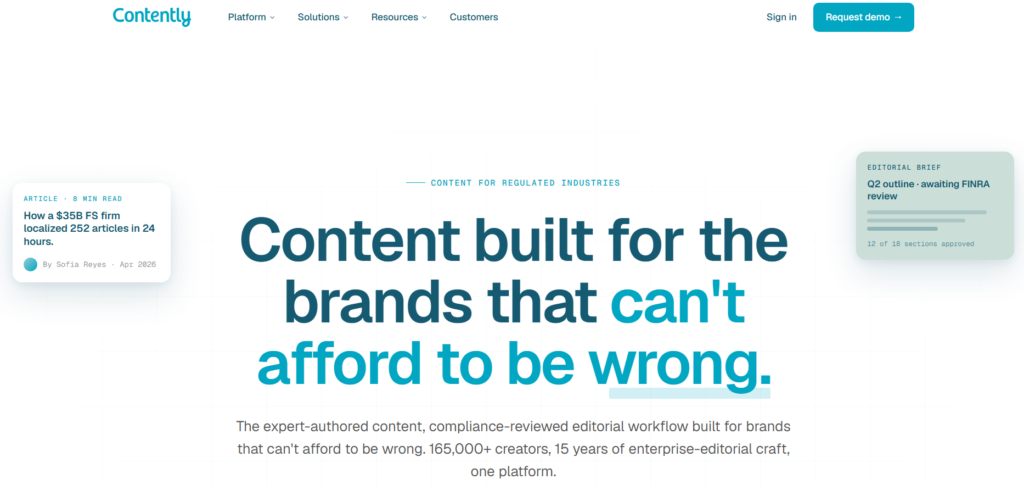
The Contently content management platform combines an advanced set of tools for managing content and a network of vetted professionals with the expertise required for global enterprises. Use it to keep all of your brand assets, brand standards, and content history unified and protected, along with accurate content performance reporting.
Adobe Experience Manager
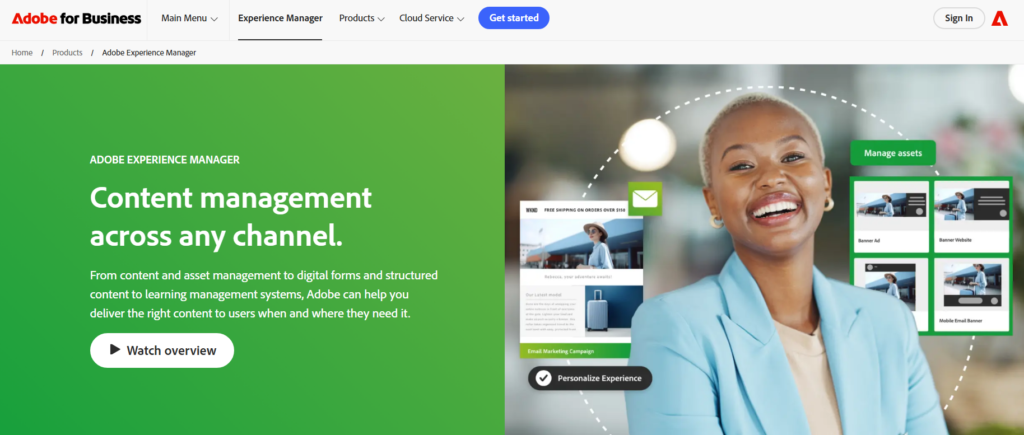
The Adobe Experience Manager is the premier enterprise content management and digital asset management solution for large-scale corporate operations to guarantee a safe place to house all creative properties and brand guidelines, distribute various forms of content across the world in multiple languages, and standardize a powerful brand experience.
Optimizely Content Management

Use Optimizely Content Management to gain command of the marketing campaigns being executed at an enterprise level. Oversee brand-level content assets and plan approval routes, marketing strategies and departmental tasks for any level within an organization.
How to Make the Best Use of Content Marketing Tools?
Research Your Audience
When trying to achieve success with content marketing tools are more useful if used when you are trying to figure out your audience’s behavior prior to creating anything. Tools that help researching will allow you to discover the questions your audience are trying to get answers to.
It will also help find the obstacles they are facing and the knowledge that they need and therefore write accordingly to your audience’s interests and searches, rather than guessing topics and trying to gain traffic or interaction, you will know exactly what to target and by the same token new trends will emerge and ideas for fresh content will come easy as you maintain and grow your audience.
- Use keyword research tools to identify keywords with high search demand and questions that target audiences seek out when searching the web.
- Analyze social media and forum interactions to identify your customers’ challenges and the vernacular that they use.
- Review competitor strategies for their content and identify gaps in the market to offer value that they may not be.
- Research emerging topics within your niche to create trending content that people would want to click on.
Improve Content Quality
These tools are helpful in ensuring your content not only is well written but also engaging, visually attractive and search-optimized. Writing assistant tools help you polish your sentences to make them clearer and SEO tools ensure proper keywords for searches, whilst design tools provide compelling visual content.
High quality content constantly builds authority, keeps your readers engaged, encourage shares, and save time on creating better and more effective pieces of content for both you and your audience across platforms.
- Refine your sentences, use the best tone, and make the text as comprehensible as possible by using readability and editing tools.
- Optimize your page with keywords, meta descriptions, headings and internal links for better search rankings.
- Design high quality graphics and visual content that will capture your audience’s attention and keep them engaged.
- Ensure that all content maintains a clear and consistent branding.
Measure Your Results
Actually producing content is only the first part; finding out how effective that content actually is will allow you to refine your strategies for marketing and understand your audience as well as your business needs are being met.
Through the measurement of traffic, interaction, conversion and audience behavior data provides you with the most important part; the ability to optimize current strategy, refresh past or low-ranking articles, and optimize resources.
The monitoring of content performance also allows for changes on the fly and real time adjustments in your campaign based on what is performing and what isn’t in a given moment.
- Use analytic tools to measure engagement, traffic and conversions on your articles.
- Learn your audience’s habits to discover how they respond to different topics and formats.
- Update old or low performing articles with the newest information in the field to ensure high ranking and a wide readership.
- Use data to make informed decisions and optimize for future content ideas, resource distribution, and campaign planning.
Plan Content Strategically
Content marketing tools will help you organize your ideas and build a content plan which follows your business goals. You can plan your content for as far into the future as you wish so as to have consistency and also maintain relevance in the subjects you write about;editorial calendars are a popular form of tool for managing content.
Coordinating publication dates will also ensure you are releasing content strategically, this and managing your workflow will save you last-minute efforts in the office and keep your team on track.
- Use a content calendar to schedule upcoming articles, posts and campaigns in advance.
- Structure your content based on topics, audience or marketing goal in a logical fashion.
- Align publishing schedules to optimize visibility and brand message.
- Manage work-flow to ensure everyone in the team has clear tasks and is responsible for what.
Repurpose Content Effectively
These tools help you to make more from less; one piece of content will serve you in many different ways when repurposed, e.g. a blog post can easily be used for social media, to create videos or to be sent in an email newsletter.
Doing so is more efficient and allows you to reach wider audiences that engage with your brand through different channels. By doing this you will be more efficient and ensure more value from the effort that has gone into each piece of content created.
- Create social media posts, videos, infographics and newsletters from one article and spread it out across different platforms to reach more people.
- Re-brand your original content so it suits different formats, but keep its core message and brand values.
- Optimize your visual and written content with design and editing tools for more engaging content across all platforms.
- Extend your content’s lifecycle with different forms that your target audience may enjoy.
Enhance Content Distribution
No amount of effort put into content marketing will be successful if that content cannot be discovered by your audience. These tools will give your content the ability to be distributed to multiple platforms and increase your visibility and engagement.
Email marketing and social media schedulers, along with automation tools will allow for a more efficient release of your content across channels and save you time which can then be reinvested into producing further valuable content. This will increase the chances of people viewing and interacting with your content.
- Automate publishing and scheduling on multiple channels to reach a wide array of users and build your online brand image.
- Send targeted content via email marketing to segments based on interests.
- Research when your audience is most active online and use this to publish and share content.
- Focus your time on strategy rather than redundant distribution tasks by automating tasks.
To Conclude
Choosing the correct content marketing tools can greatly enhance the caliber of your marketing, its visibility, and its efficiency. They each serve a distinct purpose; this can be creating ideas, creating better material, making them discoverable, making them visually interesting, scheduling social media content, and assessing their effectiveness.
Instead of relying on one specific solution, most successful marketers often use a variety of different tools together in order to effectively handle their content marketing in a complete way across each stage of the content lifecycle.
The best set of tools will be specific to your organization’s needs as well as to the kind of budget, audience and work process you have. You will be able to save time, and money as well as make better marketing decisions with help of the available data and you will have more time to focus on creating outstanding content and meeting your marketing objectives.
FAQs
Are AI content marketing tools effective?
AI tools are fantastic at helping content marketers be productive as they save a lot of time. They also help marketers develop good ideas, they are efficient, and they can help automate and ease many marketing tasks. Some tools like the AI writer can create outlines for a blog or generate social media captions and product descriptions. AI analytic tools can predict trends and tell you about consumer behavior, although AI cannot fully take over from the strategic aspects of content marketing. Used correctly and in combination with human intelligence, they will provide good benefits.
Are free content marketing tools effective?
Free tools such as AnswerThePublic, Google Keywords Planner, Canva, and Buffer are highly useful, particularly for small teams and startups with limited funds. These are wonderful tools for content research, generation, scheduling and for monitoring results although they are sometimes limited by usage numbers and fewer options when compared to the paid versions of some tools. Free content marketing tools can be very useful when trying out different strategies, learning how to produce content effectively or for building a foundation before investing more heavily into other software solutions.
How frequently ought I utilize content marketing tools?
The rate at which you should use content marketing tools depends mostly on your specific tasks and marketing objectives. When it comes to topics and tracking trends you will use tools every day while you will also want to examine how successful your content is each week or each month. These tools can assist your content marketing plan to be far more data-driven. If you use content marketing tools regularly, you’ll discover you can increase effectiveness much more easily.
How should I go about integrating many content marketing tools?
By integrating many content marketing tools, you can make different solutions work well with each other to streamline the workflow of many marketers by cutting down the need to jump from application to application. Tools that have a good level of integration are capable of sync up with other tools that include email, social media, analytics and more. Automation tools can also assist in making solutions work well together even when they have no direct connection by creating work flows with different services. Efficient integration permits content marketers to control campaigns from one location.
Are content marketing tools suitable for beginners?
It’s absolutely suitable. Many content marketing tools offer easy-to-use interfaces and tutorials in order for them to be straightforward for beginners. These tools include things like Buffer, AnswerThePublic, Canva and Google Analytics that don’t demand high technical ability. In the first place it is a good idea for novices to try free versions of these applications. Then, you’ll gradually be capable of taking on a broader array of advanced features when your experience and skills develop further. These tools aid novice marketers produce and disseminate their material with quality and ease.