
The Chiang Mai SEO Conference 2025 (CMSEO 2025) turned Chiang Mai, Thailand into a live SEO laboratory from 10–14 November 2025.
Officially, CMSEO is organized by Smash Digital and Diggity Marketing. In reality, it’s powered by the community:
- 800+ SEOs from agencies, affiliates, SaaS, iGaming, local businesses and AI tools
- 80+ side events across the city
- Deep dives into SEO, AI search, LLMs, entities, local SEO, blackhat experiments, UX and automation
If you’ve only seen CMSEO on social media, it looks like a standard search conference. On the ground, it feels more like a week-long festival of SEO, AI and growth experiments.
CMSEO 2025 at a Glance
- Location: Chiang Mai, Thailand
- Dates: 10–14 November 2025
- Official agenda: Workshops, main-stage keynotes, Community Day, opening & closing parties
- Real agenda: A full “CMSEO Week” with people arriving early, staying late and joining dozens of side events, meetups and masterminds
- Core themes:
- LLM & AI search
- Entities, EEAT & Knowledge Graph
- Local SEO & Google Maps
- Parasite SEO & alternative traffic
- Automation, n8n & AI workflows
- UX, design and conversion
- Experimental / blackhat SEO tactics
Official Dates vs the Real “CMSEO Week
On paper, CMSEO 2025 runs:
10–14 November 2025
covering:
- Mon–Tue: Deep-dive workshops
- Wed: Community Day
- Thu–Fri: Main-stage program
- Evenings: Opening & closing parties, networking nights
In practice, the real CMSEO experience is wider:
- Attendees arrive before the 10th and stay after the 14th
- Agencies, tool founders, and niche communities host their own events around the city
- Many of the most tactical conversations happen outside the main hall – in cafés, rooftop bars, coworking spaces and poolside meetups
If you only attend the “official” sessions, you risk missing most of the nuanced, off-the-record learning.
The Side-Event Ecosystem: 80+ Mini Conferences in One City
The backbone of CMSEO is its side-event ecosystem.
These sessions are:
- Hosted by: Agencies, solo SEOs, SaaS founders, affiliate marketers, regional communities
- Organized via: The CMSEO / Whova app
- Spread across: Cafés, coworking spaces, gyms, pools, hotels, rooftops and bars
Popular side-event themes
- Reddit marketing & “parasite” SEO
From scaling Reddit posting to parasite SEO systems that leverage high-authority platforms. - Digital PR & link building
- PR designed for LLM visibility
- “Build once, get links forever” assets for passive link acquisition
- AI & LLM SEO
- Getting brands into ChatGPT-style answers
- Structuring content for AI retrieval
- Aligning LLMs with accurate brand information
- Expired domains & domain engineering
- Sourcing and evaluating expired domains
- Reactivating legacy link graphs in a safer, more structured way
- Blackhat & experimental SEO
- Spamdex / content farm models
- CTR and interaction manipulation theories
- Negative SEO and reputation manipulation case studies
(presented as high-risk, short-term and often not aligned with search engine guidelines)
- Local SEO & map pack dominance
- Automation with AI, GPTs and n8n
- Maps interaction signals and reinstatement workflows
- Automation & agency scaling
- Reducing manual work by 15–20 hours per client
- Systematizing delivery to scale from 5 to 50+ clients
- Regional & community meetups
- India / Filipino / Aussie SEOs
- Women in SEO
- Niche SaaS and affiliate gatherings
- Lifestyle & fitness
- Yoga, Muay Thai, pickleball, football
- Poolside breakfasts, walk-and-talk city tours
Typical side-event structure:
- Arrival & intros
- Short talk/demo (15–30 mins)
- Q&A and live screen-shares
- 1:1 networking and deal-making
This is where you usually hear the unfiltered version of case studies and experiments.
Day-by-Day Highlights
Monday, 10 November – Workshops Day 1 & Opening Party
The first afternoon focused on positioning, parasite SEO, UX and off-site authority.
Igor Bajsic – Landing Billionaires & A-List Clients
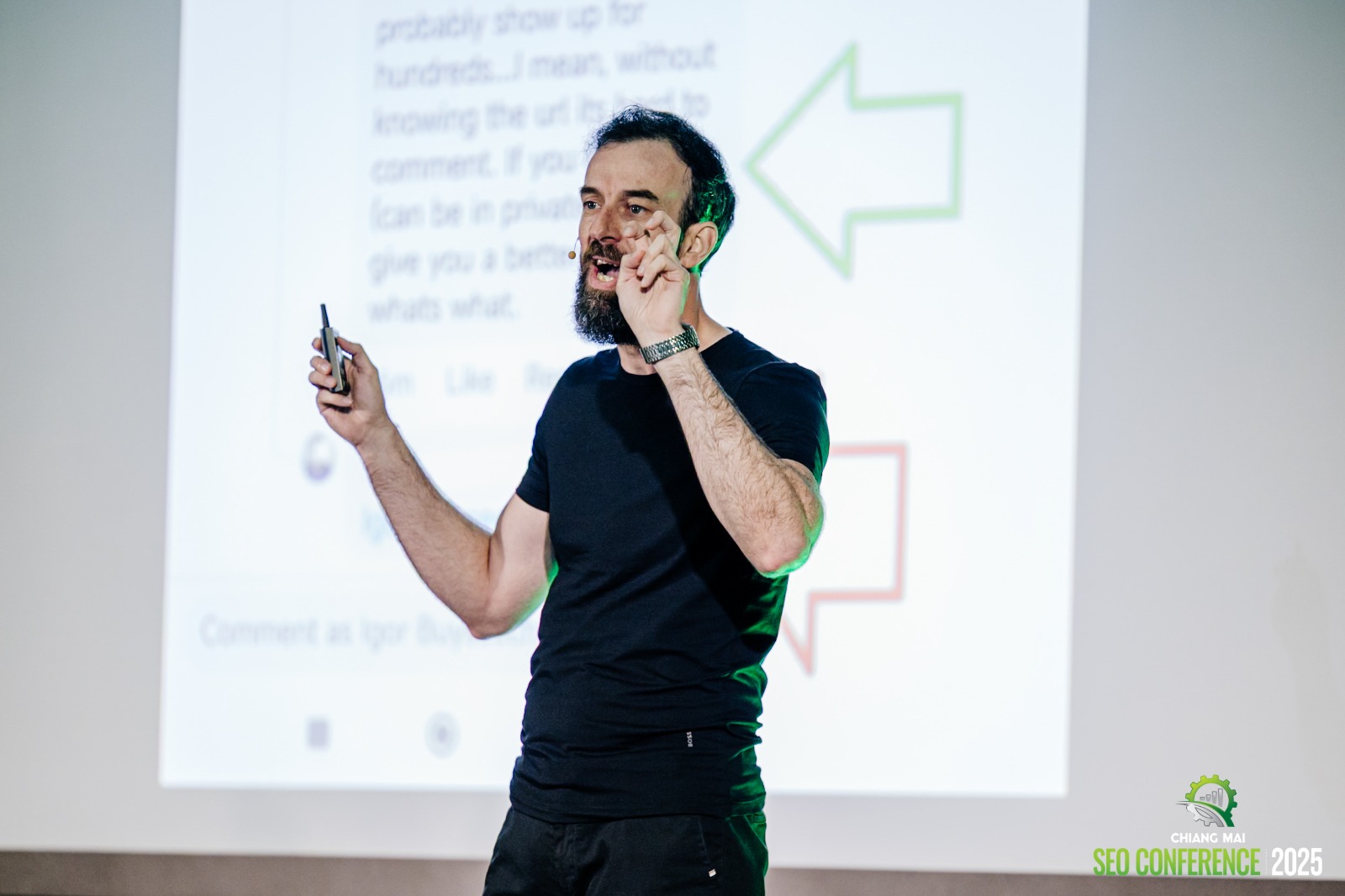
“How I Land Billionaires & A-List Celebrities As SEO Clients (Without Ads, Funnels or Cold Emails)”
- Positioning inside specific cultures and communities (e.g. music, entertainment)
- Becoming “the SEO person” in a tight circle where trust travels by word-of-mouth
- Key line: “1 Doc = 1,000 Docs” – one perfectly positioned asset in the right network can outperform a thousand generic pieces of content
James Oliver – Zero-Cost Traffic & Parasite SEO
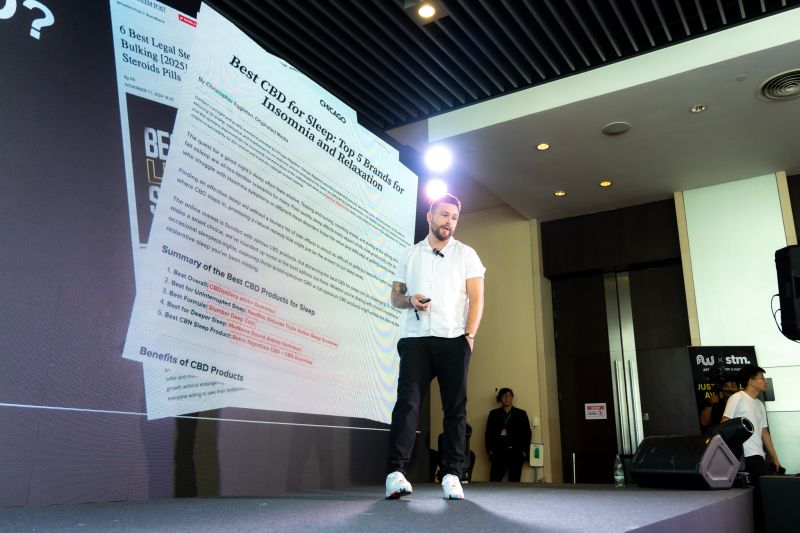
- Parasite SEO to leverage authority platforms
- “Zero-click” exposure: winning attention even when users don’t click through
- Using more aggressive, experimental tactics to quickly test what works in volatile SERPs
Sophie Brannon – Design, Data & Discovery
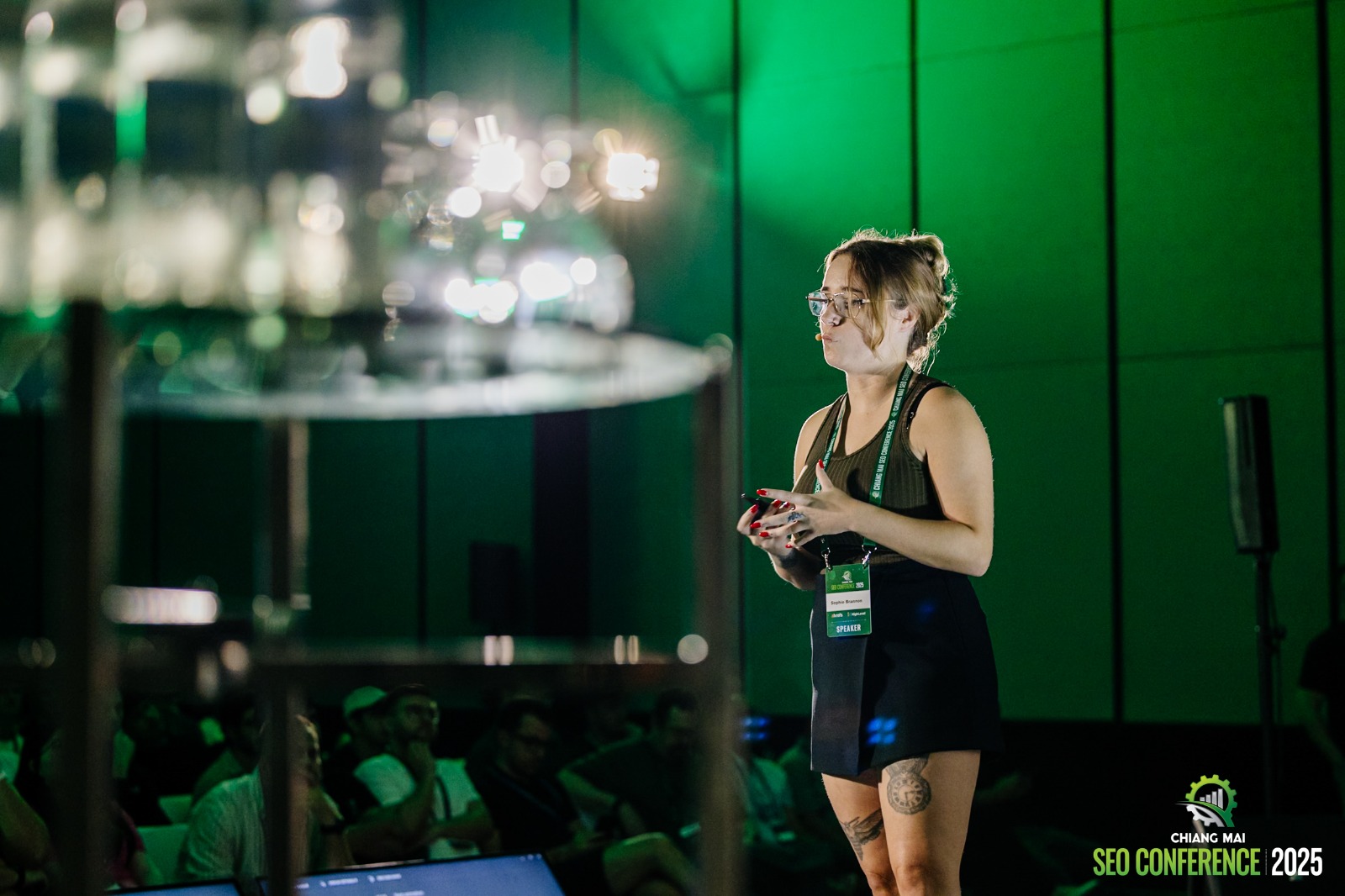
“Design, Data & Discovery: An Experiment-First Approach to eCommerce SEO”
- Longitudinal UX testing on layouts, flows and content structure
- Better UX leading to a ~26% increase in revenue per visitor, not just higher rankings
- Clear reminder that UX and CRO are core SEO levers in 2025
Christopher Panteli – PR That Actually Scales
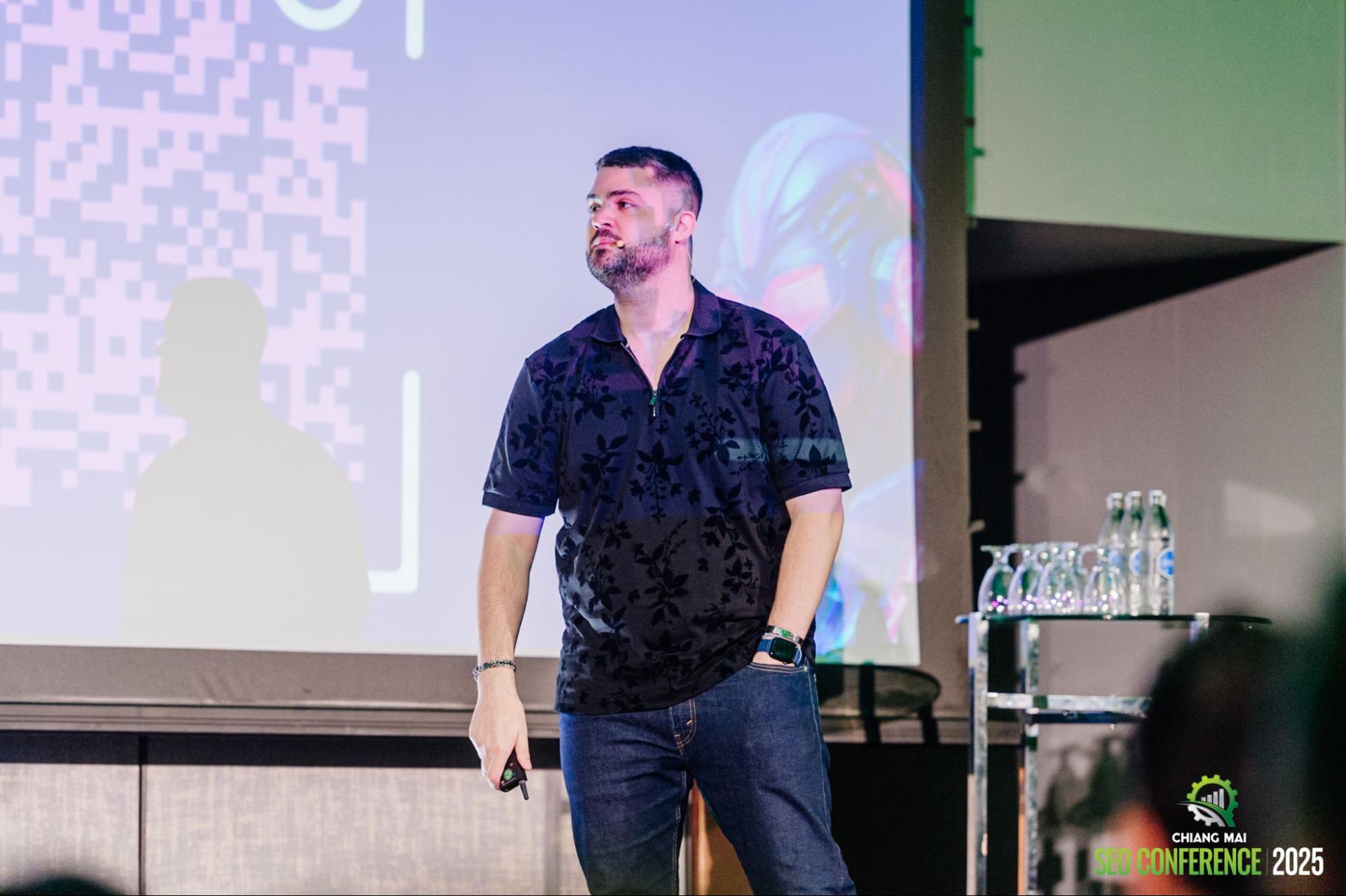
- Moving beyond spray-and-pray outreach
- Building long-term relationships with journalists and creators
- Providing consistent, interesting assets instead of one-off campaigns
Chris M. Walker & Szymon Słowik – GEO & Off-Site SEO in the AI Era
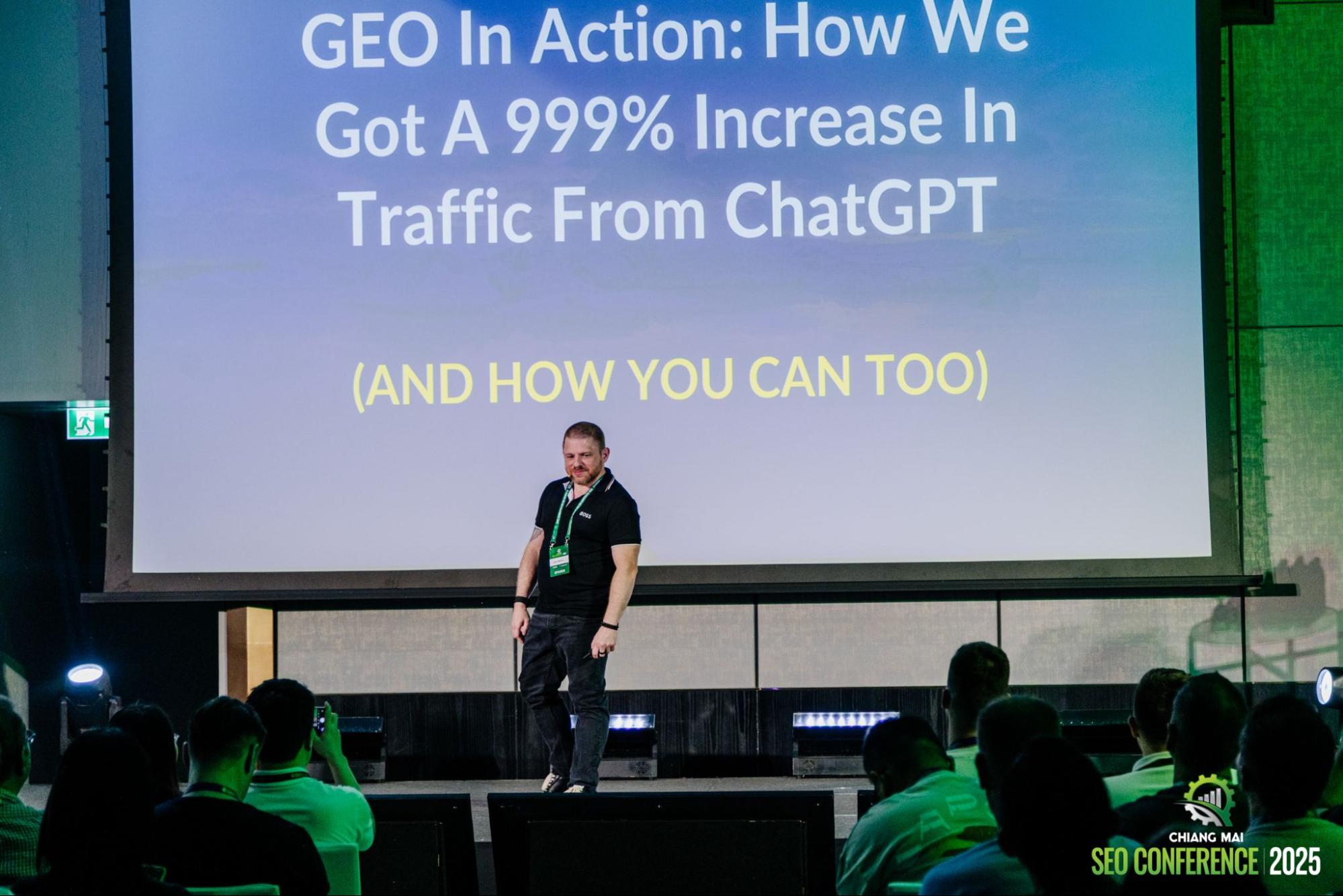
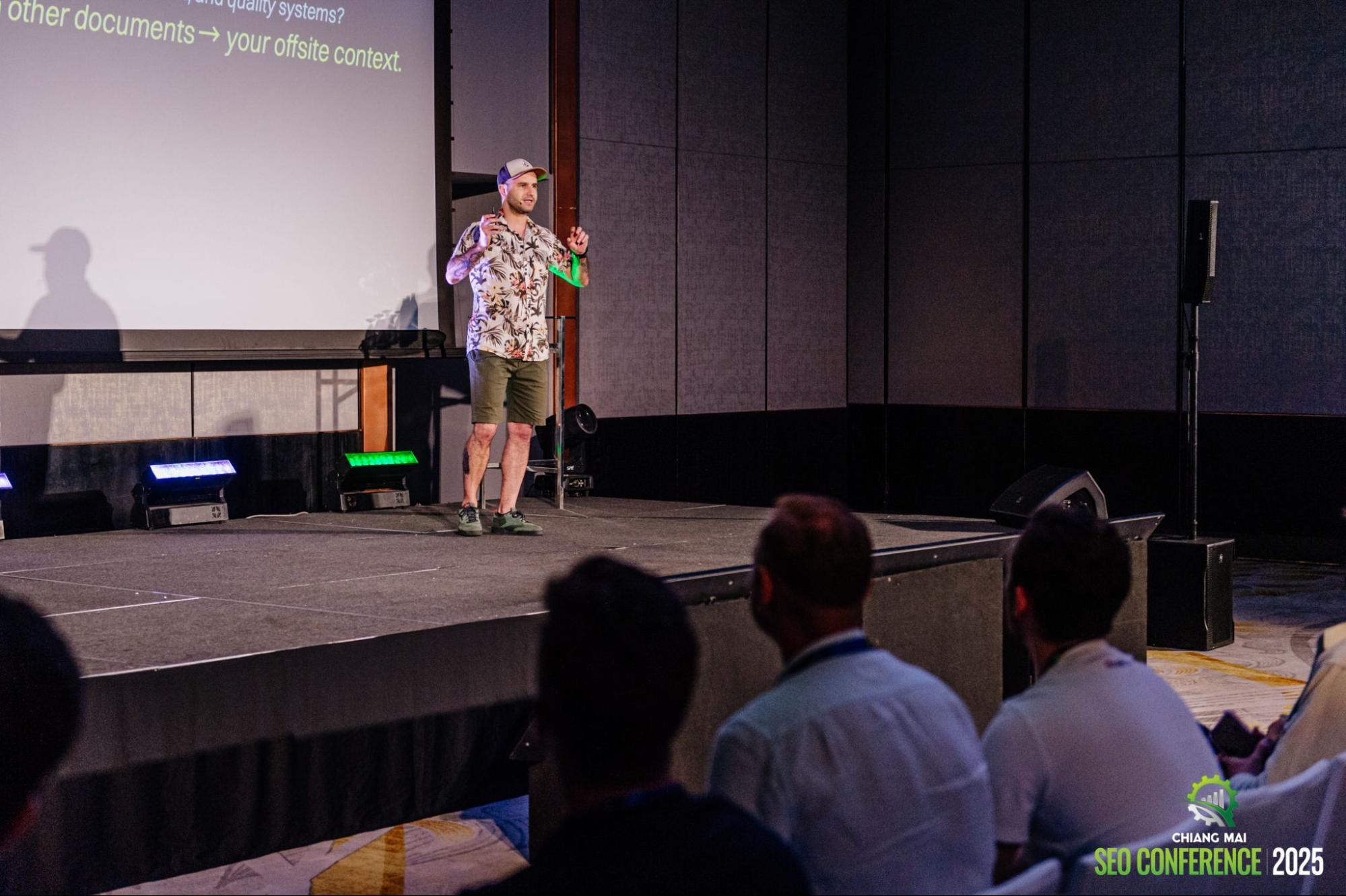
- Case study of a 999% traffic increase from ChatGPT
- How reinforcement learning and human feedback shape brand presence in LLMs
- Off-site authority (links, mentions, entities) as a stabilizing factor in a chaotic AI-driven landscape
The day closed with the Opening Night Party, sponsored by HighLevel – a relaxed way to turn workshop conversations into real-world connections.
Tuesday, 11 November – Workshops Day 2 & Networking Night
Day two brought AI ethics, HCU recovery, Local SEO automation and EEAT into focus.
Madeleine Lambert – AI Content & Google’s Search Landscape
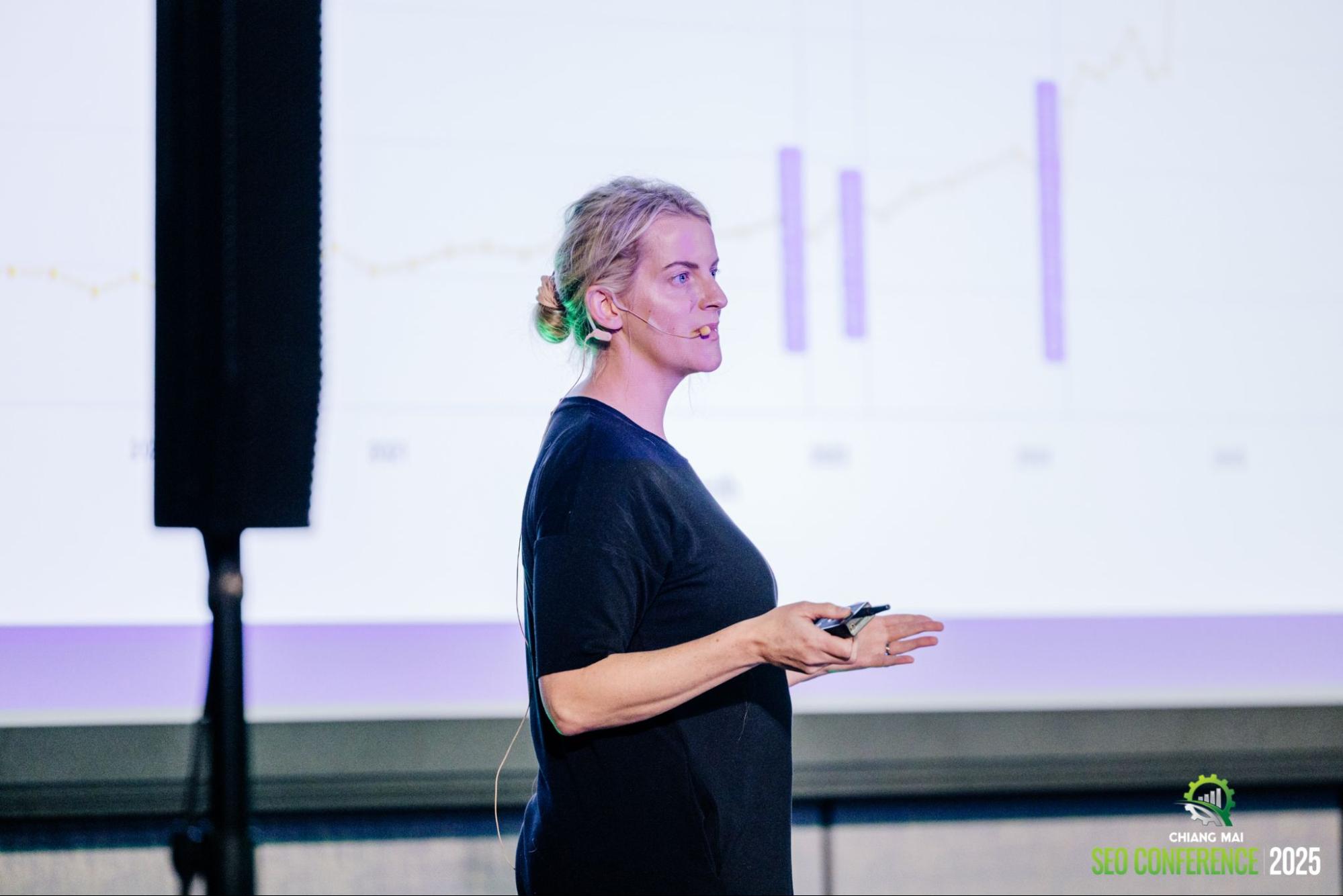
- The danger of “AI citing AI” – models generating content based on other AI-generated sources
- Risks of a polluted information environment and confused quality signals
- Implications for Google as it tries to separate original, expert content from derivative text
Niels Zee – Surviving HCU & Scaling Affiliates
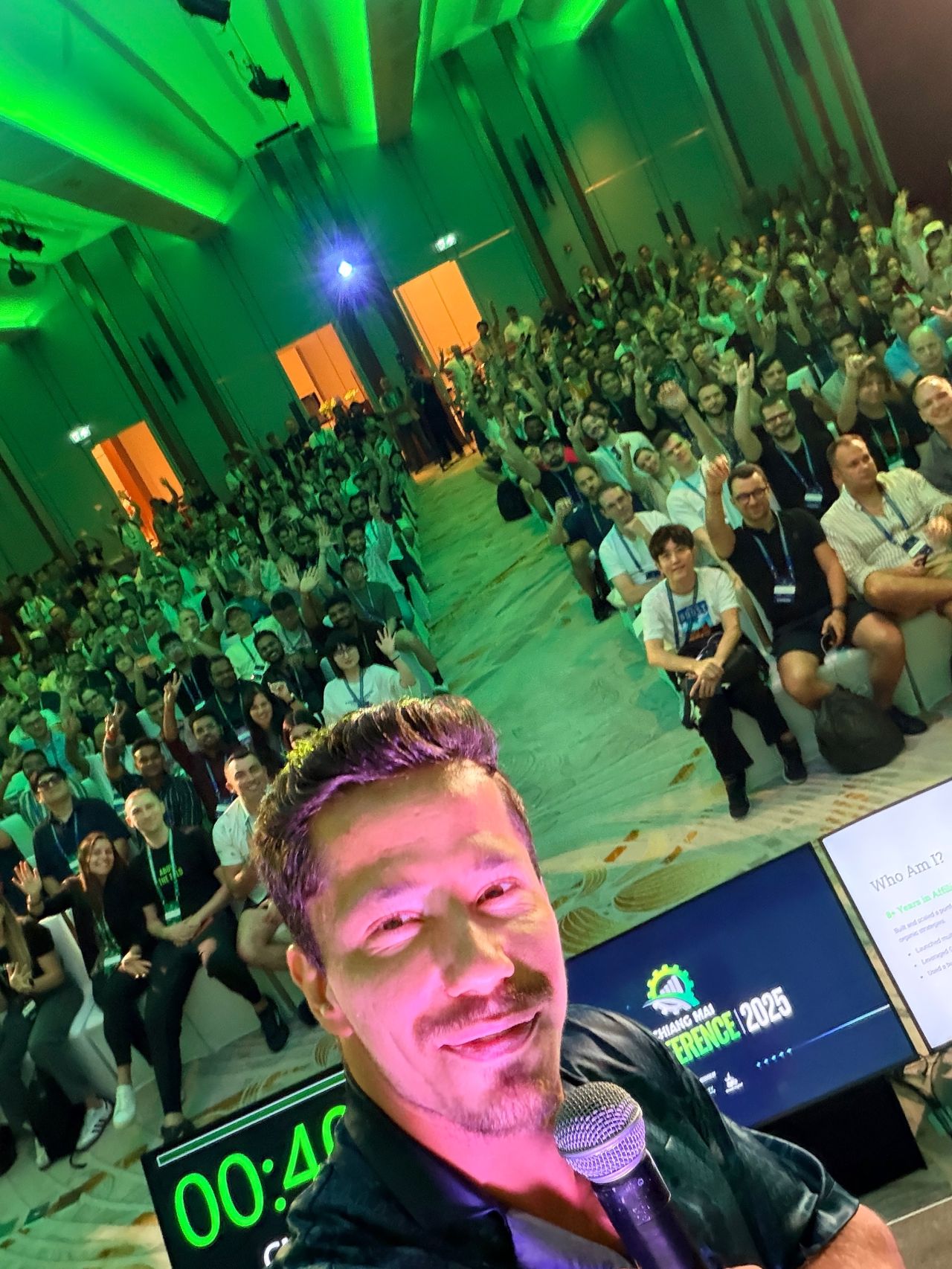
- How the Helpful Content Update reshaped affiliate SEO
- Pivoting from thin listicles to brand-driven content and parasite SEO
- Frameworks for building more resilient affiliate assets
Navneet Kaushal (PageTraffic) – Automating Local SEO
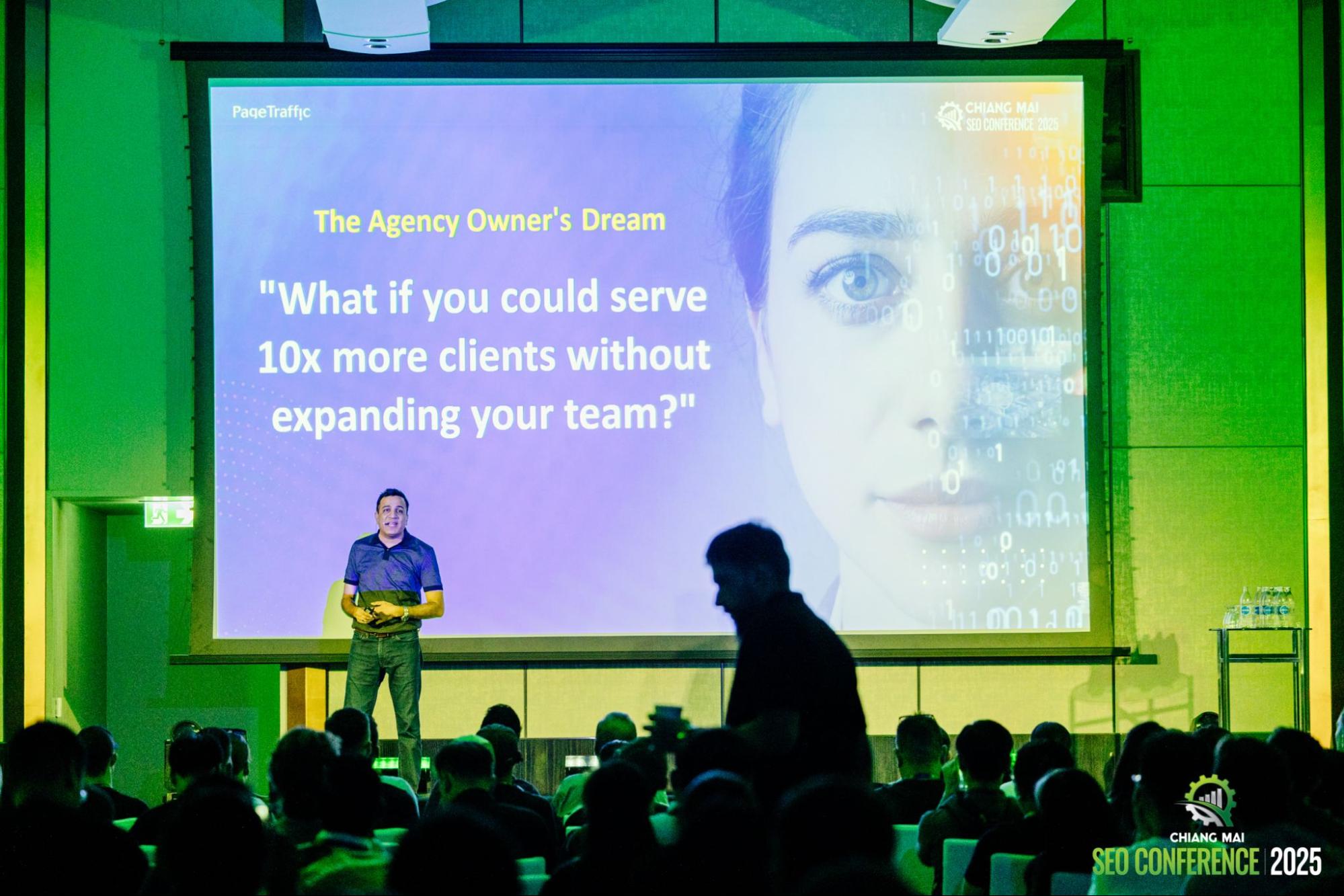
“Automating Local SEO: How To Save Hours & Win Google Maps Rankings”
- Using AI, GPTs and n8n to automate repetitive tasks:
- Local SEO audits
- Citation and NAP checks
- Google Business Profile tracking and alerts
- Reporting and client communication
- Teams saving 15–20 hours per campaign, enabling agencies to scale without proportionally growing headcount
Tom Winter – EEAT Beyond the Checklist
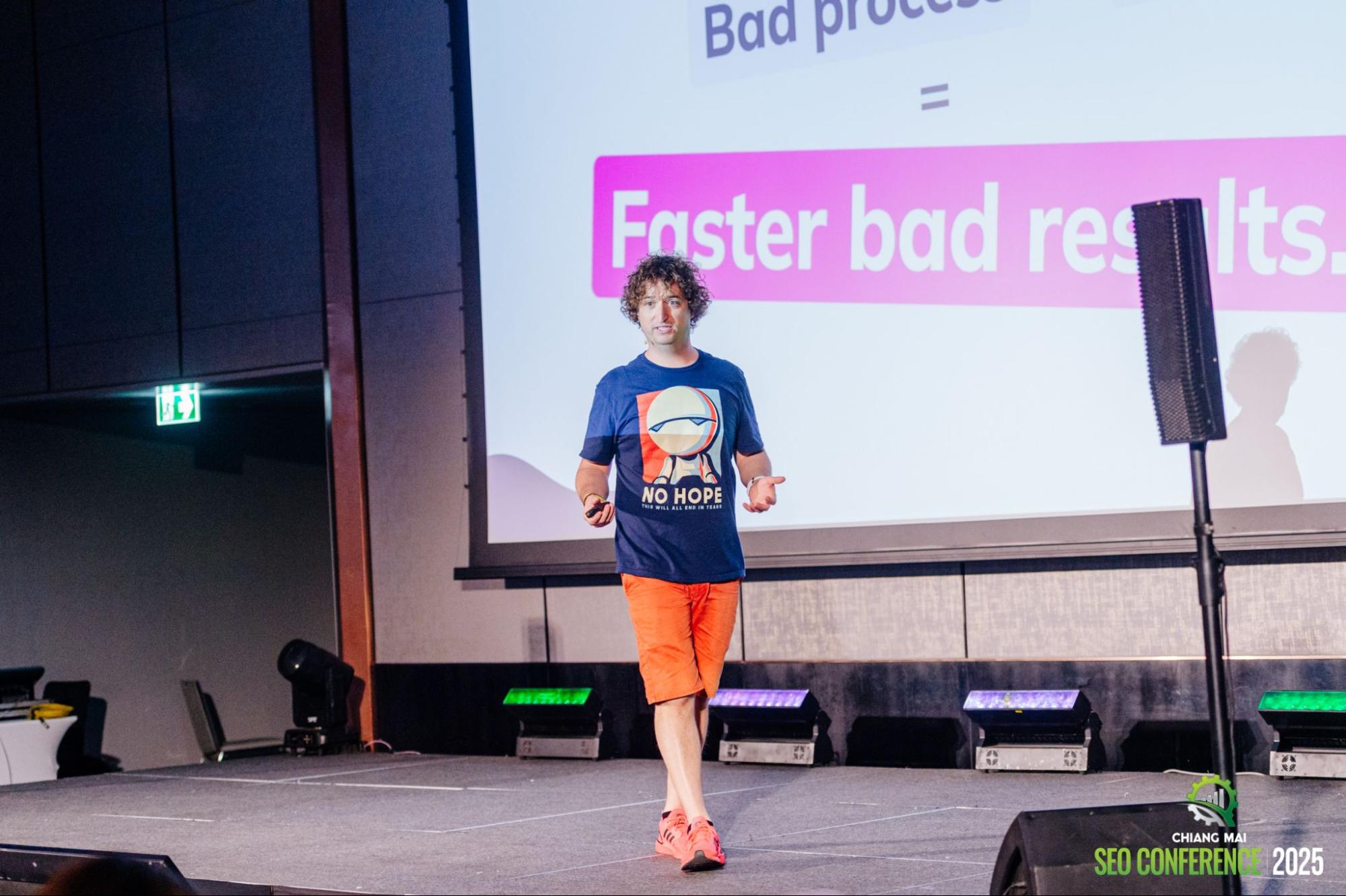
- EEAT as a Knowledge Graph output, not a simple on-page checklist
- Importance of entity relationships, off-site authority and coherent on-site narratives
- Encouragement to think in terms of entity graphs, not just “add an author bio”
Alex Horsman – Passive Link Building
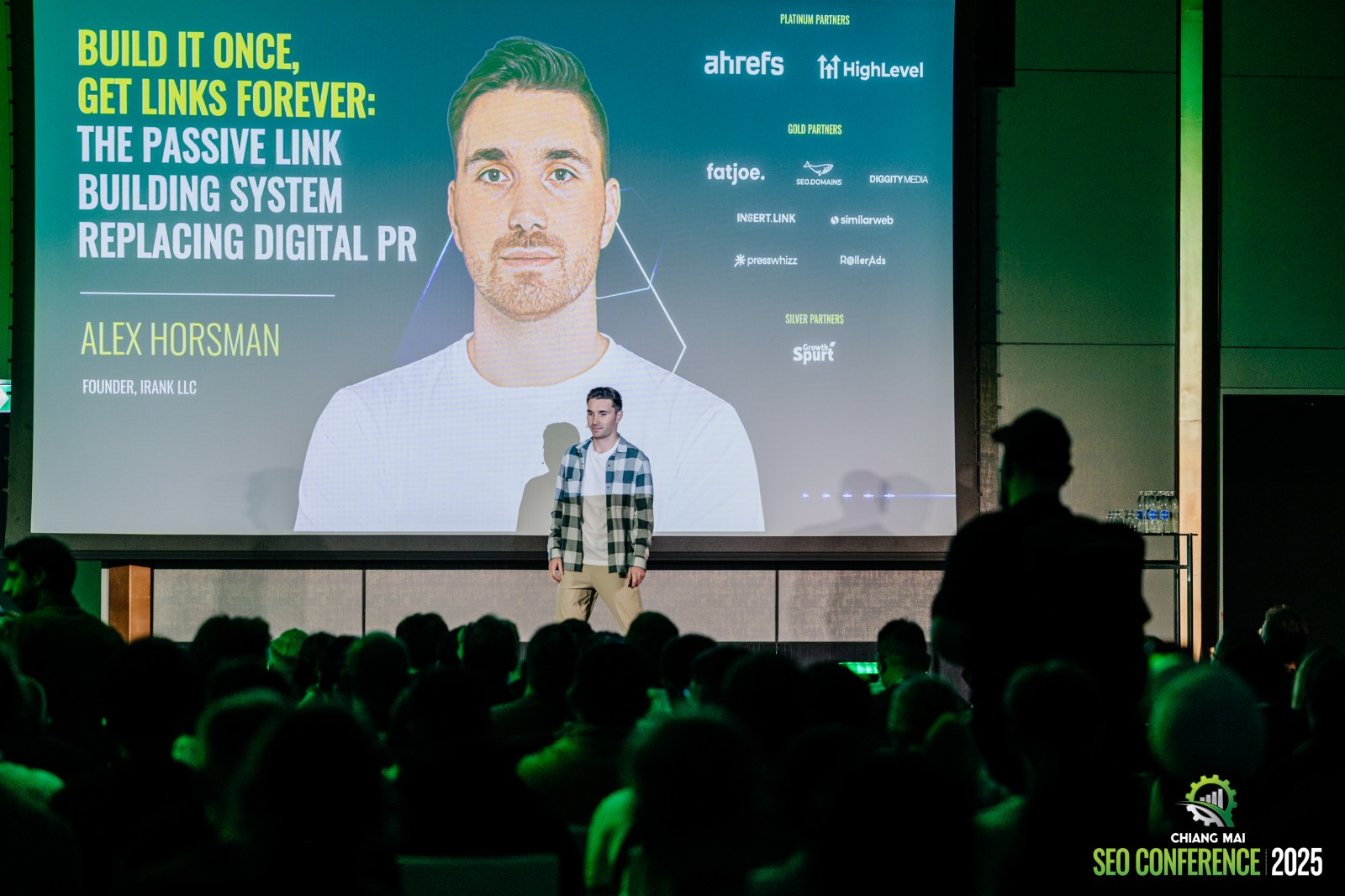
- “Build once, get links forever” strategy:
- Data studies
- Free tools
- Evergreen resources
- Long-life assets that attract links consistently, reducing reliance on constant PR blasts
Itamar Marani – From Ideas to Income
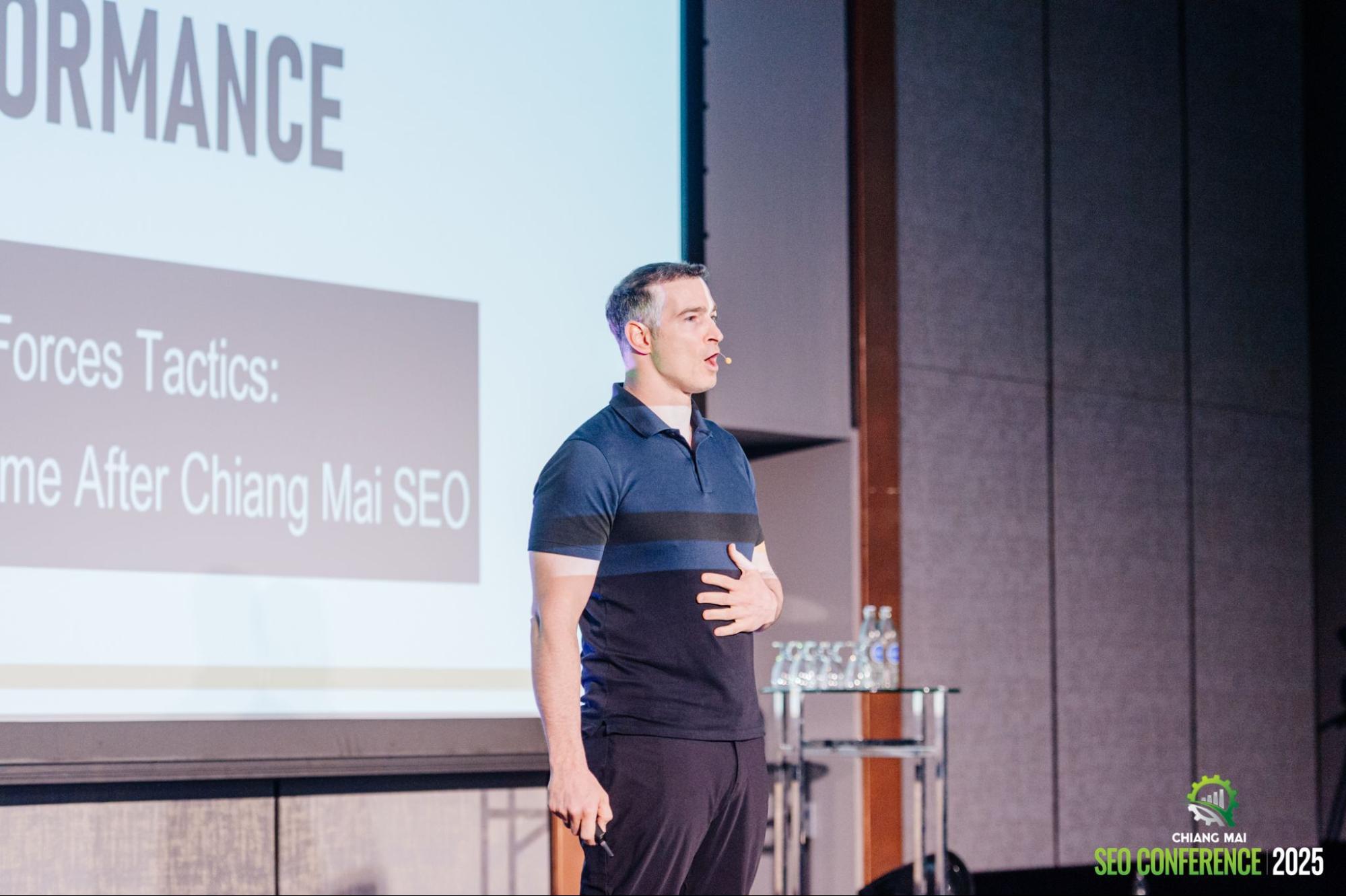
- Frameworks to turn conference inspiration into execution
- Prioritizing ideas based on your business model, capacity and risk tolerance
- Making sure CMSEO notes become a practical roadmap, not just a folder in Notion
The evening Networking Night at Tha Chang gave attendees a place to regroup, compare notes and plan the rest of the week.
Wednesday, 12 November – Community Day
Community Day is CMSEO’s open-format day:
- No fixed main-stage agenda
- Attendees drive the schedule via the app
Across the city you’d find:
- Micro-workshops on LLM SEO, GEO experiments and entity optimization
- Advanced blackhat roundtables looking at short-term, high-risk tactics
- Regional meetups, rooftop mixers and casual masterminds
- Night-market tours that turned into late-night SERP and revenue breakdowns
For many repeat visitors, Community Day is where the most candid, tactical conversations happen.
Thursday, 13 November – Main Program Day 1
Main-stage talks on Day 1 covered content experiments, “vibe” SEO, tools and affiliate disruption.
Kyle Roof – (Un)helpful Content & (Un)helpful Robots
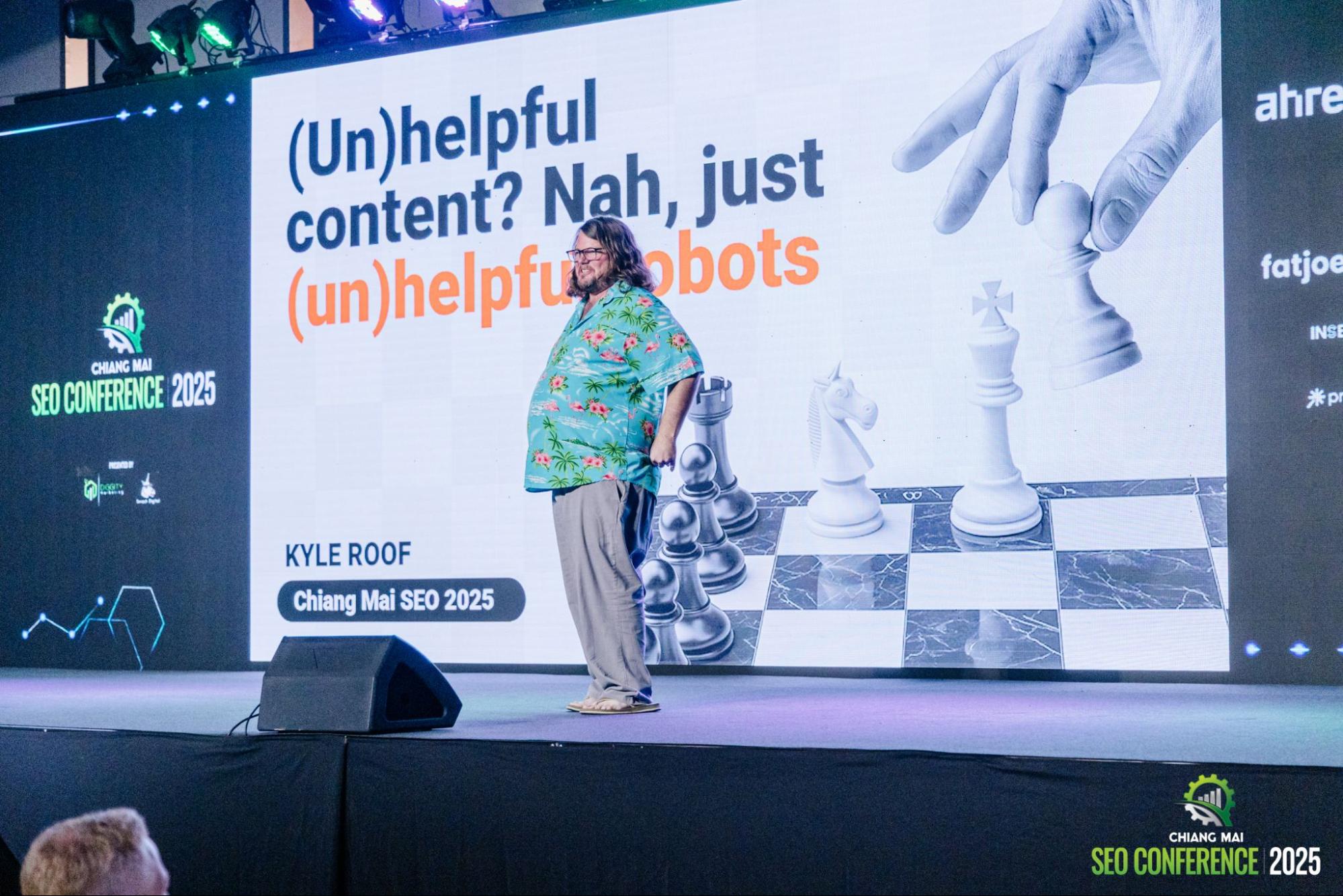
- Experimental tests on headings, on-page signals and schema
- Case studies where real-world results diverged from official documentation
- Message: You cannot rely only on what Google says – you have to test.
Robert Niechcial – Vibe Marketing & Vibe SEO
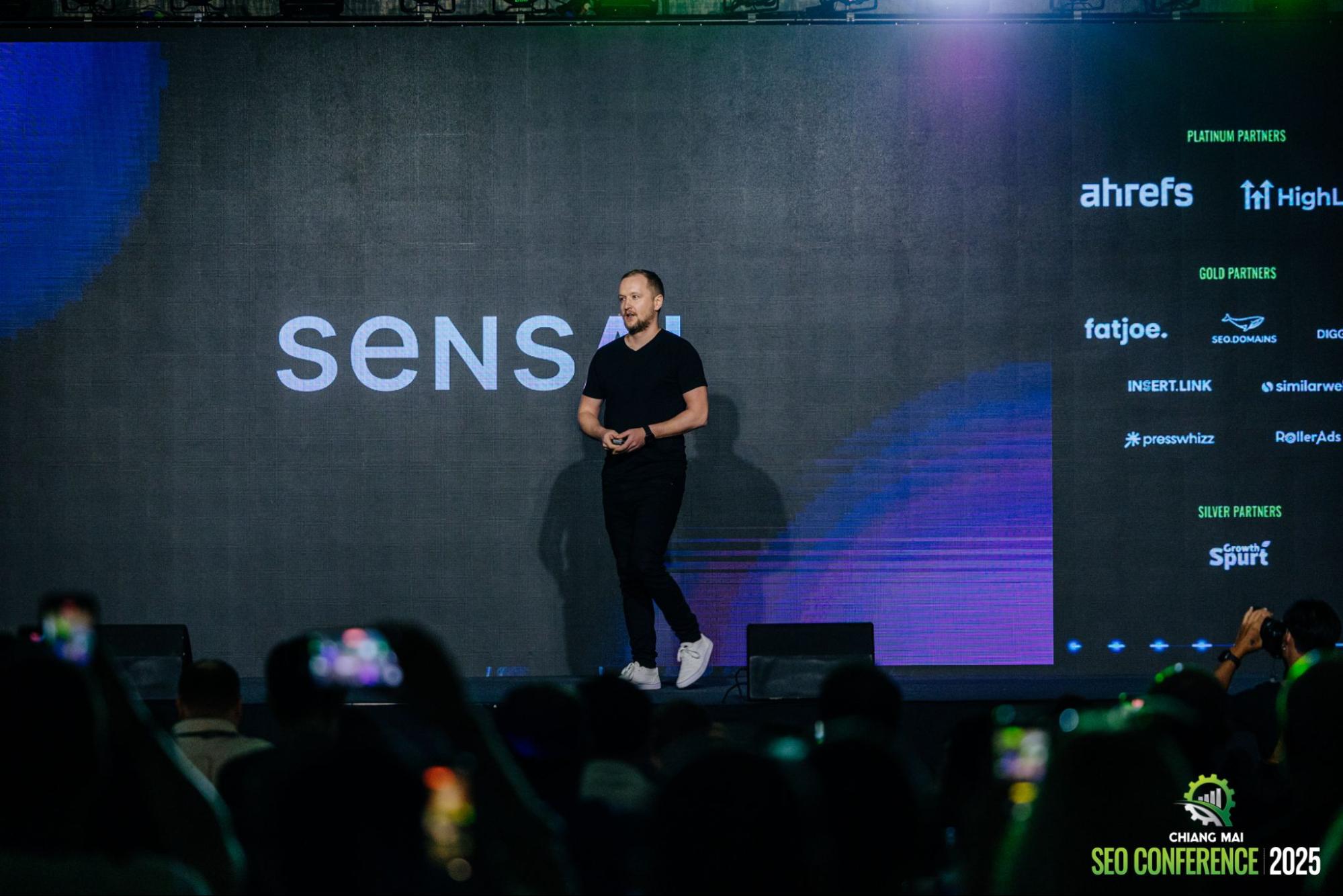
- Framing SEO as more than technical factors and keywords
- Looking at how a brand “feels” across AI, search and social
- Using tools to analyze AI answer patterns and align SEO strategy with brand “vibe”
Tim Soulo (Ahrefs) – What’s New
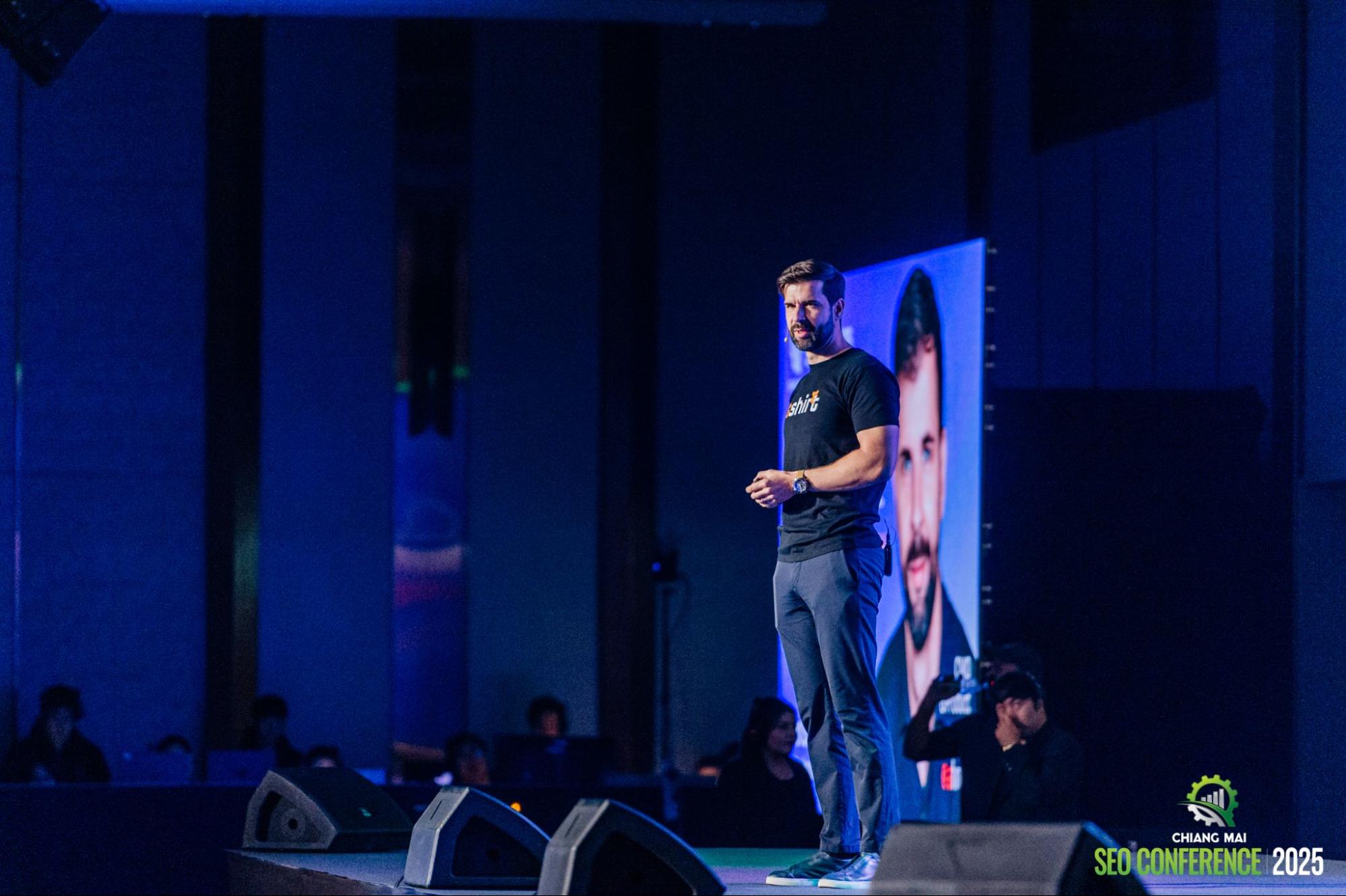
- Product roadmap and recent Ahrefs updates
- How tool makers are adapting to the shift toward AI-powered search and LLM usage
Peter Macinkovic – The Affiliate Apocalypse
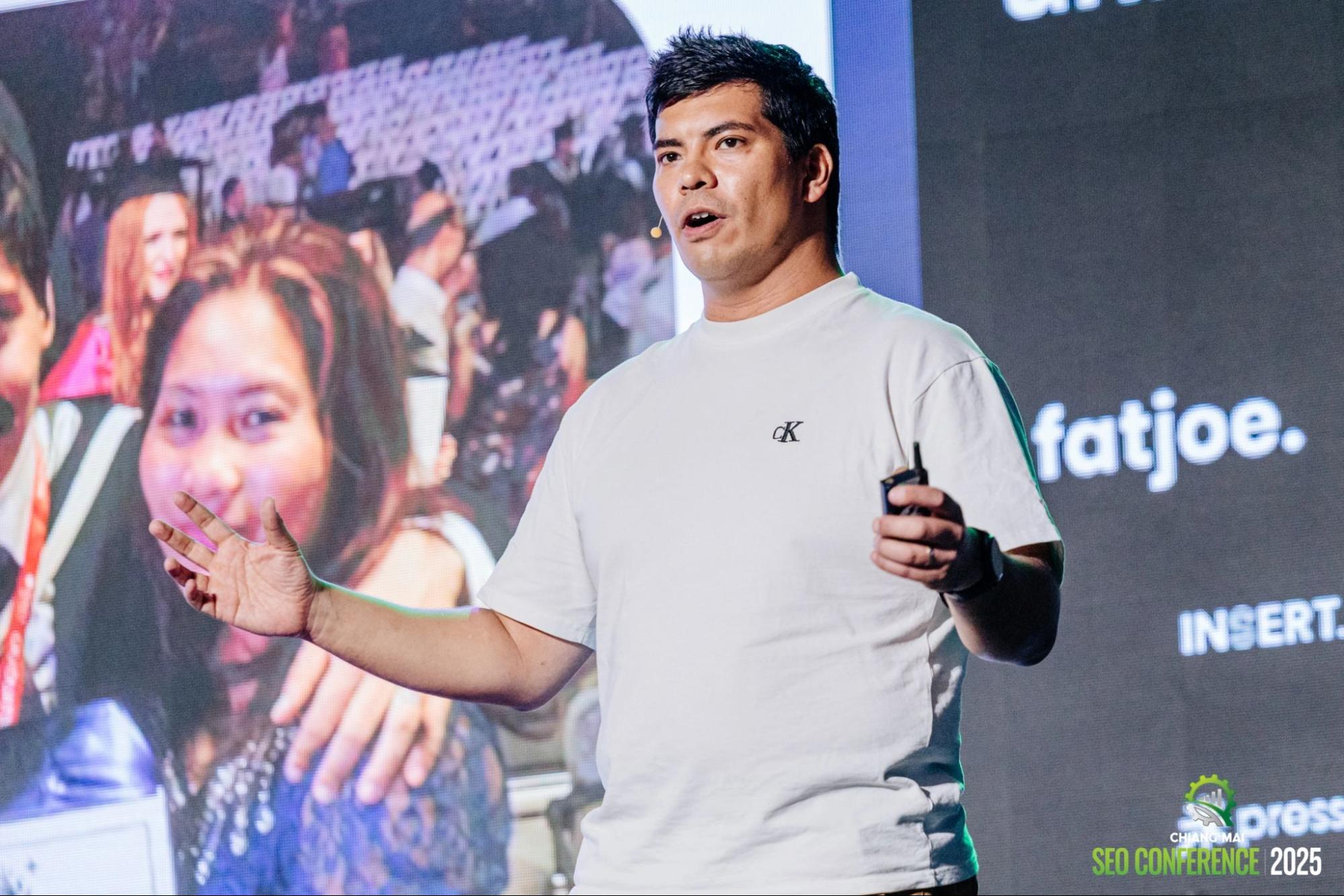
- Post-HCU landscape for affiliate terms
- How parasite SEO, expired domains and well-structured content clusters are reshaping who survives
- Lessons from affiliates that adapted vs those that disappeared from the SERPs
Cindy Krum – AI, Short-Form Video & Influence Marketing
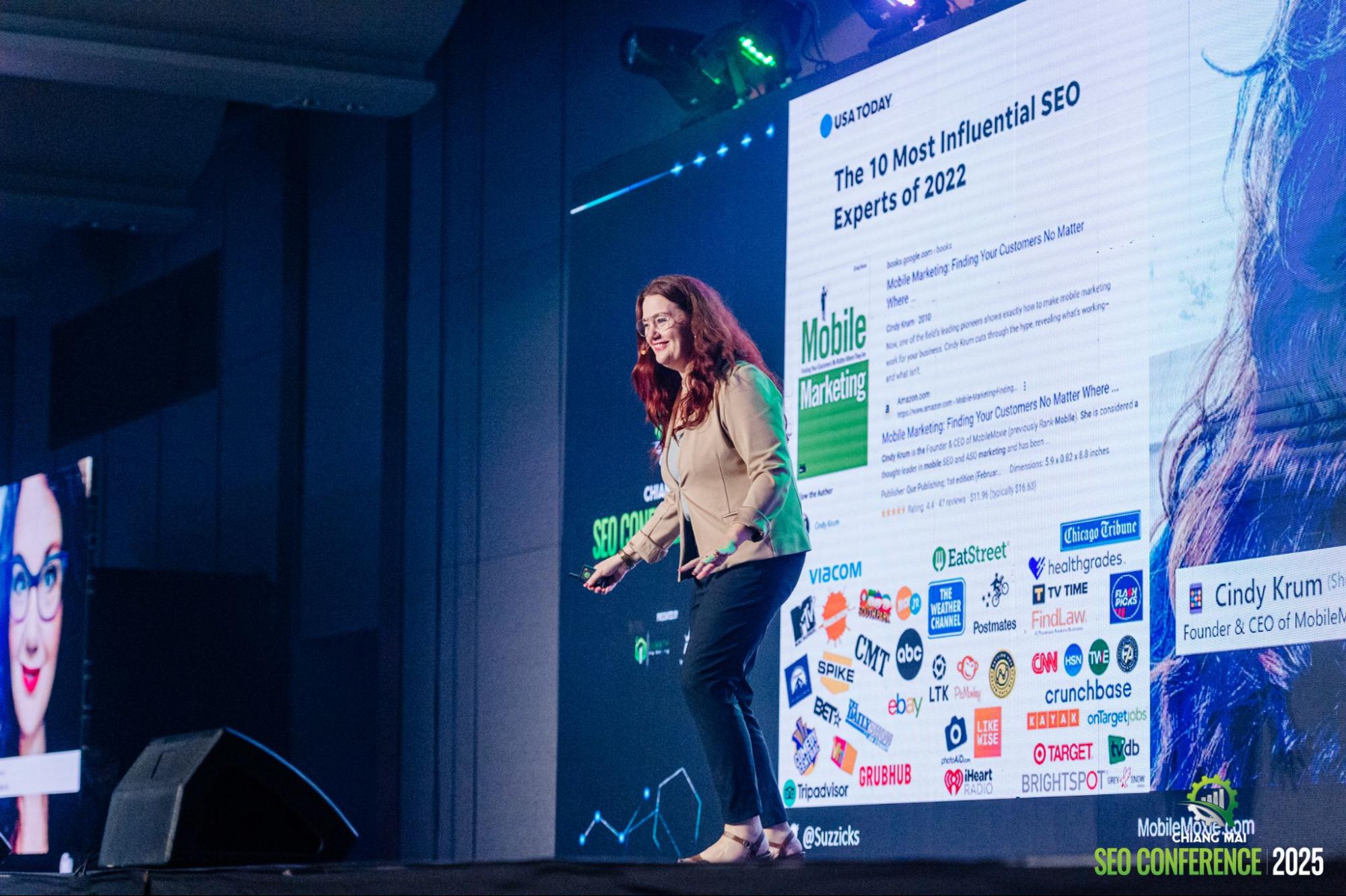
- Google’s increasing use of short videos (Reels, Shorts, etc.) in results
- LLMs referencing video content alongside text
- Why brands should build presence in video ecosystems, not just on blogs
Michal Suski (Surfer) – On-Page vs LLM Signals
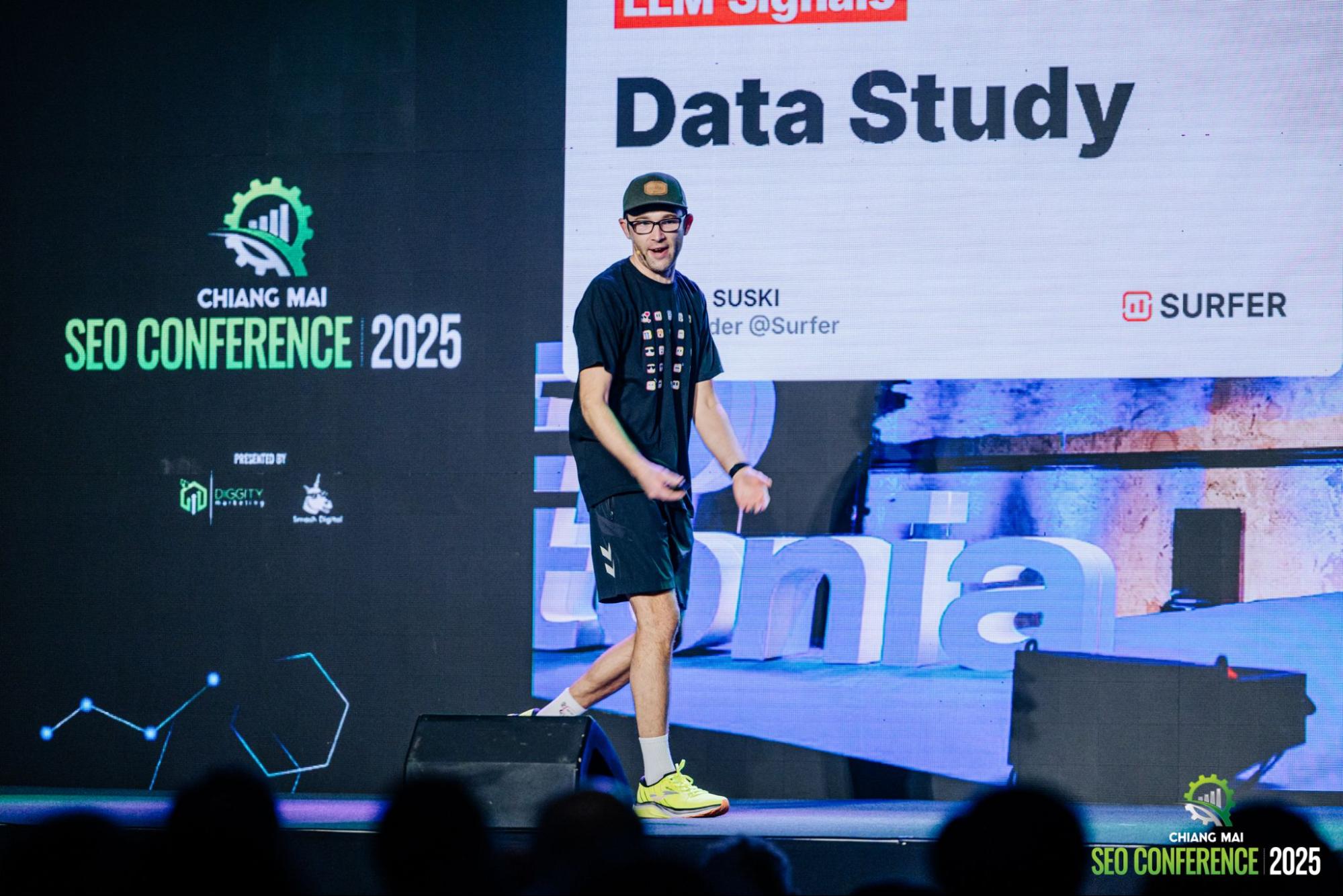
- Study findings on:
- Exact match domains
- Page speed and TTFB
- Schema in practice
- Behavioral signals in ranking
- Key conclusion: sites with the strongest topical coverage consistently win, even as AI reshapes search
Friday, 14 November – Main Program Day 2 & Closing Party
The final day blended Local SEO, AI manipulation, omni-channel growth and blackhat case studies.
Greg Gifford – Local SEO as a Different Beast
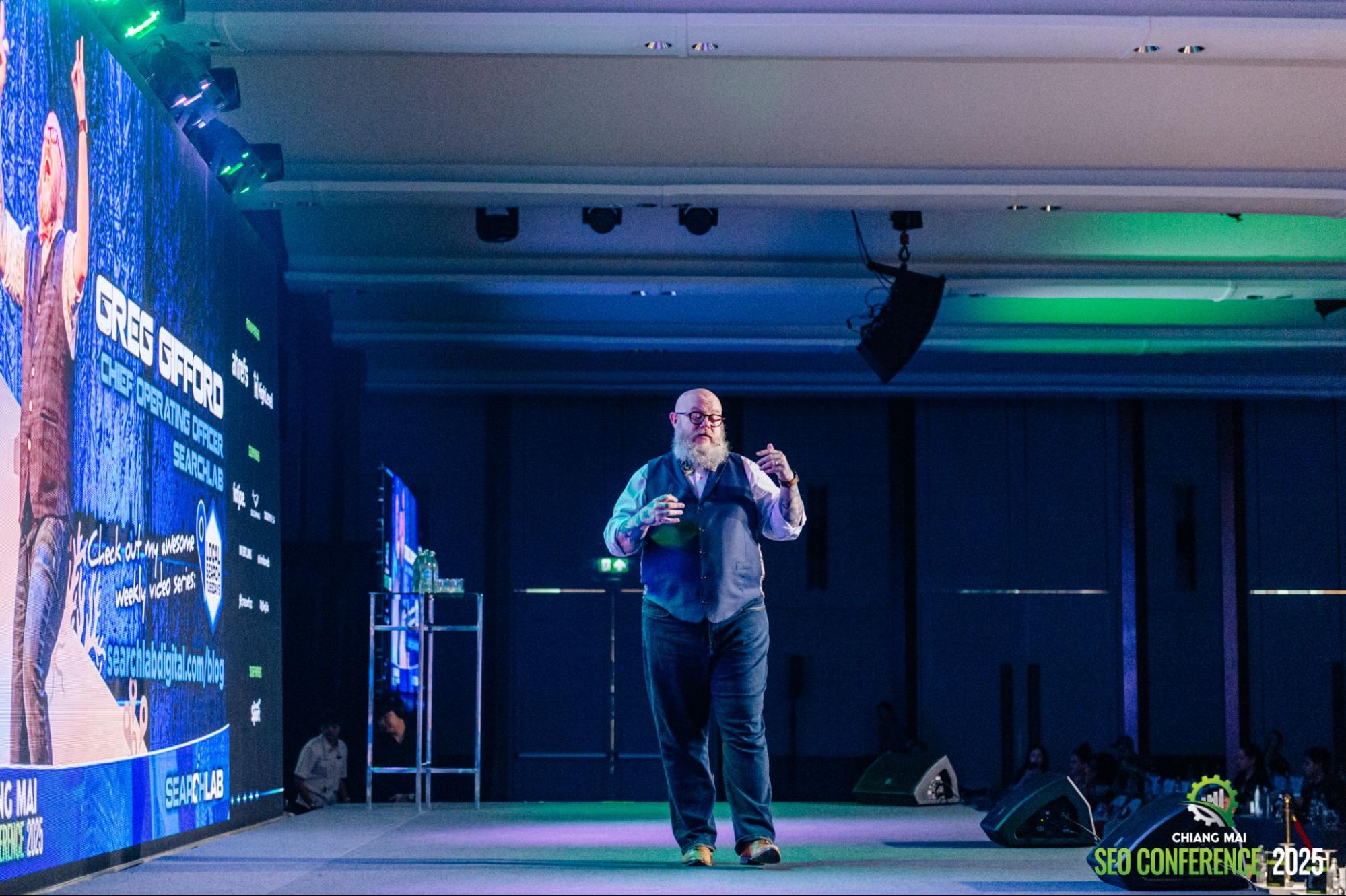
“Doc Brown’s Guide to Crushing The Competition With Local SEO”
- Why local SEO operates under different algorithm rules
- How reviews, photos, interactions and local relevance shape Maps rankings
- Practical strategies for GBP optimization, reinstatements and interaction signals
Alan Cladx – Manipulating AI for Brand Benefit
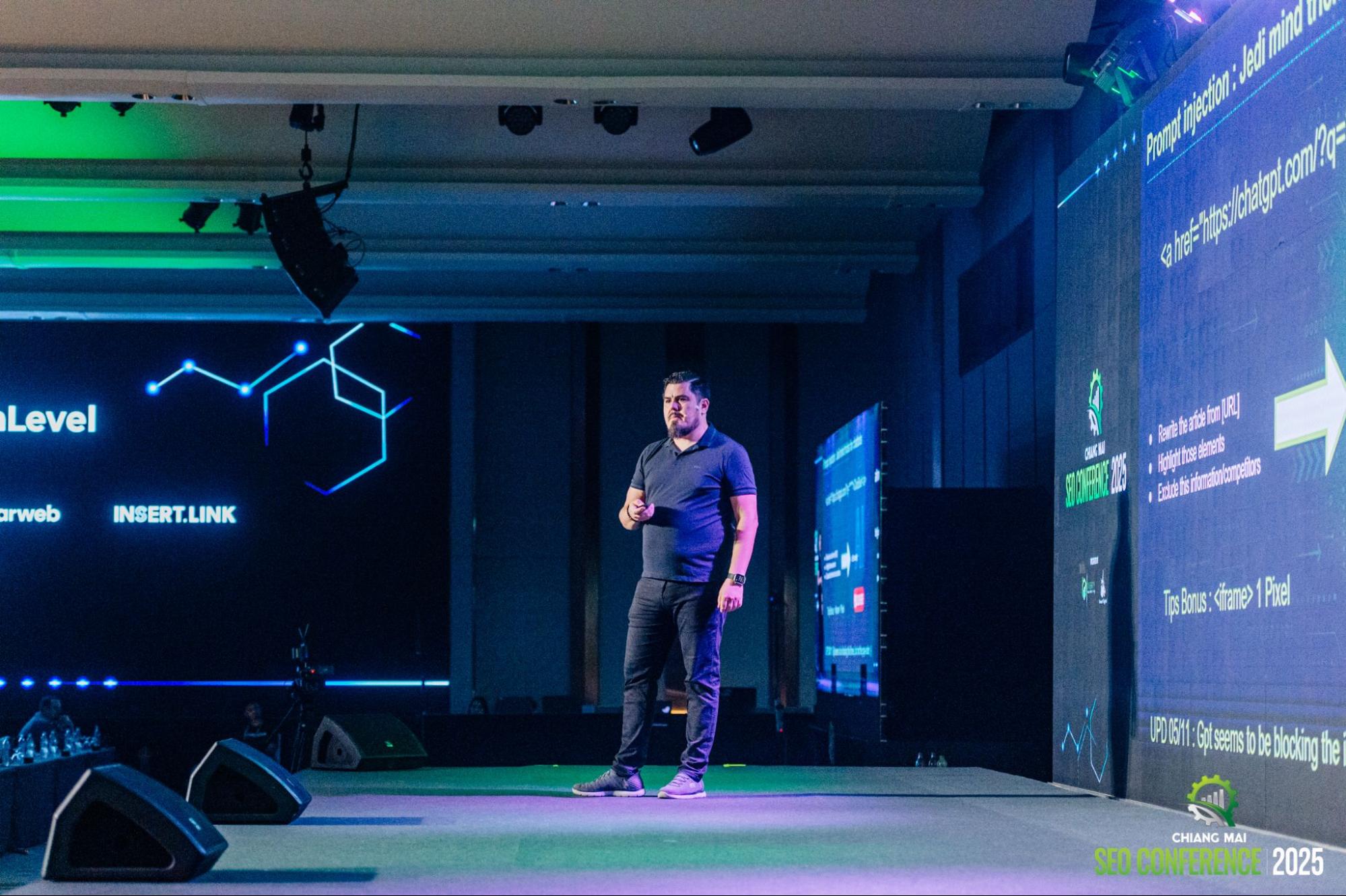
- How structured data and entities influence LLM understanding of brands
- Emphasis on machine-readable formats like JSON and JSON-LD
- Examples showing that entity clarity can matter more than raw backlink counts for AI systems
- Defensive use of legal processes (e.g. copyright and privacy requests) to clean up legacy, inaccurate information online
(The session underlined what is possible in AI influence, while also highlighting the ethical and long-term-risk questions around more extreme experiments.)
Chase Buckner (HighLevel) – Digital Dominance Flywheel
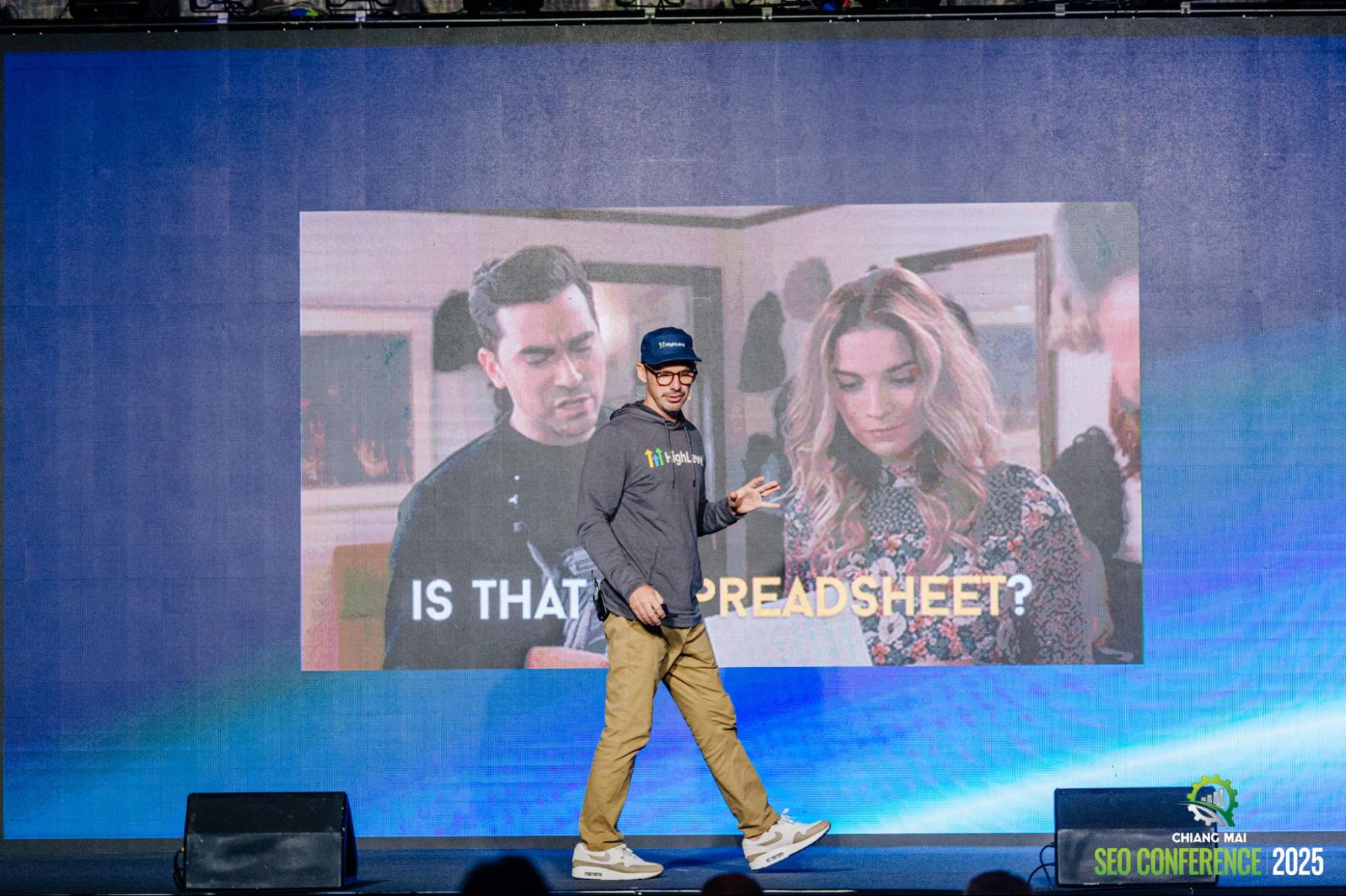
- A full-funnel growth flywheel: capture → nurture → close → evangelize → reactivate
- Voice AI case study:
- 5.4M+ calls processed
- 30,000+ appointments booked
- 450,000+ human hours saved
- Clear signal that automation is becoming a core sales and support channel, not an add-on
Meme Competition & Beyond Google
- CMSEO’s meme competition returned, with entries poking fun at updates, AI and client chaos
James Norquay spoke on “Beyond Google”:
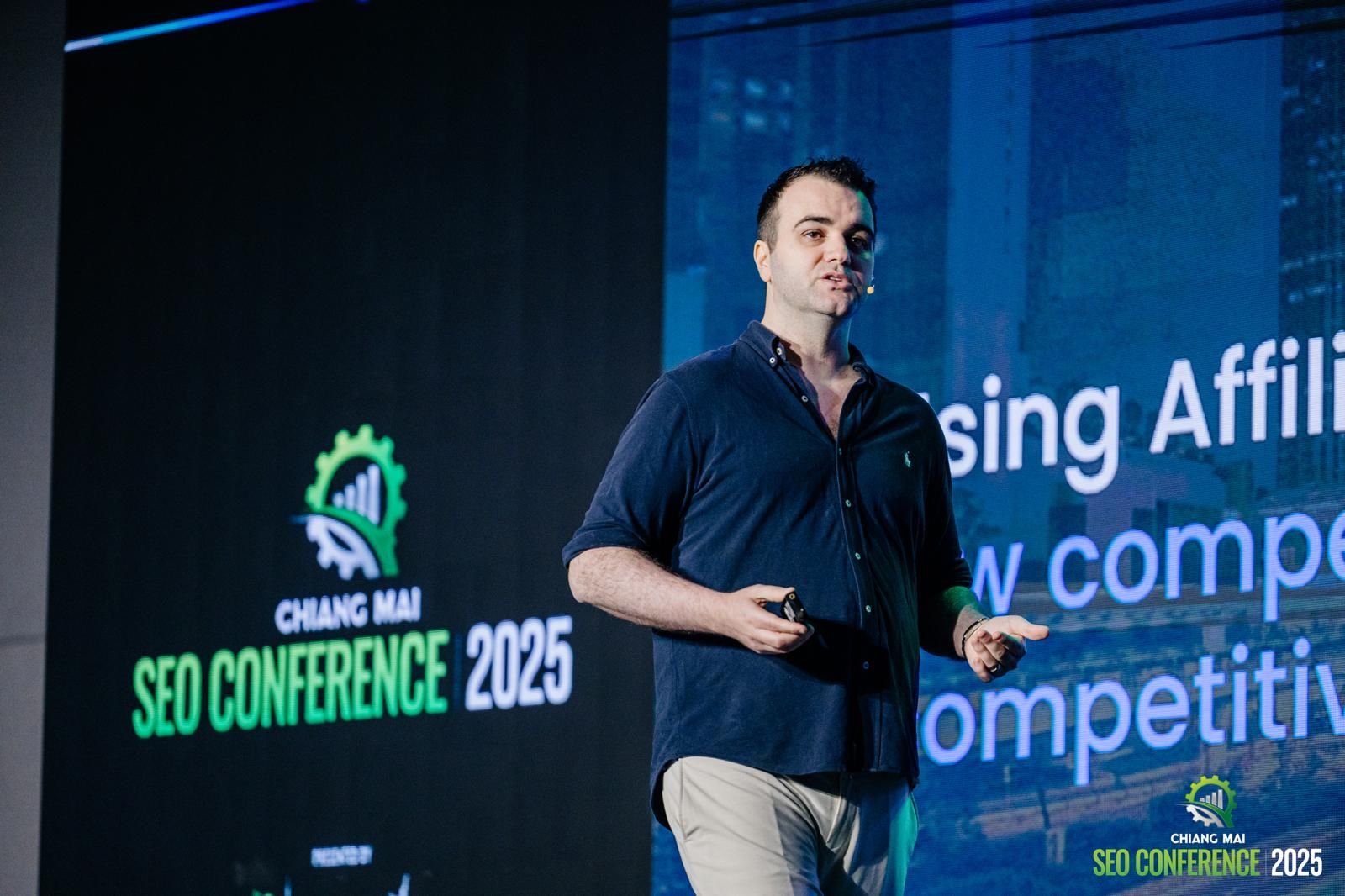
- YouTube, influencers and content partnerships
- Multi-channel organic strategies that reduce dependence on a single platform
Steve Toth – SEO’s Next Chapter: Truth Over Traffic
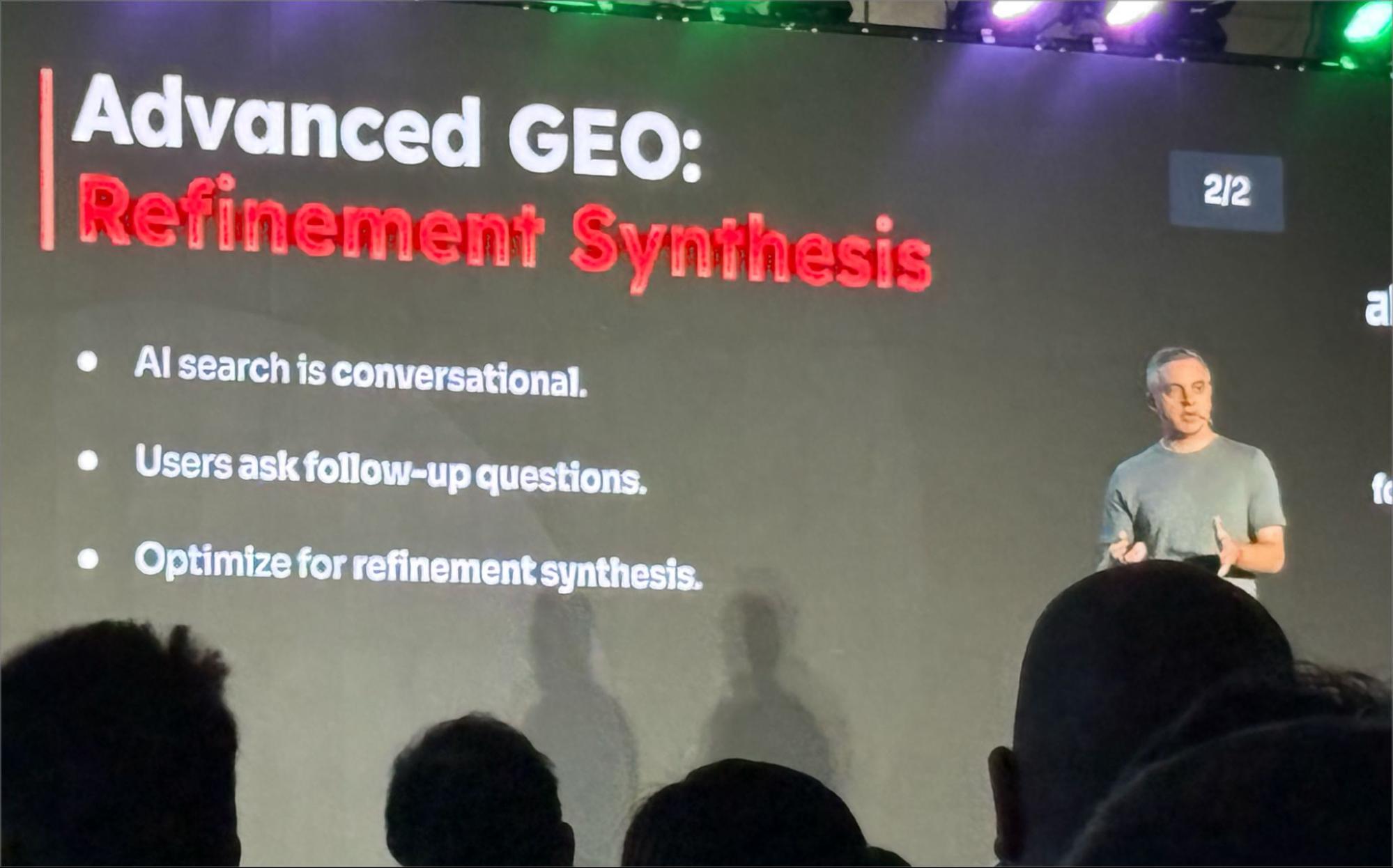
- Why “truth beats traffic” in AI search
- LLMs caring more about coherent, consistent information than sheer volume
- How to structure brand and product information for conversational search visibility
Craig Campbell – Blackhat Tactics in 2025
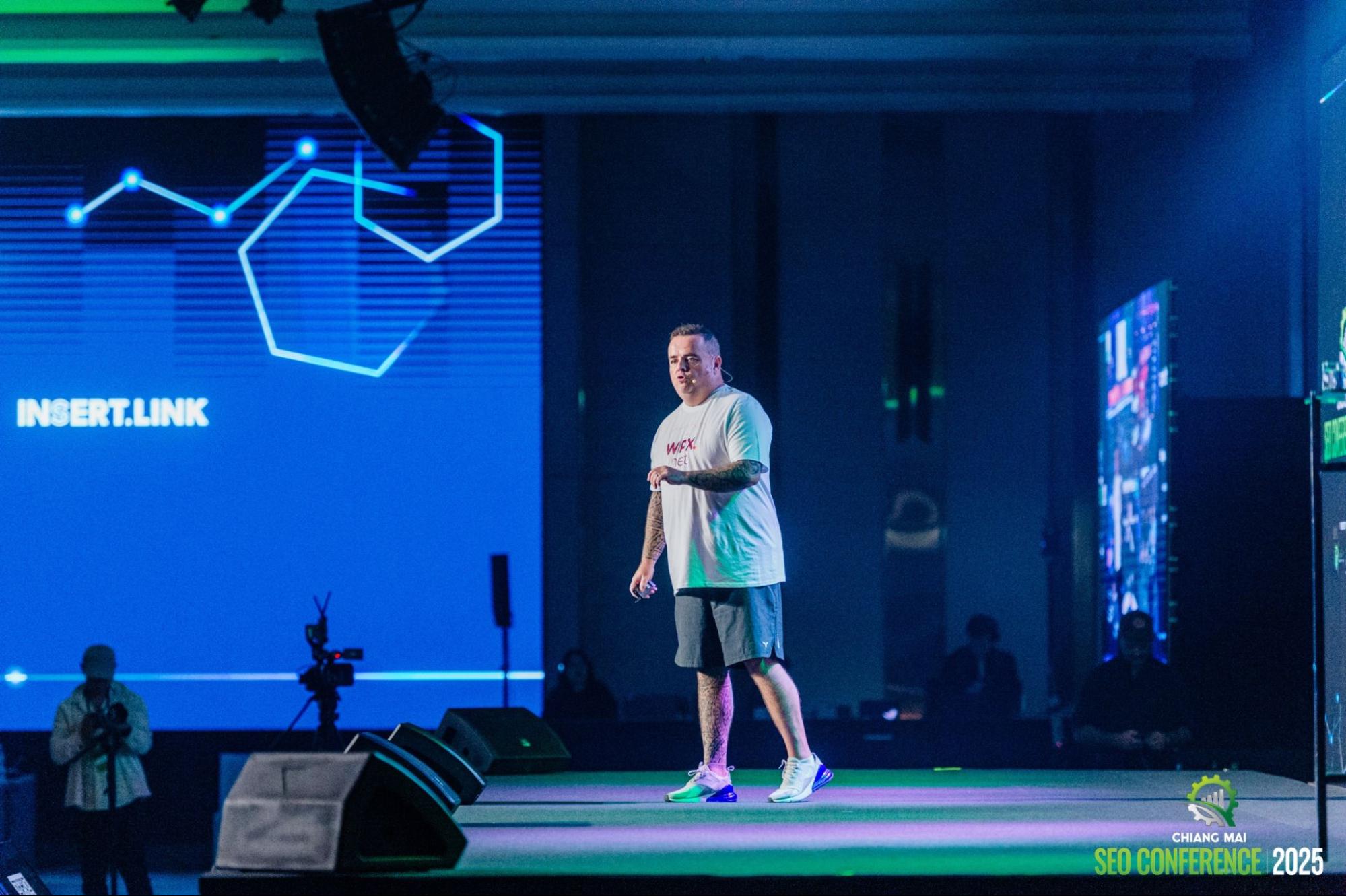
- Case studies on manufacturing entities and personas
- Building out complete ecosystems (sites, profiles, citations) to make fabricated entities appear “real” online
- Reinforcement of a key theme: if the web repeatedly says something exists, many systems will treat it as if it does
The conference wrapped up with the Closing Night Party, presented by Ahrefs, where final deals, partnerships and friendships were sealed.
Chiang Mai SEO 2025 Side Events
GEO & LLM Search: How Brands Show Up in Conversations
Sessions led by Steve Toth and others focused on how LLM search changes discovery.
From Clicks to Conversations
- Traditional search: users click multiple results across a SERP
- LLM search: users stay in a single conversation, asking 5–10 follow-ups
- Brands are judged inside that chat window, not across multiple clicks
Refinement Synthesis
Steve described “Refinement Synthesis”:
- With each follow-up, the AI refines:
- Its understanding of the user’s intent
- Which brands continue to be mentioned
A brand can be:
- Recognized as “good” in isolation
- But still not recommended by default if it lacks clear, structured citations and comparison content
The LLM Information Hub
One of the most actionable patterns:
- Create a single, structured “LLM info” page on your site explaining:
- Who you are
- What you do and for whom
- Pricing and positioning
- Features, limitations and FAQs
- Comparisons vs alternatives
- Use clear headings, bullets and simple formats (Markdown is ideal)
This gives AI models a clean, low-friction source to understand and represent your brand.
Truth Alignment
“Truth alignment” = making sure:
What AI believes about your brand ≈ reality.
That means:
- Updating or consolidating outdated content
- Removing contradictions
- Providing consistent, structured explanations
- Owning comparison pages (X vs Y, or X vs Y vs Z) tailored to your ICP
Entities, EEAT & Local SEO: Making the Graph Work for You
At a packed side event, Eean Ovens (Agency Assassin) shared insights from ~6,000 campaigns and 100+ experiments focused on entities and local SEO.
Key ideas:
- EEAT is best seen as a Knowledge Graph outcome, not a simple checklist
- Entity relationships are influenced by:
- Link authority
- Page traffic
- Off-site mentions and co-occurrences
They tested a four-pillar content framework supported by:
- Contextual articles
- Entity-rich internal anchors
- Strong off-site entity reinforcement (news, web 2.0, satellite pages)
Local SEO takeaways:
- Interaction signals (calls, directions, bookings, photo uploads, reviews) act as trust metrics
- Negative interactions can hurt, but overall activity indicates that a business is real and relevant
Combined with Greg Gifford’s main-stage talk and Navneet Kaushal’s automation workshop, the message was clear:
Treat Local SEO as a distinct discipline with its own algorithm, signals and playbook.
AI, Data Science & Clean Signals: Reverse-Engineering Search
Brie Moreau’s side-event talk, “From PageRank to AI,” tied together patents, ML models and AI behavior.
Highlights:
- Reasonable Surfer: not all links are equal – placement, click likelihood and user behavior affect value
- Topic-sensitive PageRank: niche-relevant authority often beats generic high DR
- “Give Google the cleanest signal” – clear topics, clear entities, consistent context
Brie’s team:
- Analyzed millions of AI citations to see how AI mentions overlap with classic rankings
- Used machine learning to detect link farms and guest post networks with very high accuracy
- Found that tone and sentiment in content also correlate with performance
The big picture:
As AI layers on top of classic ranking signals, clarity and statistical “cleanliness” of your signals become even more important.
Blackhat, Spamdex & Expired Domains: Experimental Edges
CMSEO doesn’t ignore experimental or non-compliant SEO – it debates it in the open.
Across sessions led by Alan Cladx, Nick Vanderhoven, Tobias and a panel at Weave Artisan Society, attendees saw:
- How pros evaluate expired domains for relevance and legacy link value
- How content-farm models flood the index with millions of pages, aiming for a small winning percentage
- How experimental setups play with:
- Recrawl behavior
- Interaction signals
- Suggest/autocomplete demand
- Reputation and ORM manipulation
The consistent caveats:
- Many of these tactics are high-risk and short-lived
- They can violate search engine guidelines and create significant legal, ethical and business risk
- Suitable, if at all, only in very specific, high-tolerance verticals (e.g., some iGaming operators)
For most brands and agencies, the real value is understanding how the edges are tested, then doubling down on sustainable, entity-driven strategies.
UX, Positioning & Automation: Beyond “Just SEO”
CMSEO 2025 also reinforced that SEO now sits inside a broader growth stack.
- UX & Revenue: Sophie Brannon’s experiments showed a 26% uplift in revenue per visitor from UX improvements alone.
- Positioning & Community: Igor Bajsic’s work with niche communities showed that being embedded in a culture can drive elite client acquisition more effectively than ads.
- Voice AI & Operations: Chase Buckner’s HighLevel stats (5.4M calls, 30k+ appointments, 450k hours saved) highlighted how AI is quietly taking over repetitive communication tasks, freeing humans for higher-value work.
Key Takeaways from CMSEO 2025
From Yaswanth (Loops Digital) and the PageTraffic lens, CMSEO 2025 made one thing very clear:
SEO in 2025 is no longer just “rank a page for a keyword.”
It’s shaping how both Google and AI systems understand your brand, entity and topic across the entire web.
For brands and agencies, that translates into a few practical priorities:
- Own your entity:
- Clear brand/story pages
- Consistent NAP and identity
- Structured data and JSON-LD
- Build an “LLM hub” page:
Give AI models one clean, structured destination to learn about your brand. - Invest in topical depth:
Clusters, supporting content and comparisons – not just isolated money pages. - Treat Local SEO separately:
Dedicated focus on Maps, interaction signals, reviews and local entities. - Automate responsibly:
Use AI + workflows (like Navneet’s n8n setups) to free humans from repetitive tasks. - Respect the edges, play the long game:
Understand blackhat and experimental tactics, but build your business on durable, brand-safe strategies.
Frequently Asked Questions
What is the Chiang Mai SEO Conference (CMSEO)?
The Chiang Mai SEO Conference (CMSEO) is an annual SEO conference held in Chiang Mai, Thailand, organized by Smash Digital and Diggity Marketing. It brings together more than 800 SEOs, digital marketers, agency owners, affiliates, and SaaS founders for deep-dive sessions on SEO, AI search, local SEO, automation, and growth tactics.
The conference combines official workshops and main-stage sessions with over 80 community-driven side events across the city, creating a week-long environment of learning, testing, and networking.
When did CMSEO 2025 take place?
The official CMSEO 2025 conference was held from 10–14 November 2025.
The schedule typically looked like:
10th–11th November: Deep-dive workshops
12th November: Community Day (open format, attendee-driven)
13th–14th November: Main-stage keynotes and presentations
Evenings: Opening party, networking nights, and closing party
In practice, the real “CMSEO Week” extends beyond these dates. Many attendees arrive early and stay late to join pre-conference meetups, private masterminds, and post-conference networking sessions.
Who is CMSEO For?
CMSEO is ideal for professionals who already understand SEO basics and want to level up with advanced, practical strategies. It is especially relevant for:
Agency owners and SEO teams looking to scale operations
Affiliate marketers adapting to the post-HCU landscape
Local SEO specialists and Google Maps experts
SaaS founders building AI-powered tools
Digital marketers exploring LLM and AI search optimization
Solo SEOs who want to network and learn cutting-edge tactics
Anyone interested in experimental SEO, automation, and entity optimization
What were the main topics covered at CMSEO 2025?
The 2025 conference focused on how SEO is evolving in an AI-first world. Key topics include:
LLM and AI search optimization (GEO – Generative Engine Optimization)
Entities, EEAT, and Knowledge Graph strategies
Local SEO and Google Maps ranking tactics
Parasite SEO and alternative traffic sources
Automation with AI, GPTs, and n8n workflows
UX, design, and conversion optimization
Digital PR and passive link building
Experimental and blackhat SEO tactics (with clear risk disclaimers)
Reddit marketing and community-based SEO
Expired domains and domain engineering
How much does CMSEO cost?
Pricing for CMSEO varies by ticket type and when you buy:
Early-bird tickets
Standard tickets
Last-minute rates
Some side events are free and open to all attendees. Others may have separate fees, limited spots, or require specific registration.
For the most accurate and current pricing, you should always check the official CMSEO website.
What makes CMSEO different from other SEO conferences?
CMSEO stands out because it is designed as a tactical, community-driven experience rather than just a series of presentations.
It’s different in several ways:
Community-driven
Over 80 side events are organized by attendees, agencies, and tool founders, creating an authentic, unfiltered learning environment.
Tactical focus
Sessions prioritize actionable tactics and real case studies over high-level theory.
Open discussion of experimental tactics
Experimental, grey, and blackhat tactics are discussed openly, with clear warnings and context.
Week-long experience
The conference extends beyond the official dates with pre- and post-events, making it a full “CMSEO Week.”
Intimate networking
Smaller side events make it easier to build deeper connections and have real one-on-one conversations.
Location
Chiang Mai offers affordable accommodation, excellent food, and a vibrant digital nomad and SEO community.
What are side events and how do I join them?
Side events are community-organized sessions hosted by agencies, solo SEOs, tool founders, and niche communities. They are often where the most candid, advanced discussions happen.
You’ll find side events like:
Regional meetups (for example, India, Philippines, Australia)
Niche deep dives (Reddit marketing, LLM SEO, local SEO, link-building)
Lifestyle activities (Muay Thai, yoga, pickleball, walk-and-talk tours)
Mastermind sessions and agency roundtables
These events are listed in the CMSEO/Whova app, and attendees can browse and join based on their interests. Most are informal, with short talks followed by Q&A and open networking. Many of the most valuable “off-the-record” conversations happen in these rooms, not just on the main stage.
Is CMSEO suitable for beginners?
CMSEO welcomes all skill levels, but the content is primarily intermediate to advanced. The conference assumes you already understand core SEO concepts and moves quickly into tactics, experiments, and AI-driven strategies.
Beginners can still get tremendous value by:
Attending more foundational workshops
Networking with experienced practitioners
Joining side events focused on specific topics
Asking questions during Q&A sessions
If you are new to SEO, it’s smart to study the basics before you arrive so you can keep up and make the most of the sessions.
What was PageTraffic’s involvement in CMSEO 2025?
PageTraffic participated in CMSEO 2025 through a workshop led by Navneet Kaushal, Founder and CEO of PageTraffic.
He presented a session titled “Automating Local SEO: How To Save Hours & Win Google Maps Rankings.” The workshop showed how AI, GPTs, and n8n automation can help agencies save 15–20 hours per local SEO campaign by automating:
Local SEO audits
Citation and NAP checks
Google Business Profile tracking and alerts
Reporting and client communication
This session was especially significant because Navneet was the first ever speaker from India at CMSEO, highlighting the growing influence of Indian SEO expertise on the global stage.
Are there recordings or materials available after the conference?
Availability of recordings and materials varies by year and by speaker. Some speakers share slides, tools, or additional resources publicly after the event, while others keep their content private.
To find materials, you can:
Check individual speaker websites and social media profiles.
Visit the official CMSEO website.
Follow SEO communities such as Search Engine Journal, Moz, and relevant Slack or Discord groups.
Many side-event conversations are intentionally off-the-record and are not recorded or published.
How do I prepare for CMSEO?
To get the most out of CMSEO, plan before, be intentional during, and follow up after.
Before the conference
Review the schedule in the CMSEO/Whova app, shortlist your must-attend workshops and side events, and research key speakers. Book accommodation early (Chiang Mai fills up fast) and join the CMSEO Facebook group or other community channels to start connecting in advance.
During the conference
Balance official sessions with side events instead of trying to attend everything. Leave space for spontaneous networking, carry business cards or a digital contact, and take only the notes you really need—relationships and live conversations are usually more valuable.
After the conference
When CMSEO ends, review your notes and pick three to five actions you’ll actually implement. Follow up with new contacts within 48 hours, stay active in communities and mastermind groups, and turn what you learned into repeatable processes and systems, not just another forgotten notes folder.
What are the biggest takeaways from CMSEO 2025?
CMSEO 2025 reinforced that SEO in 2025 is much more than “ranking pages for keywords.” The focus has shifted towards entities, AI systems, and automation.
Key priorities include:
Own your entity Build clear brand and story pages, maintain consistent NAP data, and use structured data so search engines and LLMs can confidently understand your business.
Create an “LLM hub” page Give AI models a single, clean, structured destination that explains your brand, services, locations, and key facts in one place.
Invest in topical depth Move beyond isolated pages and create topic clusters, supporting content, and useful comparison pieces.
Treat Local SEO separately Approach Local SEO as its own discipline, focusing on Maps rankings, interaction signals, and reviews instead of treating it as an afterthought.
Automate responsibly Use AI and workflows to eliminate repetitive tasks and free your team to focus on strategy, creativity, and relationships.
Build for truth, not just traffic LLMs prioritize coherent, consistent information across sources. Accuracy and clarity become as important as volume.
Understand the edges, play the long game Learn from experimental and blackhat tactics so you understand the limits, but build your business on durable, long-term strategies.
How can I stay updated on CMSEO 2026?
To stay current with announcements and details for CMSEO 2026 and beyond, you can:
Follow @CMSEOConference on X (Twitter)
Visit the official CMSEO website
Subscribe to newsletters from Smash Digital and Diggity Marketing
Join the CMSEO Facebook group
Follow key speakers and organizers on social media
CMSEO 2025: Where the Future of Search Gets Built
The Chiang Mai SEO Conference 2025 wasn’t just another event. It was a week-long lab where 800+ practitioners tested ideas, challenged assumptions, and shaped the next phase of search.
The shift from traditional SEO to AI-first optimization is now real. LLM search is changing discovery, entities matter more than keywords, and automation has moved from “nice-to-have” to mandatory. Winning in 2025 means owning your entity across Google and AI systems, building clear “LLM hub” pages, treating Local SEO as its own discipline, and automating the grunt work so humans can focus on strategy.
Whether you were in Chiang Mai or watching from afar, what matters now is execution. Turn notes into systems. Turn insights into processes. Build for the search landscape that’s coming, not the one that’s already gone.
Because when everyone is back in Chiang Mai next year, the question won’t be “Did you attend CMSEO 2025?” It’ll be: “What did you do with what you learned?”