
Keyword clustering tools are now very important for today’s SEO and content marketing strategies. Instead of just focusing on single keywords, marketers now group similar search terms together based on what people are looking for and topical relevance.
This change matches how search engines look at content. They give higher rankings to pages that show expertise on related topics. Keyword clustering tools make it easier to organize keywords by looking at search results, finding similar words, and grouping them together in a way that helps with creating content.
Whether you’re organizing topics, improving a blog, or growing a content plan, these tools can help you work faster, avoid competition for the same keywords, and have better chances of ranking higher.
There are many choices available, from specific tools like Keyword Cupid and Cluster AI to larger SEO platforms like Semrush and Ahrefs. In this post, we look at ten strong keyword clustering tools and what makes each one special.
What is Keyword Clustering?
Keyword clustering is the process of using similar keywords together. This method promotes a smart and careful way to do SEO. Content marketers can group similar keywords together so they can create more suitable content.
This method stops competition between similar options and makes sure they meet what users want. This strategy helps keep the content focused on main topics and related topics. Search engines like this structure, and using it can help make your site more visible and relevant in search results.
Understanding Keyword Clusters Easily
Simple keyword clusters are the basis of a good SEO plan. They have the same goal or aim for the same question. For example, “best cricket shoes,” “top cricket shoes,” and “cricket shoe reviews” all mean the same thing to the person searching.
In each cluster, you will have an important keyword, like “best cricket shoes”. It also includes other types, like “waterproof cricket shoes” or “lightweight cricket shoes”. Making maps or charts to show these groups can really help with planning content. It changes the process from guessing what works to having a clear plan.
Why is Grouping Important?
Grouping keywords helps you create a clearer plan for your content. It helps websites better match what people are searching for. As a result, users are more likely to keep interacting with your content.
It also helps you meet the needs of different types of readers based on what they look for and how they look for it. With these keyword groups, you can find problems on your website, avoid competing with your own content, and discover new topics that haven’t been written about yet.
Understanding What Users Are Looking For
Understanding what users are looking for is important for grouping keywords. People look for things for different reasons.
- Informational: Searching for answers or instructions
- Transactional: Ready to buy or do something
- Navigational: Involves looking for a specific brand or website
Clustering by intent involves grouping keywords based on what people want. This helps make sure your content connects well with them.
SEO Success from Clustering Keywords
Grouping keywords is an important method for SEO experts and something that every team should have. It helps crawlers understand your content better, which can bring more visitors to your website for free.
By grouping similar keywords together, you help bots understand your site better and create pages that match what people are looking for. Google can understand the main subject of each webpage, which helps you appear in the right search results.
Keyword grouping helps stop “keyword cannibalization”. This happens when different pages on a website compete for the same ranking in search results.
Improve Your Content Plan
When you use keyword grouping, you can make specific and easy-to-understand themes and topics. Think of each type of search intent as a separate group or page. This rule keeps your blog clean and not filled with messy, unrelated stuff.
By using clusters, you can make important main pages backed by detailed content on related topics, all connected to each other. This setup keeps you safe from all sides and shows search engines that you are an expert in your area.
Having related content for each topic helps your website look more organized and relevant, which is good for both users and search engines.
Make User Interaction Metrics Better
Well-organized sections help lower bounce rates and keep readers on your site longer as they move along the marketing process. If the information matches what people are looking for, they will stay on your website longer. Use groups of related topics to create new content that matches what users are looking for.
Always keep an eye on how users are interacting with your site, like how long they stay and how often they leave right away, to see what works well. Change your main plan according to which projects and subjects get the most attention.
Get Better Search Rankings
Even better, well-organized groups of keywords help you rank higher. Search engines look for websites that thoroughly explain a topic and prove they know a lot about it. Look for popular keywords that many people search for, but that aren’t too hard to rank for, to get fast results. Creating your content based on these groups helps you become an expert in the topic and attract more people searching online.
Discover New Content Ideas
Clusters help organize information clearly, making it easy to spot missing content. Find any gaps or problems, and then plan new pages. Cluster brainstorming is when people come together to share ideas and come up with new content. This is what makes your content fresh and keeps your audience coming back for more.
Top 10 Clustering Tools for Keywords
Surfer SEO

Surfer SEO is a strong tool for improving web pages, and it also has good features for clustering related keywords. It uses language processing algorithms and live SERP analysis to organize keywords based on how well they can rank and relate to the topic.
Users can enter a wide range of keywords, and Surfer will sort them into helpful groups. This will assist you in creating expert topics and organizing your content. These groups match what people are searching for on Google right now, so they are very useful for planning content.
The interface is easy to use, and you can add grouped keywords to your content plans or outlines without any trouble. Surfer SEO connects each group of keywords to search results, showing you which competitors are ranking for similar keywords.
This is really helpful for content teams and SEO experts who want to grow effectively. Surfer’s keyword clustering is a part of a larger set of tools that also includes audits and content editors.
Ahrefs

Ahrefs is a top tool for SEO. Although it doesn’t have a special feature just for clustering keywords, it has good options to help you manually group keywords using its Keywords Explorer and Content Gap tools.
It helps find groups of keywords by understanding what people are looking for, the main topics, and how similar they are in rankings. With Ahrefs, you can sort keyword ideas by exact matches, similar phrases, or questions, and then group them based on how similar they are in search results.
You have to group keywords manually or move them to other tools, but Ahrefs is really good at giving important keyword information like how many searches they get, how hard they are to rank for, and how much traffic they can bring.
For experienced users, this helps to organize keywords in a smart way to build detailed content sections. Also, the Content Explorer and competitive analysis tools can help find content ideas for each group.
SE Ranking
SE Ranking has a tool that automatically groups keywords together as part of its complete SEO platform. This feature sorts keywords by how often the same websites show up in the top results for each search. This method is called SERP similarity.
You can change how strict the grouping is, so you can make either wide or very specific groups based on what you want. SE Ranking shows which keywords are in the same groups. This helps marketers plan their content strategies around related keywords.
The tool also gives ideas for main pages and related articles, helping users create organized content that is better for topics and SEO results. It’s really helpful for content marketers and companies that want to do keyword research more easily and quickly.
SE Ranking’s keyword clustering, along with its rank tracking, competitor analysis, and on-page tools, makes it a useful and complete option for planning content based on data.
Keyword Cupid
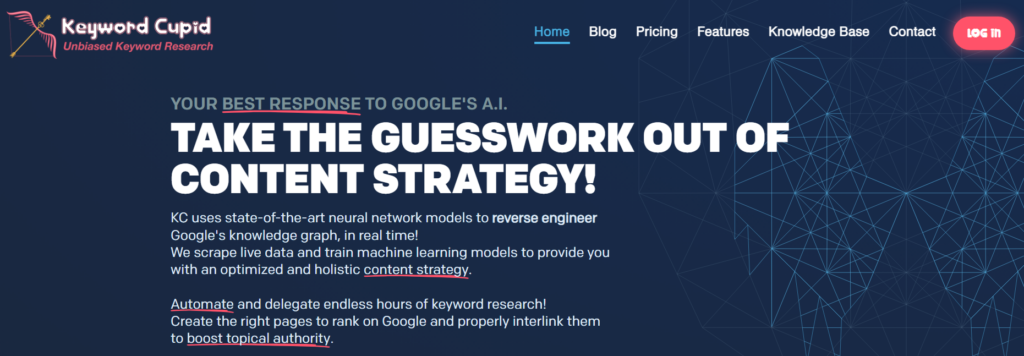
Keyword Cupid is a special tool designed to help automatically group similar keywords together. It uses smart neural networks and search engine tools to look at how words are connected based on the results people find when they search online.
The tool makes visual mind maps that show how keywords connect to each other. This is great for planning content and organizing your website. Users provide a list of keywords, and Keyword Cupid searches Google results to find groups of keywords based on actual information.
You can pick different types of clustering models (loose, tight, or exact) based on how detailed you want the clusters to be. It also lets you upload many items at once and works with tools like Ahrefs, and Google Search Console.
Keyword Cupid is very helpful for establishing expertise in a subject and organizing content, which gives users an advantage in marketing and SEO. Its focus on grouping makes it a popular tool for planners who want to increase content production effectively.
Cluster AI (Linkgraph)

Linkgraph is a special tool that organizes keywords into groups automatically. It does this by looking at how similar they are in search results and which websites rank for them.
Linkgraph is different from other SEO tools because it only works on clustering things. This makes it quick and accurate. You provide a list of keywords, and it gives you groups where all the words could appear together on the same webpage.
This helps prevent competition between your own keywords and helps establish strong expertise on a topic. Each group has a main keyword and some related words, which makes it easy to plan content.
Linkgraph is popular among content teams, agencies, and SEO experts who want to create lots of content accurately. It’s especially useful for creating content centers and making sure each article focuses on a specific group of keywords.
LowFruits
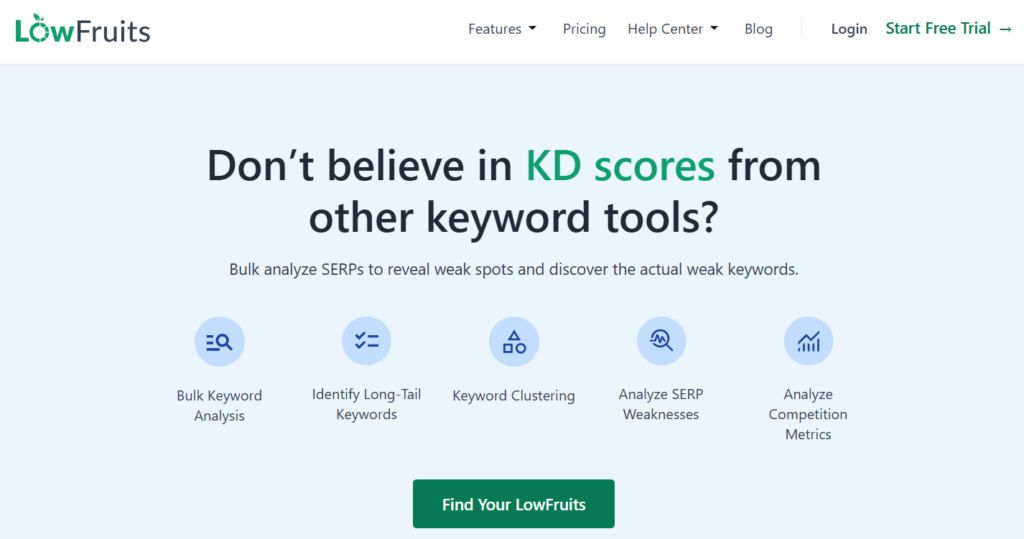
This is a tool that helps you find keywords that are easy to rank for. It groups them together based on what people are looking for and how similar they are in search results.
Its main advantage is finding keywords where low-quality websites appear on the first page, showing a good chance to rank higher. When you enter a main word, LowFruits creates many related words and groups them based on Google search results to make sure they fit well together.
Each group has scores for how competitive it is, how many people are searching for it, and how hard it is to succeed. This helps users decide which content to focus on based on the effort needed and the possible benefits.
This tool is very useful for bloggers, affiliate marketers, and small businesses that focus on specific areas with less influence. If you want to find “easy win” keywords and organize your content in useful clusters, LowFruits provides an affordable option.
Also Read: 10 Best Ubersuggest Alternatives to Try in 2026
Ubersuggest
Ubersuggest is an easy-to-use SEO tool that helps with keyword research and has a simple feature for clustering keywords. It helps users find similar keywords and sort them by their purpose, subject, or how they appear in search results.
While it doesn’t automatically group keywords like some special tools do, it gives a lot of useful information like how many people search for a word, its cost per click, how hard it is to rank for, and ideas for related content.
This information can help you decide how to organize your keywords. Ubersuggest is great for beginners or small businesses because it’s easy to use and costs less. It also has extra tools like website checks, link information, and position tracking, making it a good complete SEO platform.
If you’re new to content marketing or keyword research, Ubersuggest is a good option. However, it’s better for smaller projects rather than big campaigns. It still offers useful information for making basic content plans.
Semrush
Semrush is a very complete SEO tool. Even though it doesn’t have a special tool for automatically grouping keywords, it gives you all the information you need to do it manually.
Using tools like Keyword Magic Tool and Keyword Manager, people can find thousands of keyword ideas and then sort them by topic, purpose, or how they appear in results pages. It has a feature that groups keywords in its PPC and content marketing tools.
This helps you organize similar words based on topics or campaigns. To improve your content strategy, Semrush’s SEO Content Template and Topic Research tools help you understand how to group related topics and what factors can help them rank better.
Clustering has to be done manually, but Semrush is great for professionals who want to have control, detailed information, and options. Its powerful tools for analyzing data, comparing competition, and planning content make it great for agencies and big businesses that focus on SEO.
Zenbrief
Zenbrief is a tool that uses AI to help improve content. It includes a feature for clustering keywords when making smart content plans. It makes creating content easier by helping users find important groups of keywords related to a specific topic.
The tool looks at popular web pages and search results to find related words and suggests which ones to add to your article. It is perfect for content marketers, bloggers, and SEO writers who want to make their work easier with helpful data-based tips.
Zenbrief may not be as advanced as standalone clustering tools like Keyword Cupid or Linkgraph, but it includes clustering as part of its main aim to create content that is ready to rank well and perform optimally.
Its design makes it easy to go from finding keywords to creating complete article outlines in just a few minutes. It’s ideal for users who want an easy, step-by-step way to add keywords and plan content, without needing a lot of SEO skills or doing a lot of research.
KeywordsInsights.AI
KeywordsInsights.AI is a new tool that helps organize keywords and understand what people want when they search. It is made to simplify and speed up planning content in large amounts.
It groups keywords that are similar based on SERP similarity and AI-driven analysis, finding out which words can show up on the same webpage. In addition to just sorting, it labels each keyword with a purpose (informational, transactional, navigational).
This helps you know what type of content works best for each group. One great feature is that it can take keywords from tools like Semrush, or Google Search Console and organize them into simple, useful groups.
The platform lets you filter things in your own way and gives specific suggestions for titles and subjects based on similar groups. Its easy-to-use dashboard and good export options make it perfect for agencies, planners, and content teams that handle many keywords.
Exploring Clustering Tools
Picking the right keyword clustering tool is important for SEO agencies, consultants, and digital marketers when creating their content plans. Today, there are choices for everyone, from easy free tools for small businesses to more advanced paid options for larger projects. The right tool for you depends on how you work, how much money you have, and what you want to achieve with SEO.
Features Comparison
| Tool | Accuracy of User Intent | Integrations | Visual Maps | Custom Clustering | Export Options |
| Surfer SEO | High | Google Docs and Google Search Console | Yes | Yes | Yes |
| Ahrefs | High | Many platforms | Yes | Yes | Yes |
| SE Ranking | Medium | Google services, SEO tools | Basic | Yes | Yes |
| Keyword Cupid | High | Sheets, Google Search Console, Data Studio | Yes | Yes | Yes |
| Cluster AI | High | Google Sheets | Yes | Yes | Yes |
| Low Fruits | Medium | Google Search Console | Basic | Basic | Yes |
| Ubersuggest | Medium | Google Integrations | Limited | Basic | Yes |
| Semrush | High | Semrush Ecosystem | Yes | Yes | Yes |
| Zenbrief | Medium | Google Docs | Yes | Yes | Yes |
| KeywordsInsights.AI | High | Many platforms | Yes | Yes | Yes |
Custom clustering settings let you choose how strong the matches need to be or how big the groups should be, so you can create keyword clusters that suit your website. Visual tools, like topic maps or keyword groups, make it easier to spot missing content and plan your content strategy in a clear and purposeful way.
Simple Free Tools
Free tools are helpful for beginners or teams that don’t have much money. They group your keywords, show the simple maps we are familiar with, and let you download the information to Excel. They don’t have real-time search data or strong integrations, but they are good for local businesses and new agencies that want to try out different topics or see what’s trending.
Strong Paid Tools
Surfer and Ahrefs are strong paid tools that let you quickly group data, analyze search engine results in real-time, and export detailed information to Excel. Prices range from $19 for small quantities to $129 for bigger needs. They are usually more expensive, but that’s because they provide strong tools for creating topics, analyzing competitors, and helping with editing.
Discounts on Tools
Sign up for emails from keyword clustering tools, follow them on social media, or watch for special discounts on package deals. Many offer free trials or discount codes for new users. These offers let you try out special features without having to pay for a full subscription.
Also, think about buying during big sales like Black Friday, Cyber Monday, or at the end of a quarter when many stores have great discounts. Joining online groups or SEO forums can help you find special deals or referral codes that other people share.
Control Your Clustering Process
A good keyword clustering process helps SEO teams be more effective by working more intelligently instead of putting in extra effort. With the right tools, you can easily find keywords and group them into topics.
From there, you can create content plans that match what people are looking for. This method makes sure your content is important, organized, and ready to show up in searches.
Collect Your Basic Keywords
You start with a big group of keywords. Use tools like Google Search Console, Ahrefs, or Semrush to find out the phrases that your website is already showing up for. Next, find the opportunities.
Add keywords from Google’s “People Also Ask” section and suggestions from the keyword planner. Put them in a Google Sheet and divide them into big groups. This will help group things together later and make sure you don’t miss important topics.
Examine Automated Clusters
Use tools like Keyword Cupid or ClusterAI to group your keywords easily. These tools use things like how similar the meanings of words are and how often they appear together in results pages to group similar terms together.
After you organize everything in your spreadsheet, make some pivot tables to help you sort and review the information. Make sure each group is helpful for your content plan and meets real search needs, not just what the tool wants.
Refine Your Clusters Manually
Every tool has its problems. Go over the clusters together as a team and change any keywords that don’t fit well. Include different jobs, like writers and planners, for better results. Keep checking your groups every few months, like every 3 months, to stay updated on changes in what people are looking for.
Create Theme-Based Content
Think of each cluster as the starting point for creating content, like a blog post or a webpage about a service. Make a plan for what you’ll post and when, based on these topics, and follow the same style in all your messages. Link related topics together using smart internal connections.
Avoid Clustering Mistakes
Be careful not to group too many things together or leave out important words. Regularly check your clusters, get rid of the ones that aren’t useful, and be open to change. Stay flexible with your plan as tools change and how people search also changes.
Choose the Best Clustering Tool
Choosing the right tool for clustering keywords is challenging. It’s not enough to pick the person with the most amazing website or the biggest ad budget. If you run an SEO agency or work as a consultant, it’s essential to pick the right tool that fits your goals. When you begin your research, there’s a lot of information to sort through.
Some work by looking for similar meanings, others check how often websites appear together on Google search results, or they use language processing to understand what users want. The best solution brings together all these methods in a way that better matches how real people search.
Make Sure Your Tools Fit Your Goals
If you want to create topic clusters for your content, find tools that provide interactive mind maps, content ratings, or topic organization. If you want to do in-depth keyword research, find tools that show you your competitors and information from search results.
Some tools can even show you where content is missing, which is a big benefit.
The key is to make sure your tools match your main goals. There isn’t a single correct answer for every situation. For example, if you are a company that works with big businesses, your needs might be very different from those of a smaller agency.
Verify Data Sources
Look at the data sources, make sure they’re correct, and see if you can trust them. Good clustering relies on having high-quality data. Look for tools that show where their keyword data comes from, whether it’s directly from Google, from another service, or from their own system.
The best clustering tools clearly explain how they work, so you won’t be making choices without knowing what’s happening. Consultants often search for tools that link their results straight to a clear and up-to-date analysis of the results pages.
Use Free Tool Trials
All of the most reliable tools offer free trials. Use these as a starting point to find the tools that will work best for you. The ability to upload and export files is also important. Make sure it’s easy to upload keywords, customize groups, and download the final results. Make note of what is effective and what isn’t, this experience will be very helpful when you make decisions.
Plan for Scaling Dataset
If your list of keywords is getting bigger, your tools should be able to keep up with that. Pick clustering tools that can handle big datasets well. Look at how often they release updates and see how quickly they adapt as your markets change. This flexibility will keep your keyword organization working well as your needs change.
Ethical Clustering: Proper SEO Practices
Ethical keyword clustering is an important part of long-lasting SEO. The tech and media industries are growing strong. When using these tools in a good way, brands can stand out and be noticed for the right reasons. The best results from SEO come when you focus on providing value to the user instead of just looking for keywords.
Concentrate on Value
Keyword clusters work well when they help create content that meets what users really want. Using the same keywords in every section won’t help gain trust or bring back visitors.
Imagine you have a nutrition blog based in Crete. By helping with problems like “how to calculate calories without an app?,” you show that you understand what matters to your readers.
Over time, content that is good and offers value builds trust and authority, which search engines like to reward. Preventing overlap in cluster pages stops keyword cannibalization, making sure each page has a clear purpose.
Make Really Helpful Content
Your users don’t want to read long blocks of text. With keyword grouping, you can find out what topics your users care about. For example, a main page could be about “Crete Nutrition Regime”. It could include related topics like “paleo diet”. Using “Whole30” and “non-starchy recipes” can improve the content plan.
Content groups that follow Google’s E-E-A-T principle rise to the top. Pay attention to what your users are saying and change your clusters to make sure they stay important and useful.
Adjust to Changes in Search Guidelines
What was good enough last year might not be good enough this year. Be flexible with changes in search rules, since no part of your content is fixed. Tools can help you find the right keywords more easily and quickly by going through thousands of them.
The human touch helps us understand details, situations, and meaning better. Regular audits make sure your website stays up-to-date and provides a good experience for users.
Final Thoughts
In a world where getting noticed online is getting tougher, keyword clustering tools help organize content better and improve search visibility. By grouping related words based on how people search online and what they want, these tools help marketers create detailed groups of topics that match the way users search and how Google ranks them.
There are tools for everyone, whether you’re just starting out or more advanced. Easy-to-use options like Ubersuggest and LowFruits work for beginners, while more advanced tools like KeywordInsights.AI and Cluster AI are also available. There’s something for every budget.
Some tools, like Surfer SEO and Zenbrief, take it a step further by including grouping ideas in their content plans and improving processes. Using the right tool can greatly improve your content strategy, raise your rankings, and help you become an expert in your area.
Whether you’re working on one website or handling many SEO projects, using keyword clustering is essential. It’s a basic strategy for long-term success in results pages. Pick carefully based on your goals, scale, and how developed your SEO is.
FAQs
How do tools that cluster keywords work?
Keyword clustering tools look at your list of keywords and see how similar they are to each other. They do this by checking if they have similar meanings or if the same web pages show up in search results for both keywords. Some tools use AI or NLP, while others look at current Google search results. The result is a clear list of keyword groups. Each group has a main keyword and related words. These can help plan what content to create.
What are the advantages of using keyword clustering tools instead of doing it manually?
Sorting keywords manually can take a lot of time and may have mistakes, especially when dealing with big sets of data. Keyword clustering tools do this automatically, which saves a lot of time compared to doing manually. They offer reliable groupings based on actual search results, which makes them more accurate than just guessing. These tools also include features like how hard a keyword is to rank for, how many people are searching for it, and what people want to find. This helps you make better choices.
Do keyword clustering tools help stop keyword cannibalization?
Yes, one of the biggest benefits of keyword clustering is that it stops keyword cannibalization. This happens when different pages on your website compete for the same or similar keywords. Grouping keywords properly with clustering tools helps you make one strong page that focuses on a related group of terms, instead of spreading them out over many pages. This helps you rank better for more searches without making your SEO efforts weaker or confusing crawlers about which page to show.
Which keyword grouping tool is the best for big SEO content plans?
For big content plans, tools like Keyword Cupid, and KeywordsInsights.AI are very useful. These platforms are designed to handle a lot of keywords at once and use smart grouping based on search results and computer-based analysis. They also let you filter information, label what you’re looking for, and send it to project management tools. For agencies or in-house teams dealing with many keywords or managing a lot of content, these tools provide accuracy, speed, and flexibility.
Are keyword clustering tools only good for blog posts?
Keyword clustering is often used for blogs and informational content, but it is also very helpful for online stores, software services, affiliate sites, and local SEO plans. For product pages, it helps make sure you don’t create many pages that focus on the same topics, which can lower their search rankings. For SaaS or service companies, grouping similar items helps create organized landing pages and support information. It’s also helpful in paid advertising to find groups of keywords to use in ad groups.